

Aa Reading preferences
Cabbage earns its place in many vegetable momo fillings through quiet work. It brings bulk without an overpowering flavour, a mild sweetness when cooked and just enough bite to make the thin wrapper feel worthwhile. But cabbage also carries water, and that can weaken a seam if handled carelessly.
Here is how to prepare it deliberately, whether you are making ten momos at home or testing a larger vegetarian filling. No single cabbage proportion is traditional or correct across all Himalayan communities.
What cabbage brings to the bowl
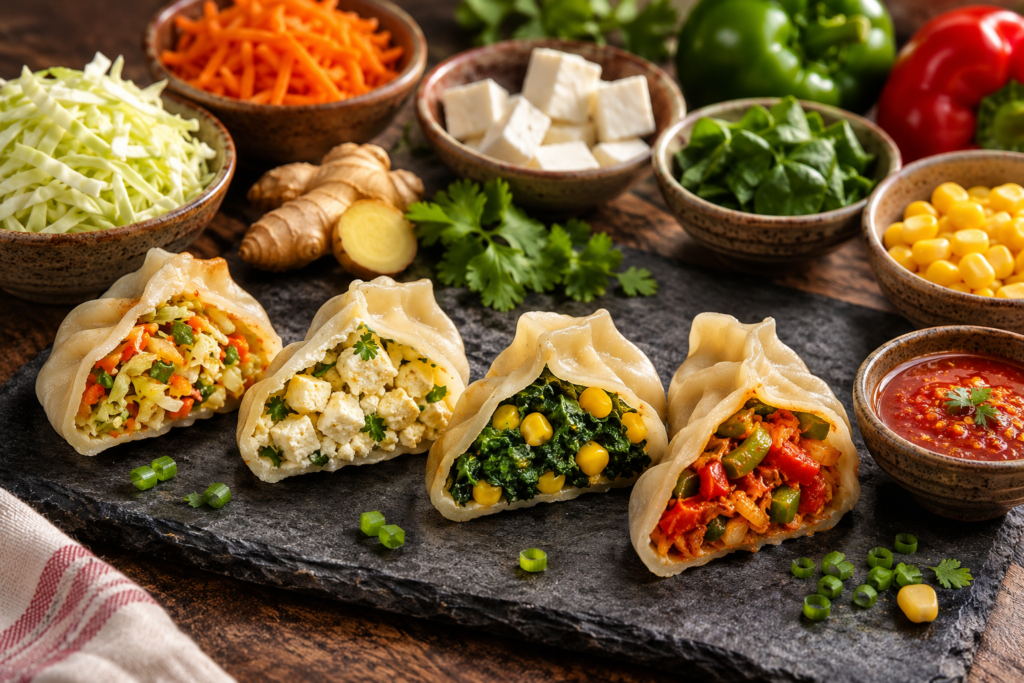
Finely shredded cabbage gives a filling structure: tiny pieces fit together, hold seasoning and distribute across each dumpling. It pairs naturally with carrot, ginger, onion, mushrooms and paneer. When heated, the pieces soften but can still retain texture if they were not cut into a puree.
Different cabbage varieties vary in tenderness and water content. Choose fresh, firm leaves and wash them before chopping. Remove damaged or spoiled portions rather than hiding them in a highly seasoned mixture.
Cut size matters more than fancy equipment
A sharp knife works well. Remove the hard base, stack the leaves and slice into fine ribbons, then turn the ribbons and cut into small pieces. A food processor can help with large batches, but short pulses are better than turning cabbage into a wet paste. Aim for pieces that fit comfortably under a small wrapper without sharp stalks pushing against it.
A uniform cut helps distribute filling weight and lets the dumplings seal with less pressure. It is also easier to taste seasoning consistently across the batch.
Two moisture-control approaches
Light salting and squeezing: mix the shredded cabbage with a small amount of salt, wait briefly, then squeeze gently to remove excess water. Remember to adjust final seasoning because some salt stays in the vegetable.
Brief cooking and cooling: sauté the cabbage just enough to reduce free moisture, then allow it to cool safely before filling. Excessively long cooking can make it limp and dull. Both approaches have a place; choose based on the recipe and test the texture.
Combine cabbage with flavour, not more water
Fresh ginger, garlic, spring onion and black pepper build flavour without relying on a large volume of liquid sauce. If adding soy sauce, count it as both seasoning and moisture—and check for wheat and soy allergens. Paneer may add dairy richness; mushrooms release their own water when cooked and may need draining.
Mix a small test portion first, steam it fully and taste. Adjust the final mixture rather than repeatedly adding seasonings to an enormous untested bowl.
An illustrative 20-piece experiment
For a small comparison, use 200 g shredded cabbage and 80 g grated carrot as your base, then divide into two equal portions. Salt and squeeze one portion; briefly sauté and cool the other. Season the two portions similarly, shape comparable dumplings and steam until fully cooked. Taste wrapper texture, filling moisture and flavour side by side.
These amounts are a home recipe trial, not tested nutritional facts or the formula used at Momo Delights. Note how much liquid each portion releases and whether seams remain closed.
Where cabbage can go wrong
| Result | Likely problem | Next attempt |
|---|---|---|
| Water pools in bowl | Long salted rest or wet vegetables | Season closer to filling; drain gently |
| Filling becomes mushy | Over-processing or overcooking | Chop rather than puree |
| Wrapper splits | Large pieces or overstuffing | Cut finer, use less filling |
| Filling tastes flat | Seasoning diluted by moisture | Control liquid, then adjust salt and ginger |
Food safety and allergens
Wash cabbage under running water, clean knives and work surfaces, and keep perishable fillings properly chilled while working. The CDC recommends refrigerators at 4°C/40°F or colder and prompt refrigeration of perishables. A vegetable filling is not automatically vegan or gluten-free once seasonings, dairy or wrappers are added.
Check Momo Delights’ allergen guidance for the brand’s cautionary information. For torn seams after assembly, see why wrappers tear.
FAQs
Can I use purple cabbage?
Yes as a home variation, but it can change colour and texture and may tint the filling.
Should the cabbage be raw before steaming?
Both raw and lightly precooked preparations exist. The recipe, moisture and final thorough cooking matter.
Does adding cabbage make momos healthier?
It adds a vegetable component, but the overall meal depends on ingredients, portion, oil and sauce.
For related momo preparation ideas, explore Paneer Spring Rolls Explained: Filling, Crunch and Dipping Sauces and Momo Delights menu. Confirm ingredients and dietary suitability when serving others.


Leave a comment