

Aa Reading preferences
Some dumplings need less chilli, not more. A ginger-scallion dip is fragrant, savoury and refreshing; it puts the warmth of ginger and the sweetness of spring onion beside the filling rather than taking over. It is particularly good with steamed vegetable momos, where a restrained sauce allows the wrapper to remain the star.
Here is a small, freshly prepared home version. It is intentionally different from a long-stored garlic- or herb-infused oil, which carries additional preservation risks.
A quick ingredient list
- 2 spring onions, washed and finely chopped
- 1 teaspoon grated fresh ginger
- 1 tablespoon neutral cooking oil
- 1–2 teaspoons lemon juice
- 1 teaspoon soy sauce, optional
- A small pinch of salt, adjusted to taste
- 1–2 teaspoons clean water if a looser sauce is wanted
Spring onion is also called scallion. If you use soy sauce, note that it may contain wheat and soy. For a soy-free version, omit it and season with salt and lemon instead.
Keep the pieces fine
Finely chop the spring-onion greens and pale stems so the sauce clings evenly to each dumpling. Grate ginger rather than leaving large fibrous chunks. Place the chopped ingredients in a clean heat-resistant bowl, then stir in lemon and optional soy sauce.
Good chopping matters here because there is no thick tomato base to disguise coarse pieces. A fine cut gives the sauce its delicate texture.
Choose a gentle oil technique
Warm the oil briefly until fluid and fragrant but not smoking, then carefully spoon it over the chopped aromatics in a heat-safe bowl. Alternatively, for a fresher and less cooked flavour, let the oil cool and mix it in without heat. Either way, avoid pouring very hot oil onto a wet bowl; spattering can burn.
Stir, taste once cool enough and adjust lemon or salt in small increments. Serve immediately. Do not store this fresh-allium oil mixture at room temperature or treat it as a shelf-stable infusion.
Which momo styles work best?
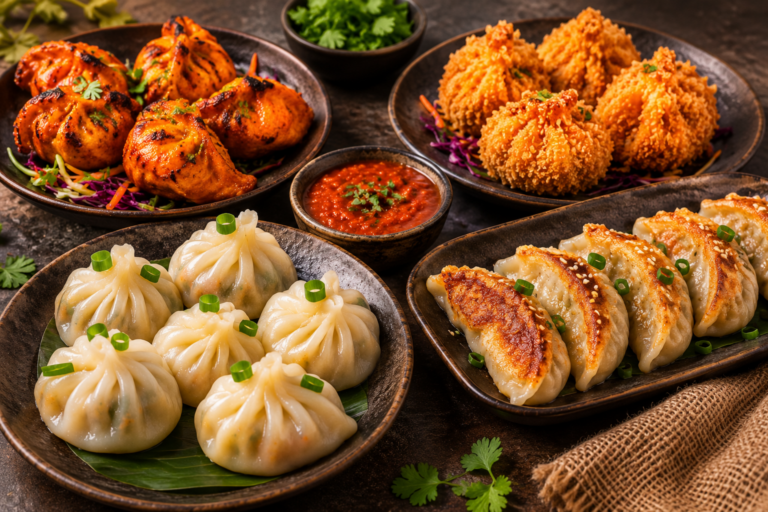
| Style | How the sauce behaves |
|---|---|
| Steamed vegetable | Fresh and aromatic without masking filling |
| Paneer | Ginger and lemon contrast with dairy richness |
| Kothey | Dip the soft edge; protect the crisp base |
| Kurkure | Use sparingly because wet sauce softens coating |
| Soup dumplings | A few drops can add aroma to the surface |
How to make it milder or brighter
For a gentle version, use less ginger and more spring onion. For a brighter dip, increase lemon cautiously. To make it thicker, reduce the added water rather than blending the scallions into a paste. A little soy sauce deepens savouriness, but too much may dominate the subtle filling.
This is not a universal Tibetan or Chinese traditional sauce specification; it is a simple home-kitchen pairing for modern vegetarian momo meals.
Fresh sauce needs careful storage
Fresh chopped alliums and water-containing ingredients spoil differently from dry seasonings. Prepare shortly before eating and refrigerate any extra promptly in a clean, covered container. For a recipe involving fresh aromatics and oil, do not assume it is safe at room temperature for extended periods. Use authoritative tested preservation guidance rather than a decorative jar’s appearance.
People with allergies should check all added ingredients, the dumplings themselves and shared utensils. Read Momo Delights’ allergen information before making assumptions about branded sauces.
For more cooking and menu ideas, see Peanut Dipping Sauce for Dumplings: Recipe and Allergen Notes and Which Sauce Goes with Which Momo? A Practical Pairing Guide. Verify ingredients and allergens where relevant.
Frequently asked questions
Is this the same as hot chilli oil?
No. Its main flavours are ginger and spring onion, and it does not need chilli.
Can I use regular onion instead?
Yes as an experiment, but the taste and texture will become sharper and less green.
Can I bottle it for later?
Not as a room-temperature product. This is a fresh dip, not a tested preservation recipe.

Leave a comment