

Aa Reading preferences
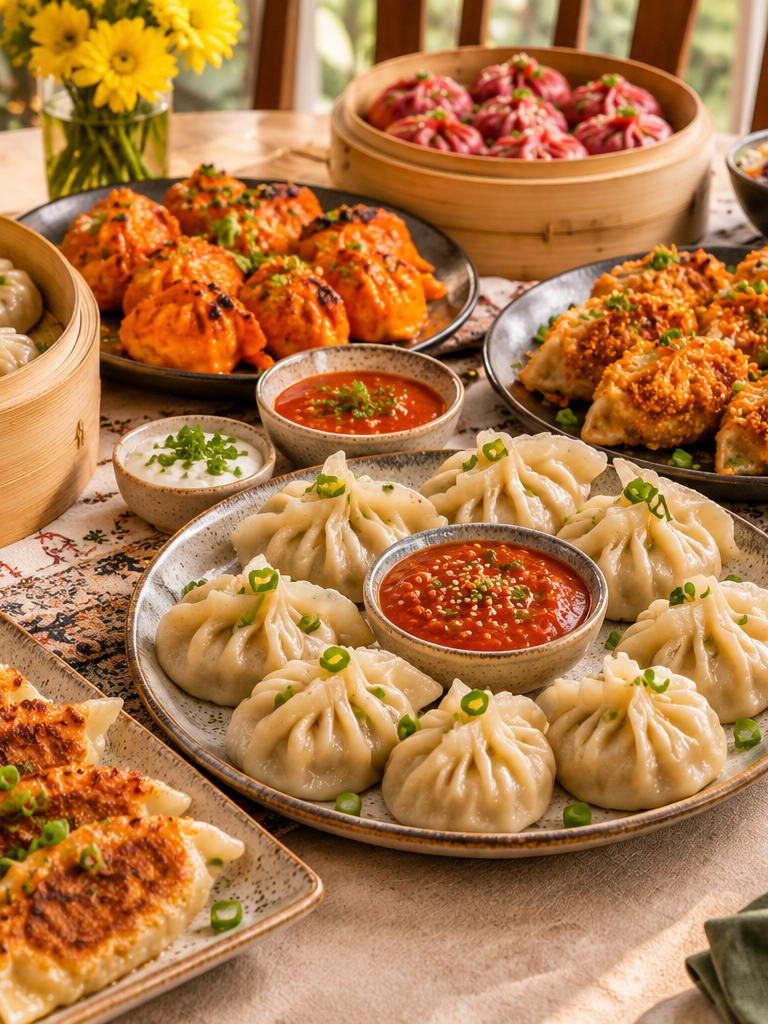
A birthday momo station can feel festive without looking like a commercial food stall squeezed into a living room. The difference is a thoughtful flow: guests arrive, make one easy choice, collect a hot plate and move away from the serving area before the next person steps forward.
Whether the host prepares dumplings at home or orders them from a supplier, the best station protects the food’s texture, the guests’ comfort and the people working behind the counter.
Start with one clear serving path
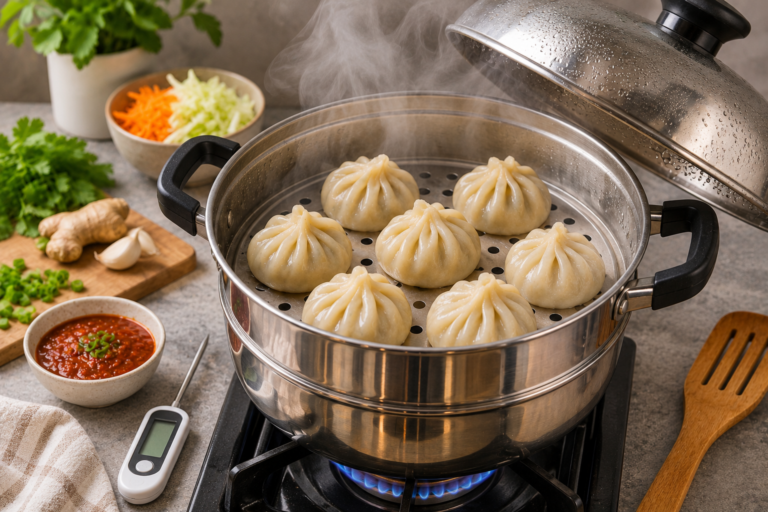
Arrange the station in this order: menu sign, clean plates, momo pickup, labelled sauces and finally napkins and cutlery. Put drinks elsewhere so guests do not block the line. Keep the steamer or hot-holding equipment behind a sensible safety barrier, away from young children, dangling decorations and crowded walkways.
If food is being prepared live, designate a cook and a separate person to manage guests and plating. One person should not be expected to handle hot steam, allergy questions and cash transactions simultaneously.
A menu with variety but little confusion
| Choice | What guests get | Service note |
|---|---|---|
| Steamed veg | Tender, mild baseline | Works with both dipping sauces |
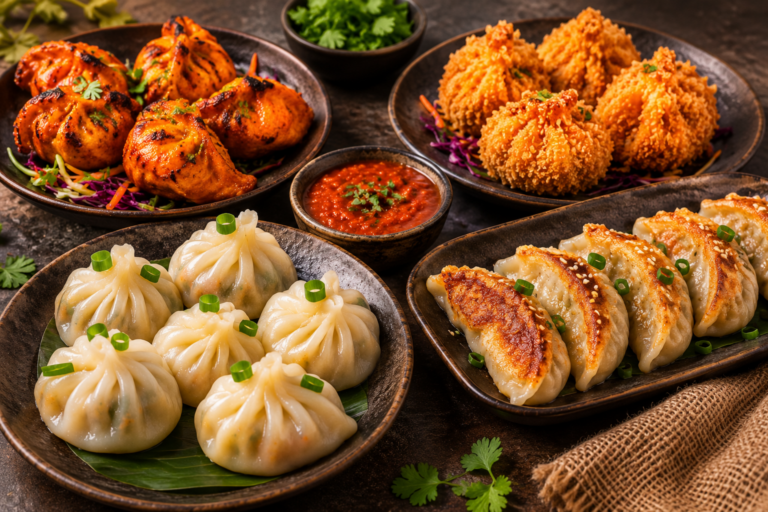
| Kothey or pan-seared | Crisp-bottom contrast | Serve promptly after finishing |
| Optional paneer | Dairy-rich filling | Clearly label milk and wheat |
| Mild tomato chutney | Acidity without heavy chilli | Own spoon and cup |
| Hot tomato-chilli dip | Optional strong heat | Keep separate from mild dip |
Confirm actual available varieties and ingredients rather than assuming every outlet offers the same menu.
Estimate the rush before the total
A fictional birthday gathering has 24 people, and you expect 16 of them to approach the station within fifteen minutes. If each asks for five small dumplings, the station needs to serve 80 pieces in that peak window—about 5.3 pieces a minute. Check whether your cooker and staff can deliver that pace safely.
This is a capacity exercise, not an estimate of real birthday demand. Guests’ appetites, other snacks and the size of the momo change the order quantity.
Protect the sauces and special diets
Have a dedicated serving tool for each dip. Ask about allergies before the event and arrange any special requests directly with the preparer, because shared utensils and buffet service can create cross-contact. Keep peanut, sesame, milk and soy ingredients clearly identified. “Vegetarian” is not enough detail for a guest with a food allergy.
For relevant brand cautions, review Momo Delights’ allergen information.
The host’s short timeline
- Two days before: confirm headcount, dietary needs, power and supplies.
- The day before: verify the menu, serving quantities and who brings the equipment.
- An hour before: place signs, tables, clean tools and waste bins.
- Before guests eat: check safe cooking and hot holding; keep backup portions controlled.
- During service: replenish smaller trays and record temperature as appropriate.
- Afterward: separate clean equipment and discard any guest-exposed sauces or unsafe leftovers.
A little hospitality goes further than decoration
Use a short printed label for each item rather than a long ingredient paragraph on the tray. Provide a comfortable space for guests to eat, especially older guests and children. Keep the sauces within reach but not near the steam exit. If the room is noisy, make the mild-versus-hot choice unmistakable through words, not colour alone.
FAQ
Is a live momo station necessary?
No. Small-batch service of properly cooked and temperature-controlled food can be simpler.
How many sauces are enough?
Two clear choices—mild and spicy—usually provide useful contrast without making the station slow.
For more kitchen and menu ideas, see Hold Cooked Momos During Restaurant Service: Safety and Texture and Momo Delights menu. Check the latest outlet menu and allergens where relevant.

Leave a comment