


Aa Reading preferences
Darjeeling momos are more than a plate of neatly folded dough. Part of their character lies in the setting: a warm serving, clear soup, a small helping of achar and the unmistakable pace of a hill-town food stop. It is a combination of food, weather, place and habit that photographs cannot fully capture.
There is no single certified “Darjeeling-style” formula. What the regional authorities describe is a helpful starting point for recognising the experience without turning it into a rigid recipe.
What the Darjeeling government describes
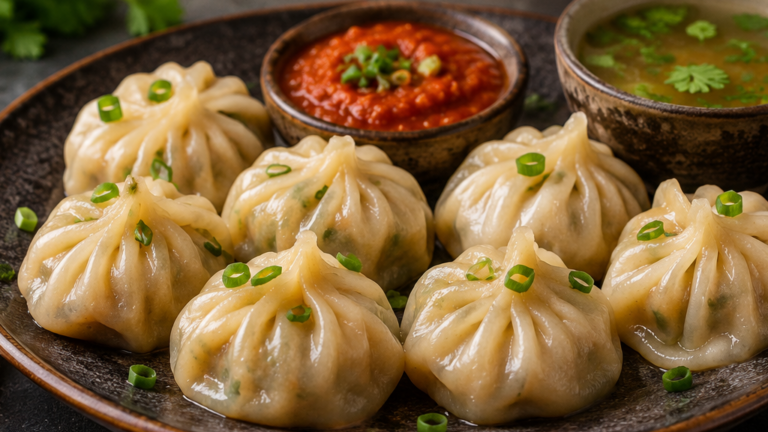
Darjeeling district’s official culture and heritage page identifies momo as steamed dumplings accompanied by a bowl of clear soup and achar, with vegetable versions using cabbage and other vegetables in place of meat. Its food list places momo alongside thukpa and other dishes connected with the region’s cross-Himalayan food traditions.
That description tells us which elements are commonly associated with the experience, but not that every stall uses the same chutney, wrapper thickness or filling proportion.
The signature elements to notice
| Element | Role in the experience |
|---|---|
| Hot steamed momo | Soft wrapper enclosing a savoury centre |
| Clear soup | Warm, relatively light accompaniment |
| Achar | Brightness and potentially a strong chilli contrast |
| Vegetarian filling | Often cabbage and other vegetables |
| Immediate service | Preserves tenderness and aroma |
Why soup matters on the plate
A small bowl of clear soup provides warmth between bites without automatically overpowering the dumplings. It is distinct from a jhol-style, sauce-filled bowl: one accompaniment may be intentionally light while the other is strongly seasoned and thicker. Ask whether the stock is vegetarian and what seasoning is used if you have dietary restrictions.
What a good wrapper feels like
Well-prepared dumplings should have dough that is cooked, not gummy, with seams that remain closed during lifting. The wrapper’s job is to support the filling rather than dominate it. Cooking method, dough hydration and the time between steamer and table all affect texture, so a stall or restaurant can deliver a different result without changing the broad dish name.
Street-style does not need an invented origin claim
Darjeeling’s food reflects the movement of people and culinary influences across the Himalayas. It is better to describe the district’s documented food patterns than insist that a specific modern stall invented the momo or that only one community may prepare it. The Government of India’s Incredible India guide notes Tibetan food in Darjeeling and the availability of momos and thukpa in local eateries.
How to order with confidence
Begin with a steamed vegetable version, ask whether soup comes alongside and taste the achar separately before adding it. If the sauce is intensely hot, a small dab may be plenty. Confirm whether fillings or soups contain meat stock, dairy, wheat, soy, sesame or nuts as relevant. A vegetable dumpling is not automatically vegan or gluten-free.
For additional brand context, see Momo Delights’ Himalayan food comparison.
For more on the dishes and places behind these flavours, read Darjeeling momo traditions and types of Himalayan momos. Recipes and serving traditions differ across communities.
Frequently asked questions
Do Darjeeling momos always include soup?
Clear soup and achar are noted by the district government, but service varies by establishment.
Are all Darjeeling momos made with meat?
No. Vegetable versions are explicitly described in the official food guide.
Is street-style the same as deep-fried?
No. Steamed momos are an established Darjeeling reference point.


Leave a comment