

Aa Reading preferences
The Himalayan region is not one kitchen. It includes varied communities, languages, agricultural conditions and culinary practices. Filled dumplings appear across many of these food settings, while vegetable-focused preparations continue to evolve with local produce, migration and modern dining habits.
Rather than searching for one “original vegetarian momo”, it is more useful to understand the possibilities and the distinctions: what vegetables are available, how dough is prepared and what sauces or soups are served alongside.
A shared shape, not a single recipe
The Government of Sikkim describes momos with meat, cheese and vegetable fillings, alongside chilli sauce and soup. The Darjeeling district government specifically notes vegetable momos with cabbage and other vegetables. These descriptions establish that vegetarian forms have an important place in regional food settings without implying that every community uses precisely the same filling.
Ingredients respond to place and season
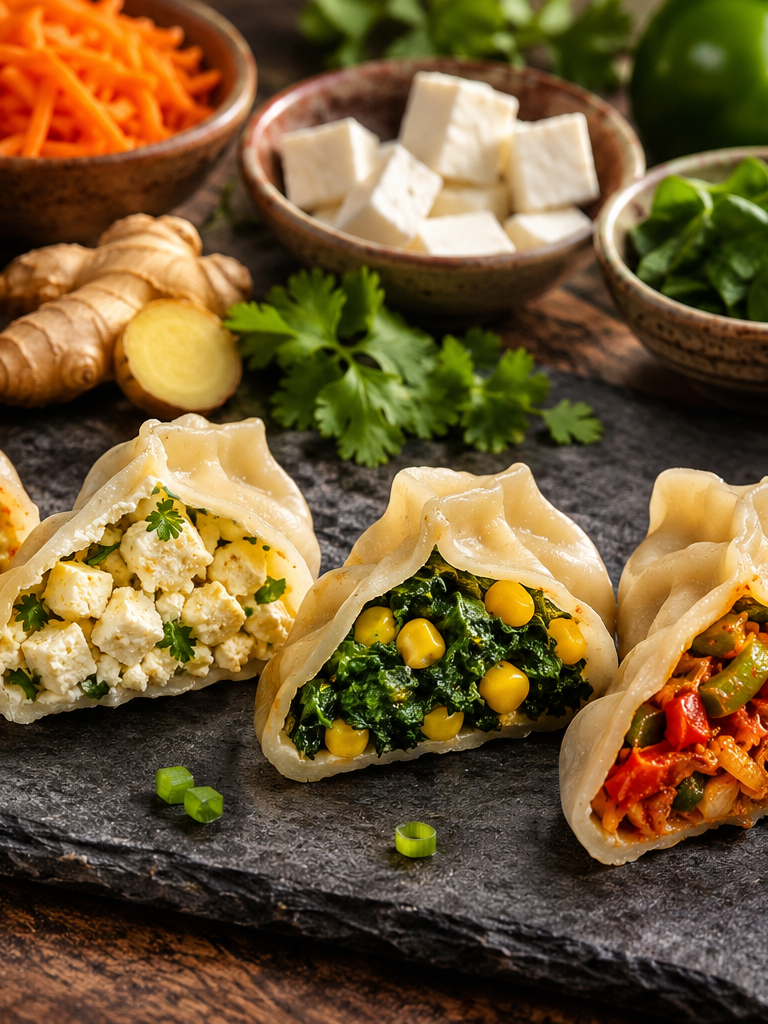
In Sikkim, district descriptions of local diets mention vegetables, mushrooms, bamboo shoots, nettle leaves and fermented products. This broader food environment helps explain why it is too narrow to treat cabbage-and-carrot as the only plausible regional vegetable combination. A contemporary kitchen may also use paneer, tofu, spinach or sweet corn, though a modern menu innovation should not be misrepresented as an ancient, universally traditional recipe.
A few useful differences
| Question | Why it varies |
|---|---|
| Filling | Vegetable availability, custom and kitchen preference |
| Wrapper | Flour, milling and preparation style |
| Shape | Family or professional folding habits |
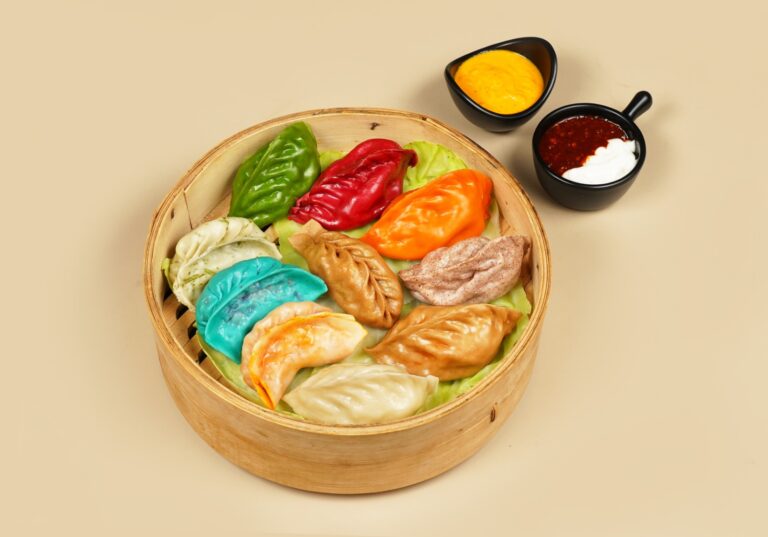
| Cooking method | Steamed, pan-seared or contemporary fried variations |
| Accompaniment | Tomato achar, chilli sauce, clear soup or jhol |
These dimensions encourage specificity. A restaurant can describe its own version without making an unsupported claim about all Himalayan diners.
Vegetarian and vegan are different
Paneer and cheese are dairy ingredients, so a cheese-filled momo can be vegetarian without being vegan. A vegetable-only filling might still use animal-derived stock, butter or a dairy sauce. Most conventional wheat wrappers contain gluten; tofu and soy seasonings bring other allergen considerations. Product-specific verification matters more than an appealing green menu badge.
How to create a respectful tasting menu
Choose a simple cabbage-ginger filling, a seasonal mushroom-and-green variation, and an optional paneer version for diners who consume dairy. Keep the wrappers comparable and serve a mild tomato dip and a stronger achar in separate cups. Describe the first as a familiar preparation and the others as your kitchen’s variations, not authoritative representations of entire regions.
Why cultural precision improves the food story
Food histories are more persuasive when they identify a place, a documented source or a particular cook. Avoid statements such as “all Tibetans use this sauce” or “Sikkim invented vegetarian momos” unless there is credible evidence. Stories of movement and adaptation can be compelling without a single origin claim.
Explore Momo Delights’ Himalayan traditions guide for further context.
Explore related Momo Delights guides: Sikkim momo traditions and momo styles and origins. Recipes and ingredient choices vary by region and kitchen; always verify specific dietary needs.
Frequently asked questions
Are traditional Himalayan dumplings always meat-filled?
No. Official regional sources describe vegetable and cheese fillings as well.
Are vegetarian momos necessarily healthy?
Nutrition depends on ingredients, preparation, portion size and accompanying food.
Does every Himalayan region share the same achar?
No. Sauce traditions vary across communities and kitchens.


Leave a comment