

Aa Reading preferences
Freezing a tray of homemade momos can make a weeknight meal feel effortless—until the entire bag comes out as one solid block. The simplest fix is to freeze the pieces separately before packaging them together. That way, you can take out a few without breaking the wrappers of the rest.
This guide explains the home-kitchen technique, what to label and what freezing does and does not do for food safety. It does not establish a guaranteed commercial shelf life.
Prepare the dumplings for the freezer
Start with clean hands, utensils and a well-managed filling. Let any cooked vegetable filling cool safely before using. Raw meat or poultry fillings require more stringent hygienic handling; keep them chilled and prevent cross-contamination with ready-to-eat foods.
Seal each momo completely, then dust only as needed to stop the raw wrappers adhering to the work surface. Inspect for torn seams before freezing—small cracks tend to become more troublesome when pieces are moved from the tray into a bag.
1. Line a tray and make one layer
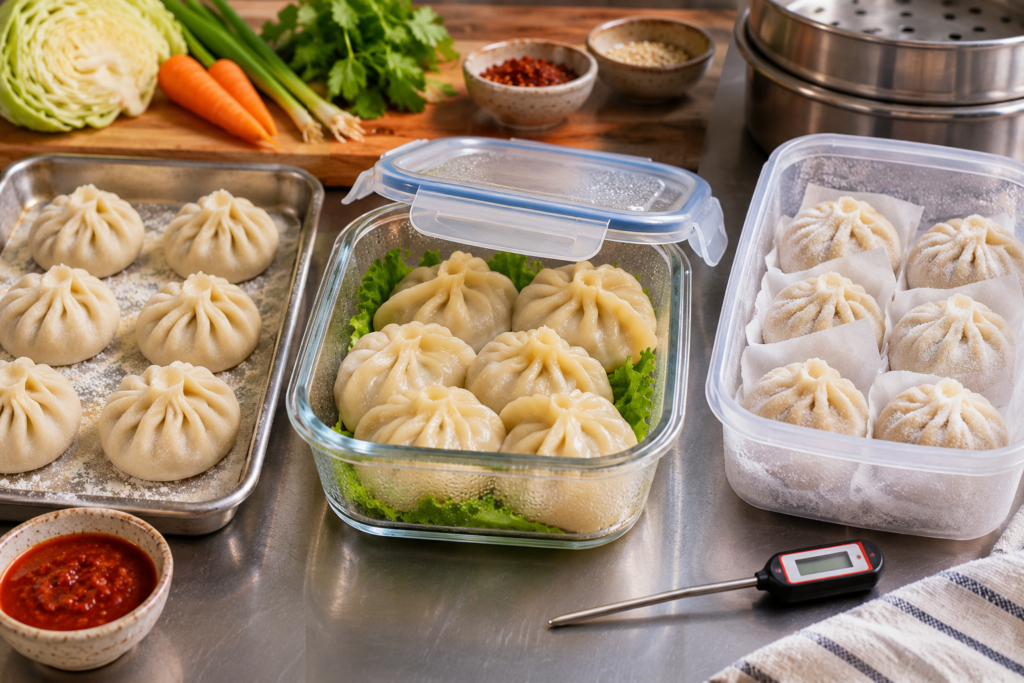
Choose a clean, freezer-safe tray or plate that fits flat in the freezer. Use a food-grade liner if needed, or a light dusting of appropriate flour for the specific dough. Arrange momos so they do not touch. Crowding defeats the purpose of tray freezing because damp wrapper surfaces can bond together.
For best freezer performance, place the tray promptly into a freezer operating at -18°C/0°F or colder. FoodSafety.gov uses this temperature as its home-freezer benchmark.
2. Freeze until firm, then package
Leave the tray undisturbed until individual pieces are firm enough to lift without bending or deforming. The time depends on freezer load, dumpling size and tray material; avoid treating a particular number of hours as a universal standard. Work promptly while transferring the firm pieces into a freezer-suitable bag or rigid container.
Remove excess air from suitable bags where practical without crushing the momos. Divide into small meal-size portions so you do not repeatedly warm the entire batch during retrieval.
3. Label for traceability at home
Write the product name, filling, date frozen and any key allergens on the package. If you have several varieties, label the bags separately—for example, “paneer/cabbage, milk and wheat” versus “vegetable, wheat and soy sauce.” Ingredient labels help prevent accidental substitutions when cooking for family members.
For a home kitchen, this is a practical organisation system. Businesses have their own additional labelling and traceability obligations.
Quality, freezer burn and safety are separate questions
FoodSafety.gov notes that items held continuously frozen at -18°C/0°F or below can remain safe indefinitely from a frozen-storage standpoint, while quality can decline over time. That does not make thawing abuse, unsafe preparation, damaged packaging or repeated warming harmless. Freezing generally stops microbial growth; it does not sterilise a poorly handled filling.
Freezer burn is primarily moisture loss and surface damage that can make wrappers dry or tough. Proper packaging improves quality, not an unsafe product’s history.
How to cook the portion you need
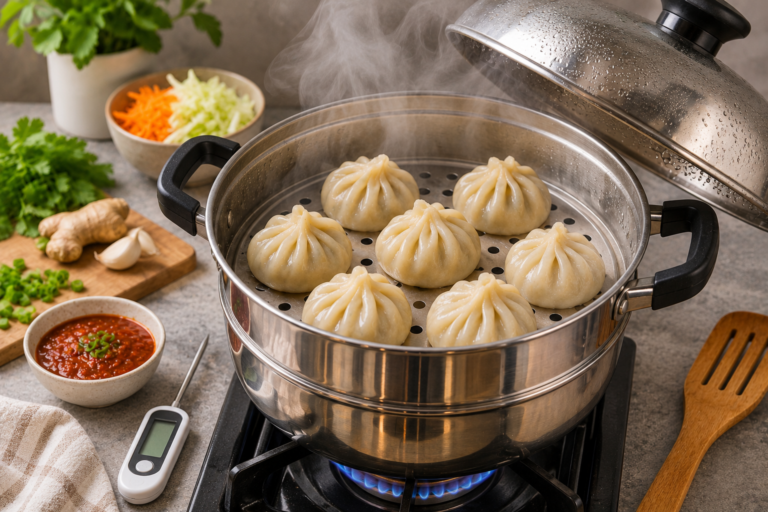
Some homemade frozen vegetable momos can be steamed directly from frozen if the recipe is designed for it. Cooking times will often be longer than for fresh momos, but size and filling matter more than a fixed stopwatch value. Ensure the wrapper and filling are completely cooked before serving. If the package or recipe instructs thawing, follow its safe thawing process.
Never leave a bag of raw frozen dumplings on the counter for hours to soften. FoodSafety.gov advises against countertop thawing of perishable foods. For commercially packaged ready-to-cook momos, the manufacturer’s directions take precedence.
A practical 20-piece batch plan
Suppose you make 20 medium momos for a household that usually eats five at a time. Shape and tray-freeze all 20, then package four separate five-piece portions. Write the freezing date on each. This gives you four predictable portions without repeatedly opening and handling a single large bag.
That arithmetic is a planning example, not a serving-size prescription. Appetites and recipe weights vary.
Troubleshooting
- They freeze as one block: they were touching or bagged before the surface became firm.
- Wrappers crack: dough or freezer packaging may be too dry; inspect hydration and reduce air exposure.
- Heavy ice crystals appear: check for temperature fluctuations and poorly sealed packaging; do not ignore any sign of thawing.
- Pieces deform: the tray was moved before they became firm, or they were crushed in a bag.
- Cooking is uneven: pieces vary in size or the steamer is crowded; standardise the next batch.
FAQs
Should I freeze raw or cooked momos?
Both approaches are possible with suitable methods. Keep the two clearly labelled and follow appropriate cooking or reheating instructions.
Can frozen momos be refrozen after thawing?
Safety depends on how and where they thawed and applicable instructions; do not assume a product thawed during warm transport is safe to refreeze.
Does freezing kill all bacteria?
No. Freezing preserves food but does not reliably make contaminated food safe.
For more cooking inspiration, see Raw vs Pre-Cooked Vegetable Fillings for Homemade Momos and Common Momo Allergens: What Diners Should Ask Before Ordering. Check allergens and ingredient suitability before serving.

Leave a comment