

Aa Reading preferences
Home cooks often disagree about one small step: should the vegetables go into momos raw, or should they be sautéed before folding? Both approaches can produce enjoyable dumplings. The better choice depends on how the vegetables behave, what texture you want and how confidently the wrapper can hold the mixture.
The central issue is not declaring a winner. It is controlling moisture, flavour and the cooking process from preparation through steaming.
What happens with a raw vegetable filling?
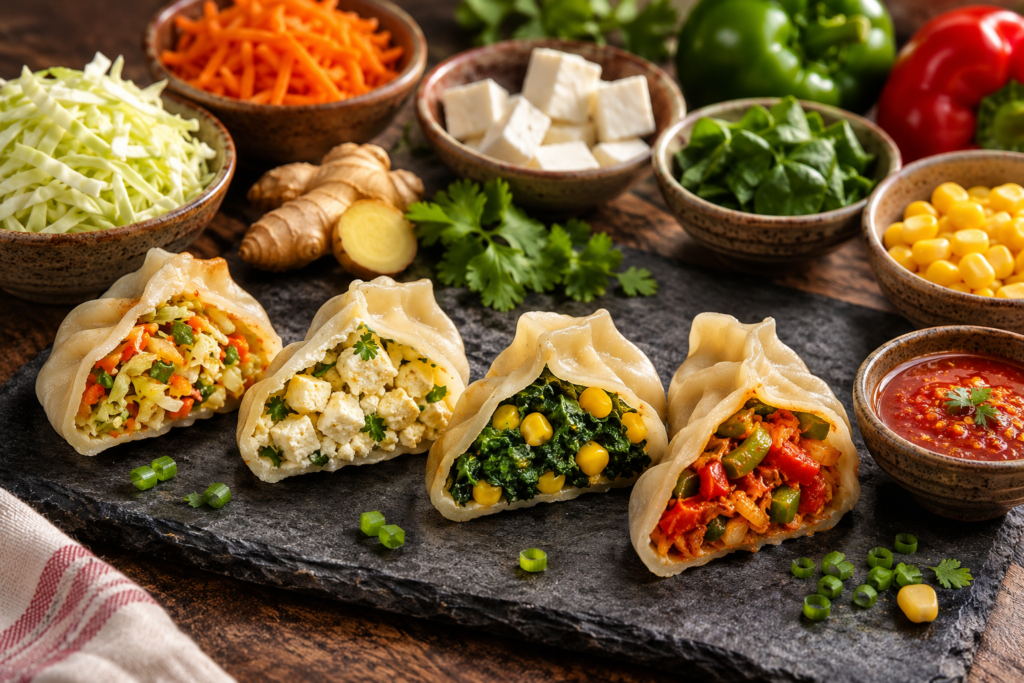
Finely chopped cabbage, carrot, spring onion and ginger can be mixed raw, then cooked with the wrapper. This approach can produce a fresh vegetable character and avoids an extra stovetop step. It also requires attention to cutting size and water release. Salted cabbage may create a puddle while the wrappers are being rolled.
Use small, consistent pieces so the centre can cook evenly. Raw vegetable filling is not permission to undercook the finished momo; the wrapper and contents still need to be fully cooked.
What happens when vegetables are sautéed first?
A brief sauté can evaporate moisture, soften onion and mushroom, and create a rounder aroma. It also changes texture, often making the filling more cohesive. Long cooking can make vegetables mushy or dry, while a pan that is too crowded can trap steam instead of reducing liquid.
Cooked components must be cooled safely before they are enclosed in raw dough. Adding piping-hot filling directly to a wrapper can make the seam sticky and difficult to close.
Side-by-side comparison
| Factor | Raw filling | Lightly pre-cooked filling |
|---|---|---|
| Preparation stages | Fewer | More |
| Vegetable bite | Often fresher, firmer | Often softer and cohesive |
| Moisture management | Salt timing and draining essential | Water can be reduced in pan |
| Assembly | Work in small chilled batches | Cool promptly before filling |
| Flavour | Fresh aromatic notes | More cooked and mellow notes |
| Safety | Fully cook finished momo | Fully cook finished momo; handle cooling correctly |
Which vegetables benefit from a pan first?
Mushrooms typically release substantial liquid as they heat, so a short sauté is often useful. Spinach can be wilted and squeezed. Finely shredded cabbage may be used raw if it is seasoned close to filling time or properly drained. Carrot usually needs only fine grating or chopping for many small dumpling recipes.
There is no need to sauté every component for the same number of minutes. Prepare each according to its moisture and texture.
A fair kitchen test
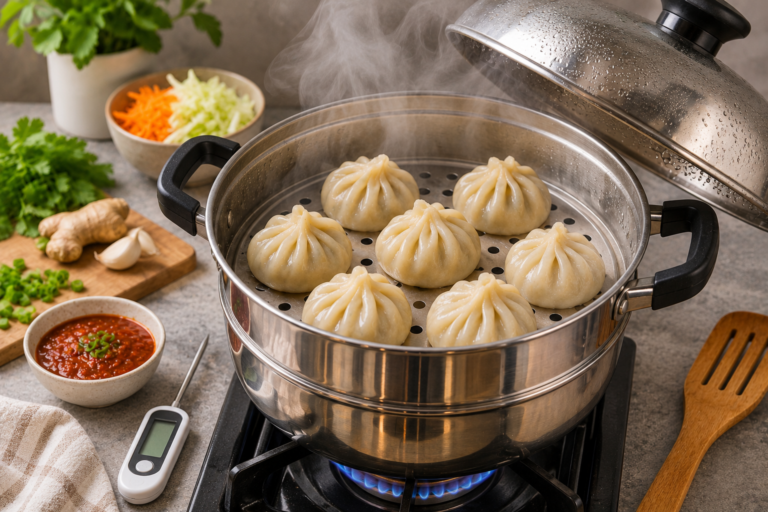
Take one carefully prepared cabbage-carrot mixture and divide it into two. Season one portion raw. Briefly sauté the other, cool it under safe conditions and adjust seasonings without creating a different flavour entirely. Shape six similar momos from each portion. Steam under the same safe procedure and compare wrapper integrity, filling texture and liquid release.
Write down what you observe: did raw filling stay crisp? Did the sautéed mixture become too dry? This test helps you choose your preferred culinary outcome, not establish food microbiology.
Don’t overlook cooling and refrigeration
Cooked filling that sits for hours in a warm bowl may become unsafe before it ever reaches a steamer. Divide warm prepared ingredients into suitable shallow portions and refrigerate promptly if not using them immediately. USDA and CDC guidance recommends keeping perishables out of room-temperature conditions for more than two hours, or one hour above approximately 32°C/90°F.
A hot-filled momo should not be used as a workaround for unsafe cooling. Follow hygienic handling and fully cook the finished food.
What if the filling includes paneer or tofu?
Both may be perishable and require chilled storage. Paneer contains milk; tofu contains soy. A raw vegetable filling mixed with dairy is not automatically safer or more shelf-stable than a briefly cooked vegetable mixture. Keep separate utensils for allergens and communicate ingredients to diners.
See Momo Delights’ allergen information for brand-level guidance on ingredient considerations.
For more ways to prepare and enjoy momos, explore Winter Momo Dinner: Soup, Dumplings and Vegetable Sides and Sharing Momos for Two: Choose Fillings, Textures and Heat Levels. Check ingredients and allergens before preparing food for others.
Frequently asked questions
Does raw vegetable filling taste better?
It can taste fresher; preference depends on vegetables, cut size and seasoning.
Will pre-cooking reduce steaming time?
It may change the heat needed for the filling, but the dough still needs thorough cooking; do not invent a shorter safe time.
Can I prepare cooked filling the day before?
With prompt chilling and hygienic handling, it may be practical; check its condition and liquid before wrapping.

Leave a comment