

Aa Reading preferences
Why did one batch of momos cook perfectly while the next needed longer? Often the timer is not the problem. A larger filling, a thicker centre of dough, a crowded tray or starting from frozen can all change how heat reaches the middle.
There is no single steaming time that reliably covers every momo. The useful method is to treat an appropriate recipe or manufacturer instruction as your starting point, then verify that the actual product is fully cooked.
Five variables that change cooking time
- Diameter and filling mass. A large piece has a longer path for heat to reach its centre.
- Wrapper thickness. A thick centre takes longer to set and may feel doughy even when the exterior looks translucent.
- Filling ingredients. Raw poultry, meat, raw vegetables and already-cooked fillings have different safety considerations.
- Starting temperature. A frozen dumpling generally needs more heating than a freshly assembled dumpling of the same size.
- Steamer capacity. Crowding and restricted steam circulation produce uneven results.
What an online time estimate can tell you
A home recipe may suggest 10–15 minutes for small, freshly made vegetable momos. That can help you decide when to begin checking, but it is not a validated time for all fillings or appliances. If you change the wrapper, increase the filling size or use frozen products, restart the test rather than relying on the old number.
Commercial frozen packs should be prepared according to their actual label, including any time, equipment, core-temperature or thawing requirements.
How to check doneness
Inspect a representative piece from the centre of the tray, where cooking may be less even. The wrapper should be fully set and the filling properly cooked. Visual checks are useful for texture but not enough for high-risk fillings. The CDC recommends a food thermometer for meat and poultry, including 74°C/165°F for poultry; the actual minimum depends on the ingredient.
If reheating properly stored cooked leftovers, US guidance lists 74°C/165°F. Do not use a browning or translucency test as a substitute for an appropriate temperature check.
Run a safe three-piece test batch
When developing a vegetarian home recipe, choose three roughly equal momos, space them in the same steamer and begin timing when steady steam is established. Check one at the recipe’s suggested time, noting wrapper feel, centre doneness and the appearance of the filling. Continue cooking and check the others as needed. Record the size and timing so the next batch is easier to reproduce.
For raw animal fillings or commercial production, use a validated cooking procedure and applicable core-temperature standards rather than treating this sensory experiment as proof of safety.
A cook’s observation log
| Variable | Record |
|---|---|
| Piece size | Approximate weight or diameter |
| Wrapper | Flour, thickness and sealing style |
| Filling | Vegetarian/raw/cooked; major ingredients |
| Starting state | Fresh, chilled or frozen |
| Appliance | Steamer model and layer arrangement |
| Result | Centre check and quality observations |
Steam evenly without overcooking
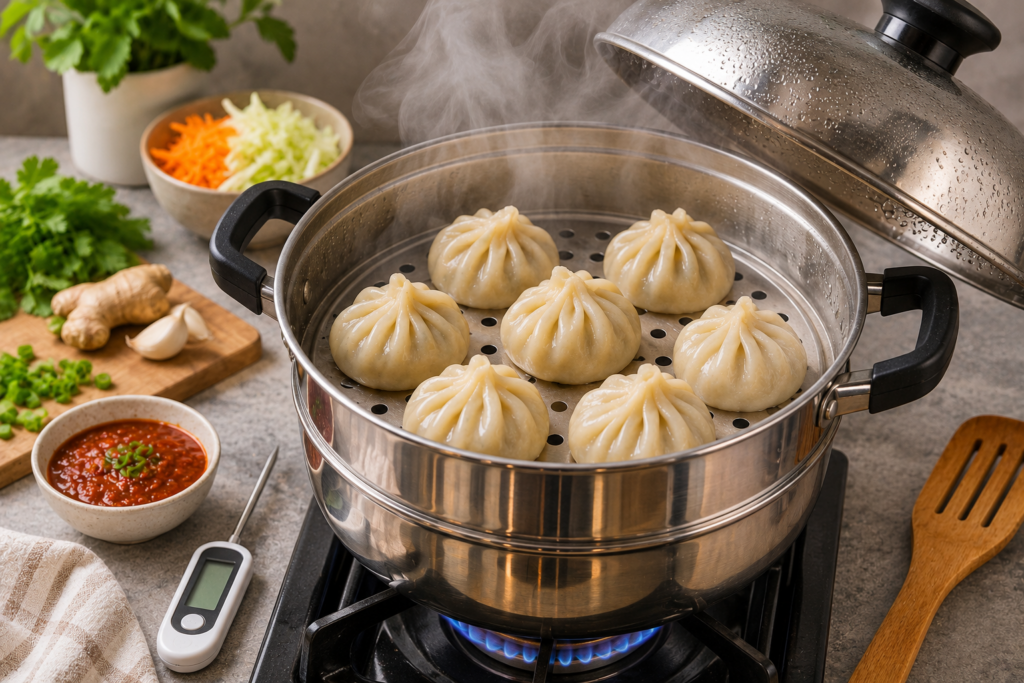
Allow gaps between momos. Keep water below the food platform, maintain steady steam and avoid lifting the lid every minute. Do not allow the pot to boil dry. If some pieces are larger, group similar sizes into the same round or expect to check them separately. Once cooked, serve promptly rather than holding them under vigorous steam until the wrappers lose their texture.
Where the recipe and packaging take priority
A ready-to-cook pack may include an intended cooking method, specific time range or handling instructions. These override general blog advice. If the pack is damaged or product temperature history is uncertain, cooking for longer is not necessarily a solution.
For common seam failures, see Momo Delights’ wrapper guide; for procurement and frozen delivery safety, see the restaurant receiving checklist.
For related momo preparation ideas, explore Paneer Spring Rolls Explained: Filling, Crunch and Dipping Sauces and Momos vs Wontons: Wrappers, Soup and Cooking Styles. Confirm ingredients and dietary suitability when serving others.
Frequently asked questions
Are larger momos always slower?
Often, because their centre takes longer to heat, but exact timing depends on thickness and filling.
Can I judge a poultry momo by the wrapper?
No. Check an appropriate internal temperature.
Do frozen momos need thawing first?
Only if the package instructions require it; many are designed to cook directly from frozen.

Leave a comment