
Aa Reading preferences
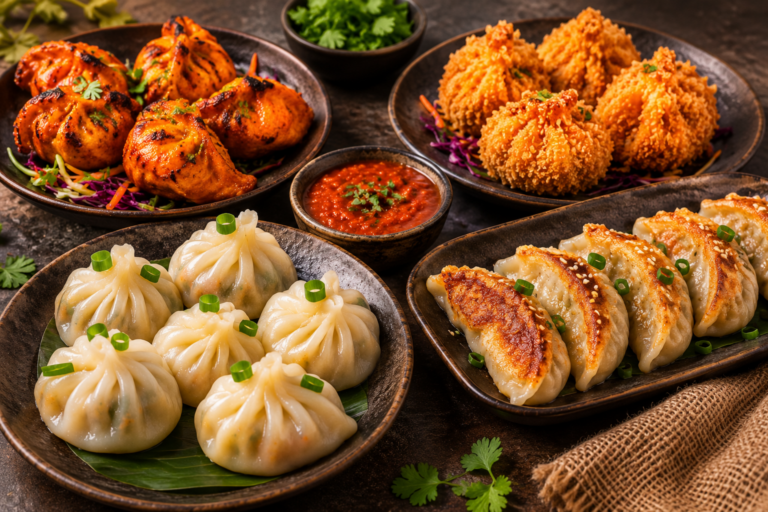
That simple definition hides a wonderful variety. A steamed momo is soft and tender; a pan-seared kothey has a contrasting crisp bottom; a modern tandoori momo brings the flavour of an Indian-style roasted spice coating. This guide explains the essential parts of a momo, where the dish fits into Himalayan food culture, how varieties differ, and how to choose a plate you will enjoy.
New to the menu? Browse the Momo Delights food menu to see examples of steamed, kothey, fried and tandoori-style offerings. Items and availability can differ between outlets.
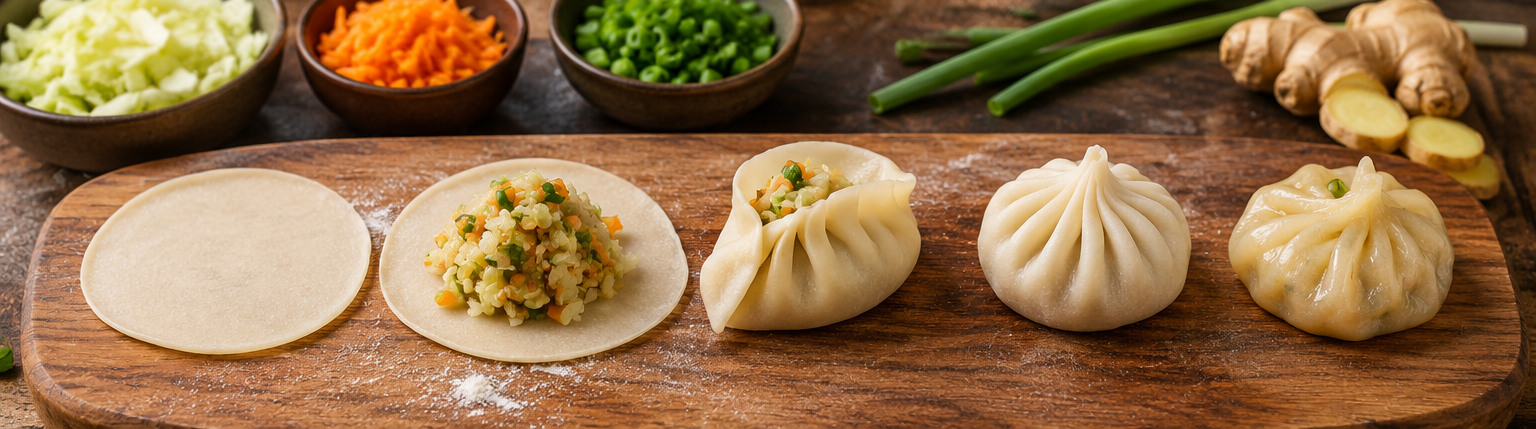
What exactly makes a momo a momo?
A momo is a member of the wider dumpling family, but the word refers to a recognisable set of Himalayan culinary traditions rather than every food wrapped in dough. Most familiar examples share three elements: a thin wrapper, a seasoned filling and a carefully sealed edge. The dumpling can then be steamed, pan-fried or prepared in other styles.
1. The wrapper
For many classic momos, cooks knead wheat flour with water into a pliable dough, rest it, and roll it into small discs. A wrapper must be flexible enough to fold without cracking and sturdy enough to hold its filling during cooking. Some contemporary menus use whole wheat, millet-based blends or coloured dough. Those changes affect texture and handling; they should not be treated as proof that a given dish is healthier without actual ingredient and nutrition information.
2. The filling
Depending on the cook and region, fillings can include chopped vegetables, minced meat, paneer, aromatics such as onion, ginger and garlic, and a measured mix of seasonings. The goal is a filling that stays pleasingly moist but does not make the wrapper soggy. There is no single universal momo filling: household, community and restaurant recipes differ substantially.
3. The fold and seal
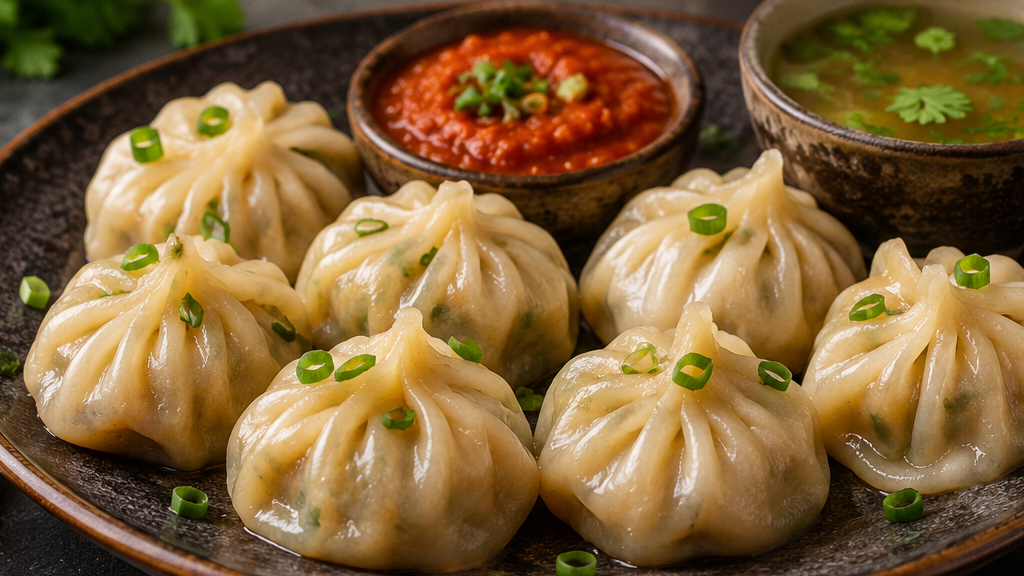
Momos may be gathered into a round pouch, folded into a crescent or pleated into other shapes. Pleating is both practical—it seals in the filling—and visual. What matters most is a secure seam and even cooking, not whether every fold looks identical.
For a more specialised discussion of traditional styles and wrapper texture, see what makes Tibetan and Himalayan-style momos different.
Where did momos come from? The history is shared, not settled
Momos are strongly connected with communities in Nepal, the Tibetan cultural region and the Eastern Himalayas. Explanations of the dish’s spread often point to historical movement along trade routes, especially links between the Kathmandu Valley and Tibet, followed by migration, household cooking and food businesses. There is no securely established single origin story that deserves to be presented as settled fact.
A 2026 Smithsonian history of momo describes the uncertainty around its origins while tracing the importance of Tibetan trade connections and the development of Nepali momo culture. Reporting in The Indian Express likewise explores the roles of Himalayan communities, Tibetan migration and Nepali/Gorkha vendors in the dumpling’s wider popularity in India.
One reliable way to understand momo is therefore to listen to the communities that make it. In Nepal, momo is an everyday favourite with many local expressions, including versions accompanied by achaar (a condiment) or a spiced sauce or broth. In Sikkim, the state tourism authority describes momos as hot steamed dumplings filled with meat or vegetables, served with chilli sauce. In Darjeeling and neighbouring Himalayan areas, momos are also entwined with local restaurant culture and memories of home.
The Sikkim Tourism cuisine guide and the Nepal Tourism Board’s heritage-cuisine recipe collection document familiar dough, filling and steaming techniques, while demonstrating that seasonings and accompaniments vary.
For deeper regional reading, explore our separate articles about Sikkim momos and food traditions, Darjeeling momos, and Tibetan, Nepalese and Himalayan cuisine. Those articles go beyond this introductory overview.
How are momos made? Five stages from dough to plate
A traditional steamed momo is usually made through the following workflow. Details—including cooking time, filling size and whether a filling is partially cooked first—depend on the recipe.
- Make and rest the dough. Mix flour and water, knead until workable, then allow the dough to rest so it can be rolled without tearing.
- Prepare the filling. Chop or mince the chosen ingredients; season for a balanced flavour and manage moisture so the wrapper does not become soggy.
- Roll the wrappers. Form small rounds that are thin enough to eat comfortably but not so thin that they split when filled.
- Fill, fold and seal. Place filling in the centre, draw the edges together and pinch the seam securely. Avoid overstuffing.
- Cook thoroughly and serve. Steam in a properly heated steamer until the dough and centre are safely cooked; serve with a suitable sauce or broth.
There is no safe universal steam time for every momo. Size, wrapper thickness, filling, starting temperature and equipment all matter. The Nepal Tourism Board recipe describes approximately 10–15 minutes for its example, while Sikkim Tourism’s published recipe describes 15–20 minutes. These are recipe-specific examples, not a guarantee that a particular frozen or meat-filled momo will be fully cooked. Always follow the product’s instructions and verify thorough cooking. For businesses, validated procedures and appropriate temperature controls are essential.
For food-handling background, consult the Food Safety and Standards Authority of India’s hygiene requirements.
Types of momos: a comparison of popular styles
The names you see on menus describe different things. Some indicate the cooking method; others describe a filling or a sauce and flavour treatment. Here is a practical guide.
| Style | What it usually means | Texture and serving experience |
|---|---|---|
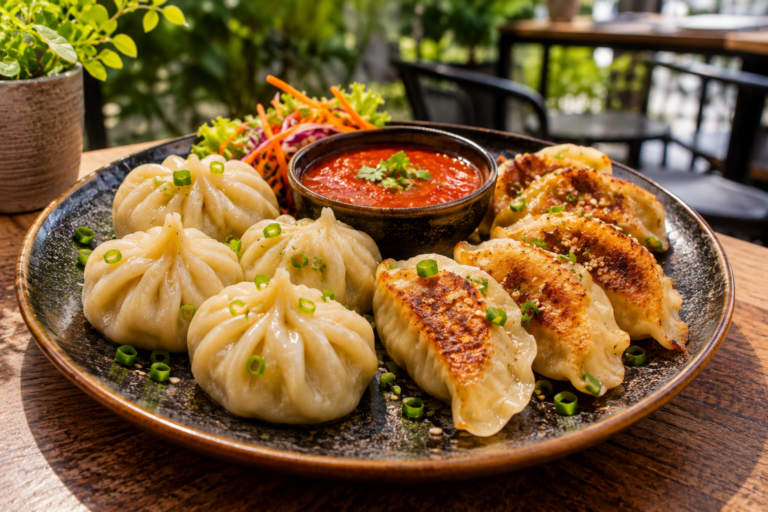
| Steamed momo | A sealed dumpling cooked using steam | Soft wrapper; filling stays central to the flavour |
| Fried momo | Steamed or otherwise prepared momo finished by frying, depending on recipe | Firmer or crisp exterior |
| Kothey momo | A pan-seared style, commonly with a browned surface | Contrast between crisp bottom and tender upper wrapper |
| Tandoori momo | A contemporary restaurant adaptation seasoned and finished in a tandoori-inspired style | Roasted or charred notes, spice coating and fuller seasoning |
| Kurkure momo | A coated, crisp-finished restaurant style | Pronounced crunch around the dumpling |
| Jhol momo | Momos served in an aromatic sauce or soup, associated especially with Nepali preparations | Saucy, spoon-friendly and warming |
None of these styles is inherently the ‘best’. A person who enjoys delicate dough and filling flavours may prefer steamed momos; someone seeking crunch might prefer kurkure or kothey. Sauce levels and specific preparations differ from restaurant to restaurant.
Momo Delights’ current menu lists examples such as Classic Veg Momo, Paneer Momo, Whole Wheat Veg Momo, Veg Kothey Momo, Veg Fried Momo, Veg Kurkure Momo, Classic Masala Momo, Afghani Momo and Malai Momo. These are examples of menu choices, not a claim that they are traditional varieties in every Himalayan community.
Are momos always vegetarian? Do they always contain maida?
No on both counts. Traditional and contemporary momos may contain meat, vegetables, cheese or paneer, and recipes vary by locality and dietary custom. Common classic wrappers are often made from refined wheat flour, but whole-wheat and alternative-grain preparations also exist. Do not assume a wrapper is gluten-free merely because it is darker, green or labelled ‘millet’: blends and shared preparation equipment can introduce wheat.
A food’s nutrition depends on the recipe and portion, including the wrapper, filling, cooking fat and accompanying sauce. Steaming uses less or no added frying oil during the final cooking step, but this alone is not enough to claim that every steamed momo is low-calorie, high-protein or suitable for a particular medical diet. For specific concerns, read actual ingredient and nutrition information.
Momos vs dumplings, gyoza, wontons and dim sum
All momos are dumplings, but not all dumplings are momos. ‘Dumpling’ is a broad description for many different foods across cuisines. A momo is a specific family within that broader category.
- Gyoza: Japanese dumplings often associated with pan-frying and a crisp underside; they have their own wrappers, fillings and seasoning traditions.
- Wonton: A Chinese dumpling form frequently served in soup or fried, with distinct wrapping styles.
- Dim sum: Not one type of dumpling; it refers to a broad Cantonese small-plate dining tradition that can include various dumplings and many non-dumpling dishes.
- Baozi: A filled steamed bun, usually based on a softer, leavened dough, rather than a standard thin-skinned momo.
These comparisons help with menu literacy, but they should not flatten distinct cultures into interchangeable labels. We explore the question further in momos vs dumplings: what’s the difference?.
How to choose momos if you are ordering for the first time
Start with your preferred texture, then consider the filling and heat level. Here is a simple decision guide:
- Want to taste the filling clearly? Begin with steamed Classic Veg or Paneer Momos.
- Prefer a crisp contrast? Try a kothey preparation.
- Looking for crunch? A kurkure-style plate may be appealing.
- Enjoy spice-led, richer restaurant flavours? Explore tandoori, masala, Afghani or malai variations and ask about their actual ingredients.
- Ordering for several people? A sampler or mixed selection can help everyone compare styles, subject to outlet availability.
Heat levels are not standardised across kitchens. Ask for chutney separately if you prefer to control the spice. If you’re dining with someone who has an allergy, check the Momo Delights allergen information page and confirm details directly with the team before placing an order.
What do you eat with momos?
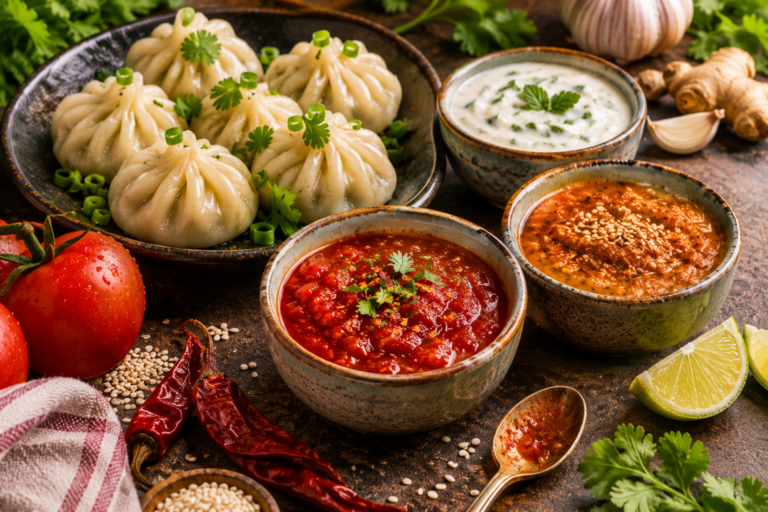
Momos are often served with achaar, tomato-chilli chutney or a broth, although accompaniments vary by region and cook. The purpose is not merely to make every bite fiery. An acidic or spicy dip can contrast with a mild filling, while soup complements a plate of steamed dumplings. At restaurants, the dish may also be paired with noodles or thukpa for a larger meal.
The Gangtok district government lists momo, tomato achar and thukpa among noteworthy regional foods. This reflects how several different preparations can be part of the same wider culinary context—not a universal fixed meal combination. See the Gangtok district cuisine notes.
Momo ingredients, food safety and sensible expectations
Because momos are filled parcels, safe handling matters for both wrappers and fillings. Food businesses must control hazards throughout preparation, cooking, holding and service. FSSAI’s published guidance emphasises good hygiene practices, ingredient handling, temperature controls and separation of raw and ready-to-eat items.
- Use clean water, washed ingredients, clean utensils and appropriate hand hygiene.
- Keep raw ingredients and cooked foods separate and manage cross-contact risks.
- Cook the centre thoroughly; the outside looking cooked is not sufficient proof for every filling.
- Follow specific product instructions for ready-to-cook products, including any refrigeration or frozen storage requirements.
- Ask about ingredients and allergens rather than relying on the name or colour of a momo.
These are general principles, not a claim about an unobserved kitchen or a food-safety certification. Momo Delights has further information on its ingredient sourcing and quality assurance and traceability pages; specific assertions there should be assessed against the business’s own documented practices.
How Momo Delights approaches the category
Momo Delights presents a menu of Himalayan-inspired and contemporary momo styles, from steamed classics to crisp and tandoori-influenced variations. The aim of this guide is to help readers recognise flavours and preparations—not to claim that every listed menu item is historical or belongs to one specific community’s traditional recipe.
For customers, explore the current food menu and find a Momo Delights location. For restaurant owners looking to add dumplings to their menu, the HoReCa and B2B supply page describes the company’s separate foodservice proposition.
Frequently asked questions about momos
What are momos made of?
Typically, a dough wrapper—often wheat-based—surrounds a seasoned filling of vegetables, meat, paneer or other ingredients. Exact ingredients vary widely by recipe.
Are momos Nepali or Tibetan?
Momo is deeply established in both Nepali and Tibetan food cultures and in other Himalayan communities. Its precise earliest origin is debated, so presenting one unqualified national origin would overstate the evidence.
Are momos the same as dim sum?
No. A momo is a specific kind of dumpling. Dim sum refers to a wider Cantonese dining tradition, which may include several kinds of dumplings alongside many other small dishes.
Do momos have to be steamed?
Steaming is a classic method, but momos can also be pan-seared, fried or served in sauce or broth. Some restaurant styles combine several cooking steps.
What is the difference between a steamed momo and a kothey momo?
Steamed momos have a generally soft surface. Kothey momos are typically pan-seared, producing a browned, crisp contact side and a different texture.
Are momos spicy?
Not necessarily. The filling may be mild or seasoned, while the accompanying chutney can be quite hot. Restaurant styles such as Schezwan or peri peri may be more spice-forward.
Are steamed momos healthier than fried momos?
Steaming generally avoids the additional oil used in frying, but nutritional comparisons require actual recipes, serving sizes, sauces and ingredient data. Neither preparation guarantees a specific health outcome.
How long should momos be steamed?
There is no single cooking time for all sizes, equipment, fillings and starting temperatures. Follow a tested recipe or the product package directions and ensure the centre is thoroughly cooked.
Key takeaways
- Momos are a distinctive Himalayan dumpling tradition with regional variations and a history that should be described carefully.
- Wrapper, filling and folding shape the eating experience; the final cooking method changes the texture.
- Steamed, kothey, fried, tandoori and kurkure describe different cooking or restaurant styles, not one uniform traditional recipe.
- Dietary and safety claims need actual ingredient, allergen and cooking information.
Ready to discover your favourite style? Explore the Momo Delights menu or find an outlet.
Research and editorial sources
- Sikkim Tourism — Cuisine: Momo. Government tourism reference for preparation and regional food context.
- Nepal Tourism Board — Heritage Cuisine Recipe Book. A documented momo recipe and service variants.
- Smithsonian Magazine (24 March 2026) — A History of Momo. Reporting on tradition, uncertainty and historical movement.
- The Indian Express — The people selling momos in India. Historical reporting and community perspectives.
- Gangtok District, Government of Sikkim — People and Recipes. Regional food references.
- FSSAI — Hygiene Requirements. General food-business handling and hygiene framework.
Editorial note: Sources checked on 1 November 2026. This is general educational content, not medical or dietary advice. The preparation image and featured illustration are AI-generated conceptual editorial visuals, not photographs documenting specific Momo Delights dishes or production.