
Aa Reading preferences
This guide is for people who want to understand momo chutney ingredients, styles, spice levels, pairings and safe handling. It distinguishes documented regional food traditions from contemporary restaurant ideas. The recipes and flavour combinations discussed are educational examples—not undisclosed formulas or claims about the exact sauce recipe used by Momo Delights.
What is momo chutney? Is it the same as achar?
In much of India, “momo chutney” commonly means the punchy red dip served beside a plate of dumplings. In Nepal, achar is a broad term for pickles and condiments, including preparations served with momo; some examples are tomato-based, while others use sesame, timur, mustard oil or different regional ingredients. Calling every momo sauce “authentic Tibetan red chutney” oversimplifies the differences between cuisines and households.
A home-style sesame-and-tomato momo achar is documented in Nepali recipe sources, including a Nepali Taste recipe featuring roasted tomato, sesame, garlic, ginger, chilli and optional timur. A separate account in TastyNepal likewise describes toasted sesame as a source of the sauce’s nutty body. These examples demonstrate a family of approaches, not a mandatory recipe.
Momos themselves are associated with the food traditions of Nepal, Tibet, Sikkim, Darjeeling and neighbouring Himalayan communities. For context, read the published Momo Delights explorations of Tibetan, Nepalese and Himalayan food differences and Sikkim momo traditions.
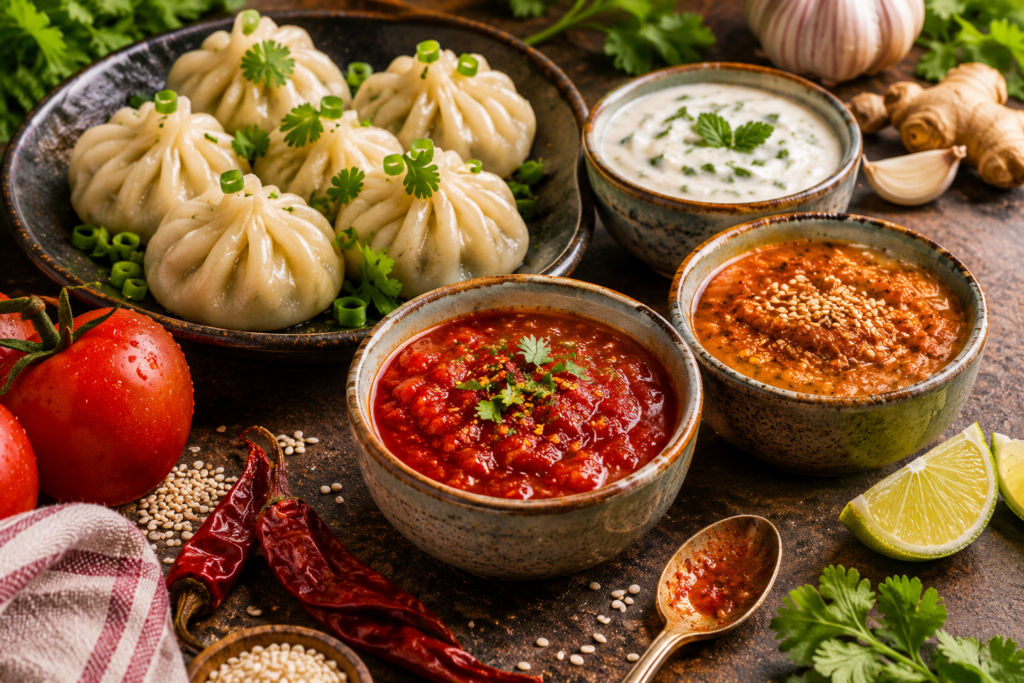
Six momo sauce styles—and what makes them different
| Sauce style | Typical flavour direction | What to pair it with | Watch for |
|---|---|---|---|
| Tomato–chilli chutney | Acidic, hot, sometimes garlicky | Classic steamed vegetable momos | Chilli heat may vary widely |
| Sesame–tomato achar | Nutty, tart and aromatic | Steamed or kothey momos | Sesame allergy; possible nuts in variants |
| Timur-seasoned achar | Citrusy, aromatic, tingling alongside chilli | Simple, filling-forward momos | Ingredient varies by region and recipe |
| Garlic–chilli dip | Direct garlic and chilli impact | Fried or crisp-coated momos | Can dominate delicate fillings |
| Creamy herb/yoghurt dip | Cooling, rich and herbal | Tandoori or heavily spiced momos | Often contains milk; cold holding needed |
| Jhol-style sauce | Pourable, spiced and soupy | Momos served in a bowl | Not simply a side dip; may include sesame |
The table is a tasting framework, not a statement that Momo Delights stocks all six types. Sauce ingredients, portion size and availability must be verified with the relevant kitchen.
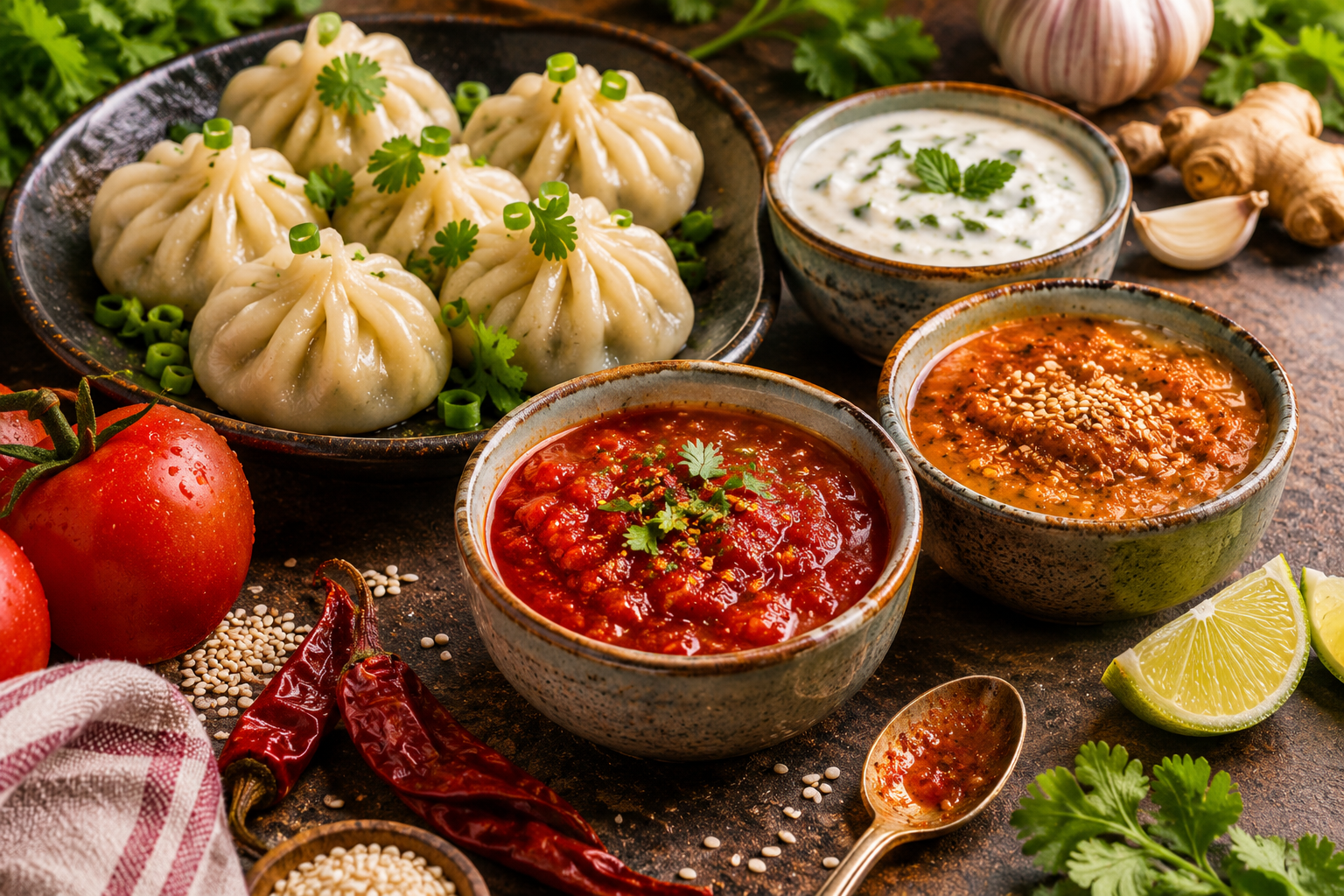
The five elements behind a balanced momo sauce
1. Heat: use chilli deliberately
Fresh chilli, dried chilli and chilli paste can produce different flavours and levels of heat. A useful sauce should be tasted with the dumpling—not only on a spoon—because the filling and wrapper soften the heat perception. “Mild,” “medium” and “hot” are not standard numerical categories; a restaurant should never assume every diner experiences spice the same way.
2. Acidity: tomato, lemon and lime
Tomato gives many chutneys a tart backbone; lime or lemon can contribute another layer. Acidic flavour can cut through a rich filling, but a tangy taste is not proof a homemade sauce is microbiologically safe or shelf-stable. Food-safety claims depend on the process, pH testing where appropriate, packing and storage conditions.
3. Body: sesame and other thickening ingredients
Ground toasted sesame can transform watery tomato into a coating sauce. The sesame contributes texture and nutty flavour and is a meaningful ingredient to disclose. Some modern recipes use other nuts or seeds, so a diner with allergies needs an actual ingredient confirmation rather than assuming every red dip is sesame-free.
4. Aroma: ginger, garlic, herbs and timur
Garlic, ginger and fresh coriander are familiar partners, while timur—an aromatic spice associated with Himalayan cooking—can introduce a distinct tingling quality. Not every momo achar uses timur. The choice of spices is a culinary decision, not a test of whether the dish is “real” or “fake.”
5. Texture and temperature
Smooth puree, textured relish and broth-like jhol deliver different experiences. A chunky dip clings differently from a pourable sauce. Pairing depends on the eating occasion: if preserving a fried or kurkure crust is important, place a wet sauce on the side until serving.
An illustrative home-style tomato–sesame momo achar
The following is a small-batch home-kitchen interpretation of the tomato–sesame style documented in the sources above, not a tested proprietary Momo Delights formula. Ingredient ratios are a suggested cooking experiment: adjust to your preferences and always handle perishable sauces safely.
| Ingredient | Starting quantity | Role |
|---|---|---|
| Medium ripe tomatoes | 3 | Acidity and base |
| Sesame seeds | 2 tablespoons | Nutty body |
| Garlic cloves | 2 | Sharp aroma |
| Fresh ginger | 1 small piece | Warm aroma |
| Chilli | To taste | Heat |
| Fresh coriander, lemon and salt | To taste | Finish and balance |
| Optional timur | A very small pinch | Distinct aromatic note |
- Wash tomatoes and herbs in clean water. Cook or roast the tomatoes until softened; cool safely for blending.
- Toast sesame carefully in a dry pan until fragrant without burning. Keep sesame separate if serving anyone with that allergy.
- Blend the tomatoes, sesame, garlic, ginger and a modest amount of chilli until the preferred texture develops.
- Season gradually with salt, lemon and herbs; taste alongside a fully cooked momo. Add a little potable water only if needed for the texture.
- Serve promptly in a clean bowl. Refrigerate perishable leftovers promptly; do not invent a long shelf life for this unvalidated household recipe.
Unlike a commercially manufactured, validated sauce, this homemade example has not undergone microbiological shelf-life testing. It is not shelf-stable simply because it contains tomato, salt or lemon.
Momo chutney pairings: what works with which dumpling?
| Momo preparation | Suggested sauce direction | Reasoning |
|---|---|---|
| Classic veg steamed momo | Tomato–chilli or mild sesame–tomato | Bright contrast without masking the filling |
| Paneer momo | Acidic red chutney or herb-led sauce | Balances a rich dairy filling |
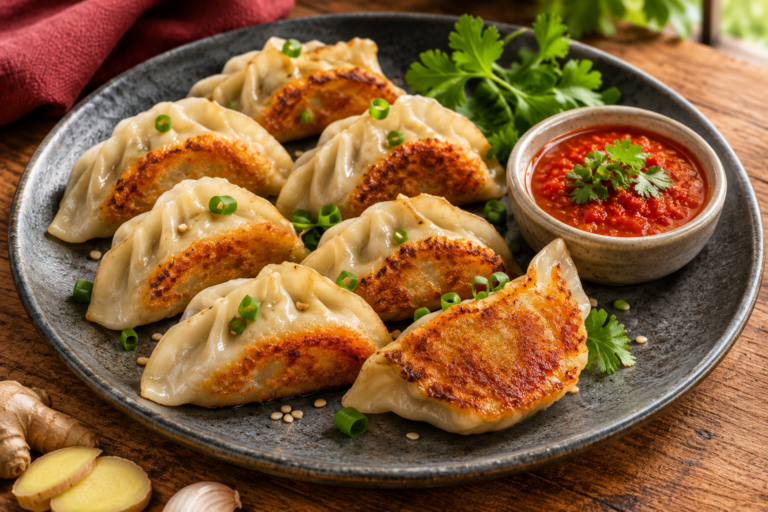
| Kothey momo | A textured achar on the side | Retains the pan-seared surface |
| Kurkure momo | Dip served separately | Protects the crunchy outer coating |
| Tandoori momo | Cooling creamy dip or tangy chutney | Offers contrast to spice and roast flavours |
| Jhol momo | A broth-like sauce is integral | Creates a different spoonable dish |
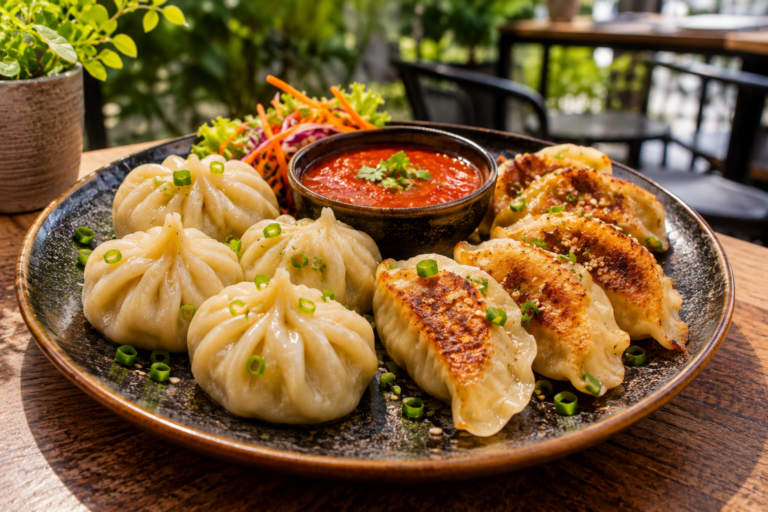
For examples of the actual menu categories—including steamed, fried, kothey and tandoori momos—open the Momo Delights menu. Product ingredients and sauces may vary by outlet; ask before ordering for allergy-related reasons. Further culinary reading: what makes Himalayan-style momos different and Darjeeling momo traditions.
How to store momo chutney safely
Home-made, water-based chutneys can be perishable, especially when they include fresh herbs, dairy or raw ingredients. The FSSAI hygiene framework covers safe water, appropriate food-handling controls and sanitation. The US government’s FoodSafety.gov guidance advises prompt refrigeration of perishable food rather than leaving it at ambient temperature for extended periods.
- Use clean ingredients, safe water, clean blending equipment and clean, food-grade containers.
- Do not put a used dipping spoon back into a communal storage jar; serve in smaller portions.
- Refrigerate perishable sauces promptly and follow a verified storage period, especially for dairy-containing sauces.
- Never claim that colour, aroma, visible spice or acid alone proves food safety.
- For commercial bottling, a recipe needs a validated process, labelling, shelf-life and temperature controls relevant to the product.
Allergen checks: sesame, peanuts or tree nuts may appear in different achar variants; creamy dips may contain milk. The Momo Delights allergen information page is useful background, but customers should confirm the actual sauce formulation.
What restaurants should ask when buying momo sauces in bulk
A B2B buyer should look beyond “spicy” or “tasty.” Request an actual specification covering ingredients, allergens, suitable storage temperature, pack format, unopened and opened shelf life, batch identification, serving cost, minimum order quantity and instructions for safe use. Ask whether flavour consistency is assessed across batches and how changes in formulation are communicated.
A practical sauce trial tests the sauce with the kitchen’s cooked momo, after the same holding and service process that a customer will experience. Check taste at first serving and again after a realistic pickup/delivery interval. Record feedback so purchasing is not based on one informal tasting.
Momo Delights has a separate HoReCa/B2B supply information page for restaurant and foodservice enquiries. Buyers can also review quality assurance and traceability information and discuss the actual sauce specifications with the team rather than assuming a consumer chutney matches a wholesale formulation.
Frequently asked questions about momo chutney
What is momo chutney usually made of?
Many versions contain tomato, chilli, garlic and salt. Some Nepali-style achar variations add toasted sesame, ginger or timur. The exact ingredients depend on the household or restaurant.
Is Nepali momo achar always the red spicy sauce?
No. Achar is a wider family of condiments, and sauces served with momo differ in colour, texture, seasoning and chilli level.
What is timur in momo sauce?
Timur is an aromatic Himalayan spice used in some preparations; its citrusy, tingling character is different from chilli heat.
Which sauce pairs best with tandoori momos?
A tangy chutney or a cooling herb-based dip can both work. Ingredients and dietary needs matter more than a universal “best” choice.
How can I make chutney less spicy?
Reduce chilli at preparation, increase the non-spicy base in an appropriate recipe and taste with a cooked dumpling. Do not rely on a very hot sauce being neutralised by a large quantity of added water.
Is momo chutney gluten-free or vegan?
Some recipes can be, but not all. Dairy-based dips are not vegan; packaged sauces can contain additional ingredients or be subject to cross-contact. Read the full ingredient and allergen information.
How long does homemade chutney last in the refrigerator?
There is no universally safe period for every raw, cooked, dairy or seed-based chutney. Store promptly and use a trusted recipe’s validated guidance; when uncertain, make a smaller batch for immediate use.
Can restaurants use the same sauce for takeaway and dine-in?
Potentially, but they should validate the sauce, packaging, delivery conditions, temperature and shelf-life requirements for each service method.
Research sources and editorial note
- Nepali Taste — Momo achar: a documented home-style tomato–sesame preparation.
- TastyNepal — Momo ko achar: flavour and technique context.
- FSSAI — Hygiene Requirements: professional food safety practices.
- FoodSafety.gov — Food and leftovers handling: perishable food refrigeration guidance.
- Momo Delights — Published food menu: current dish categories only, not proprietary chutney formulations.
Editorial review: 1 November 2026. Example preparations are educational, not Momo Delights secret recipes or certified shelf-life instructions. The featured and inline visuals are AI-generated conceptual food illustrations.