

Aa Reading preferences
A good paneer momo is tender rather than heavy. The wrapper should support the filling, not overwhelm it; the paneer should taste savoury and fresh without turning wet or rubbery. You can achieve that balance at home without a professional momo mould.
This original home-kitchen recipe makes approximately 18–22 small momos, depending on how thinly you roll the dough. It is not a claim about the ingredients or recipe of a Momo Delights commercial product.
Ingredients and expected yield
Wrapper
- 250 g plain wheat flour
- 125–150 ml drinking water, added gradually
- ¼ teaspoon salt, optional
- Extra flour for dusting
Paneer filling
- 180 g fresh paneer, crumbled finely
- 60 g cabbage, very finely chopped
- 40 g spring onion or onion, finely chopped
- 1 small green capsicum, finely chopped
- 1 teaspoon finely grated ginger
- 1 small garlic clove, optional
- 1 teaspoon neutral oil
- Black pepper and salt to taste
Paneer is a milk ingredient; regular wheat wrappers contain gluten. Check every seasoning and sauce for allergens if you are cooking for someone with dietary restrictions.
1. Make a pliable dough, then give it time
Mix the flour and salt, then add water slowly until a firm but flexible dough forms. Knead for five to seven minutes, until smoother. Cover the dough and let it rest for 20–30 minutes. This rest makes rolling easier because the flour absorbs moisture more evenly and the dough becomes less resistant to stretching.
Do not use every millilitre of water simply because a recipe lists it. Flour brands and room humidity vary. The right dough should not crack when lightly stretched, yet it should not stick aggressively to your fingers.
2. Prepare a filling that is savoury, not watery
Chop the vegetables finely enough that each piece fits within a small wrapper. If cabbage is very wet, squeeze out a little excess moisture. Warm the oil in a pan and soften the onion, ginger, garlic and capsicum briefly. Add cabbage and stir only until some moisture evaporates. Cool the mixture before folding in paneer and seasoning.
This light precooking step is a texture choice, not the only correct way to make paneer momos. A raw vegetable filling is also possible, but moisture control becomes more important. The finished mixture should hold together when pressed without releasing visible liquid into the bowl.
3. Roll thin rounds with a stronger centre
Divide the dough into small, similar pieces. Roll each into a round about 8–9 cm wide, keeping the central area just slightly thicker than the edge. Work with a few pieces at a time; keep the rest covered. If the rounds become stiff at the perimeter, the dough is drying out.
Uniformity matters more than perfectly circular shapes. A thick wrapper can obscure paneer flavour; an ultra-thin central patch can tear under the filling. Make a single test momo and adjust before shaping the full batch.
4. Fill, fold and seal
Put one modest teaspoon of filling in the centre. Fold into a half-moon and press the edges together, starting at the middle and working outwards. You can pleat the outer edge if comfortable, but a continuous sealed seam is what keeps the momo intact. Wipe any filling off the rim before pinching.
If the seam resists closing, use less filling. Adding more flour to the rim can make it drier and harder to seal. For an easy beginner fold, see our wrapper troubleshooting guide for related dough and seam advice.
5. Steam until the filling and wrapper are cooked
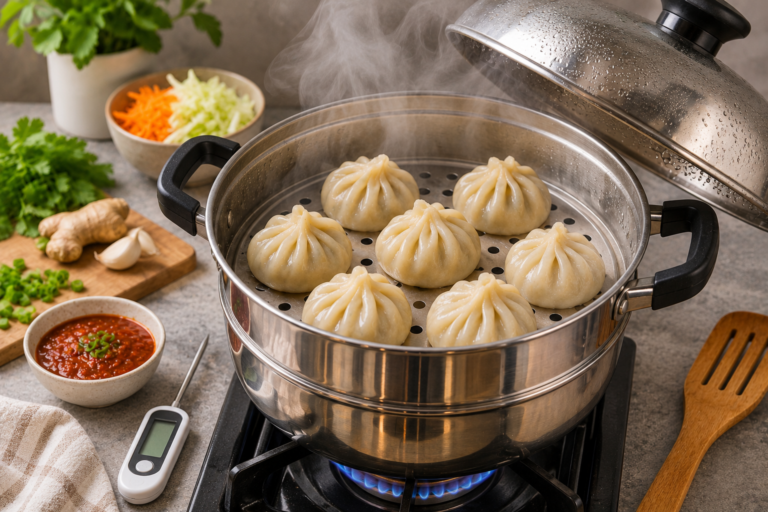
Heat water in a steamer until it produces steady steam. Lightly grease the tray or use a suitable food-safe liner; arrange the momos with small gaps. For small, freshly assembled vegetarian momos, about 10–14 minutes can be a starting estimate, not a universal safety guarantee. Wrapper thickness, dumpling size and equipment change the time required.
Check one from the centre of the batch before serving. The wrapper should be set, the filling should be thoroughly hot and no raw dough should remain. If using commercially frozen momos, follow their own package instructions rather than borrowing this fresh-recipe timing.
Serving: keep the paneer in focus
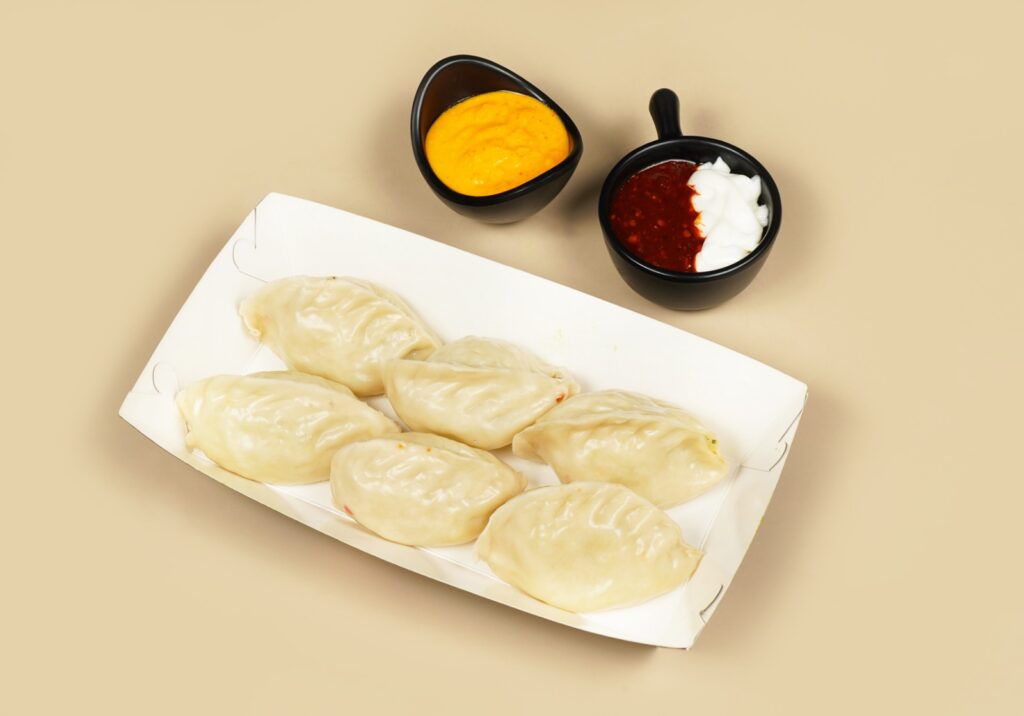
Start with a mild tomato dip or a little ginger-chilli chutney rather than drowning the plate. Paneer has a gentle dairy character, and too much sauce can hide it. A crisp cabbage salad or light vegetable broth makes a pleasant side without turning the meal into a long list of competing flavours.
For the current brand selection and actual outlet availability, visit the Momo Delights menu; this article is a home-cooking guide.
Common problems and how to rescue the next batch
- Wrappers split: the dough may be dry, too thin in the centre or overfilled. Keep unused dough covered.
- Paneer feels dry: crumble it more finely and avoid excessive pan cooking before steaming.
- Filling leaks water: drain chopped vegetables more thoroughly and cool cooked components before assembling.
- Momos stick: oil or line the steam tray and lift with a thin utensil after letting steam subside slightly.
- Different pieces finish at different times: standardise dough balls and filling portions.
Storage and FAQs
Keep raw ingredients clean and chilled when needed, and refrigerate leftover cooked momos promptly. FoodSafety.gov recommends refrigeration within two hours, or one hour in ambient heat above 32°C. Reheat refrigerated leftovers to 74°C/165°F. These are general food-safety measures; a packaged product’s label may require additional steps.
Can I use tofu instead of paneer?
Yes, but the moisture, flavour, allergen profile and texture will change. This becomes a tofu momo variation rather than a paneer recipe.
Are paneer momos vegan?
No, not with conventional dairy paneer.
Can I make the filling a day ahead?
Yes, with prompt refrigeration and hygienic handling. Recheck and drain any accumulated liquid before filling.
For more hands-on momo ideas, explore Adjusting Momo Cooking Time for Size, Filling and Wrapper and Paneer vs Tofu Momo Filling: Texture, Allergens and Cooking Choices. Always check dietary needs and ingredient labels.



Leave a comment