Aa Reading preferences
If you enjoy steamed momos but want a little crunch, kothey is an excellent style to explore. This focused guide covers what kothey means, how it differs from fully fried and steamed momos, the science of its two textures, fillings, chutneys, and what to check when ordering Veg Kothey Momo or Paneer Kothey Momo from the Momo Delights menu.
What are kothey momos, and where does the style come from?
Momos have varied culinary traditions across Nepal, Tibet, Sikkim, Darjeeling and neighbouring regions. Kothey is particularly familiar in Nepali momo menus. It is a way of preparing a filled dumpling, not a distinct category of vegetable or meat. A veg kothey and a paneer kothey can share a cooking method while having quite different fillings.
The Nepal-focused recipe collection Traditional & Contemporary Nepali Home-Cooking describes a kothey variant that is partially steamed and then finished in a covered, oiled pan until golden. Another published kothey momo recipe from Manu’s Menu starts the dumplings in an oiled pan, adds water and covers them to steam, then lets the base crisp once the water evaporates. These are different workable approaches, not evidence that one method is the only authentic method.
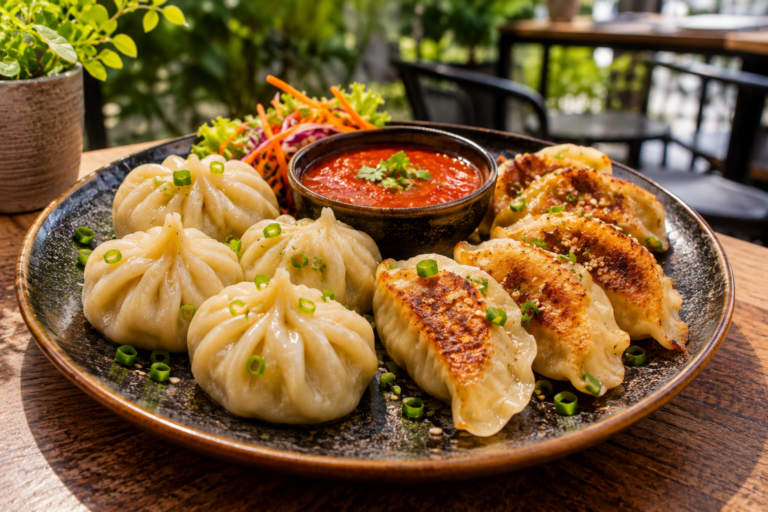
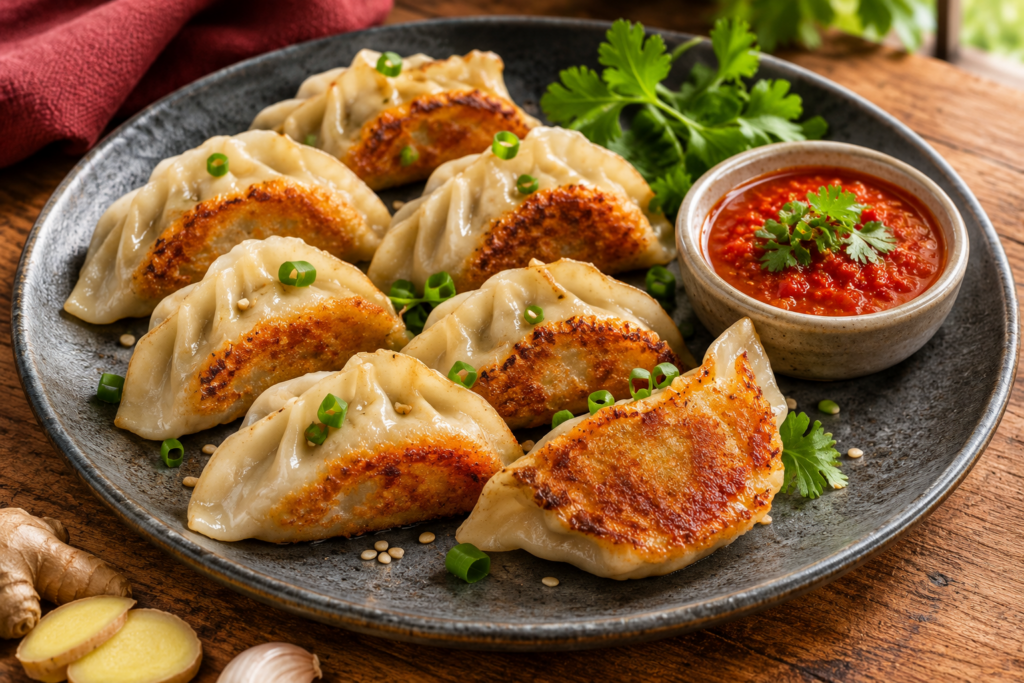
What unifies the style is its contrast: the surface touching the pan becomes browned and crisp while the pleated wrapper above remains comparatively tender. This separates it from a standard steamed momo and from a crumb-coated kurkure momo.
How are kothey momos prepared?
A typical kothey preparation starts with the same fundamentals as other momos: a workable wrapper dough, a seasoned filling and a sealed dumpling. The cooking step creates the distinctive contrast. The following is a general culinary explanation, not Momo Delights’ proprietary recipe or a validated food-safety SOP.
Method A: Steam first, then pan-sear
- Prepare and fill: Roll wrappers to even thickness, add a measured amount of filling and seal the edge.
- Steam according to a tested recipe: Ensure the dumpling and filling reach appropriate doneness. Size, raw ingredients and temperature at the start affect the process.
- Prepare the pan: Heat a suitable pan with a controlled amount of oil.
- Pan-sear the contact side: Place the momo so one broad surface contacts the pan, allowing a crisp browned area to develop.
- Serve promptly: Lift without tearing and serve with a dip on the side to preserve the contrast.
Method B: Pan-steam and crisp
Another approach begins with oil and the dumplings in a pan, adds a measured amount of water and covers the pan. The trapped steam helps cook the dumplings; as the water evaporates, the surface touching the pan can become crisp. Recipes vary in liquid quantity, heat, pan material and cooking duration. Do not copy the times from an unrelated recipe or use colour alone to decide that a raw filling is safe.
The Manu’s Menu pan-fried momo method illustrates this two-texture technique. Commercial kitchens must validate any approach for their actual wrapper, filling, equipment and batch size.
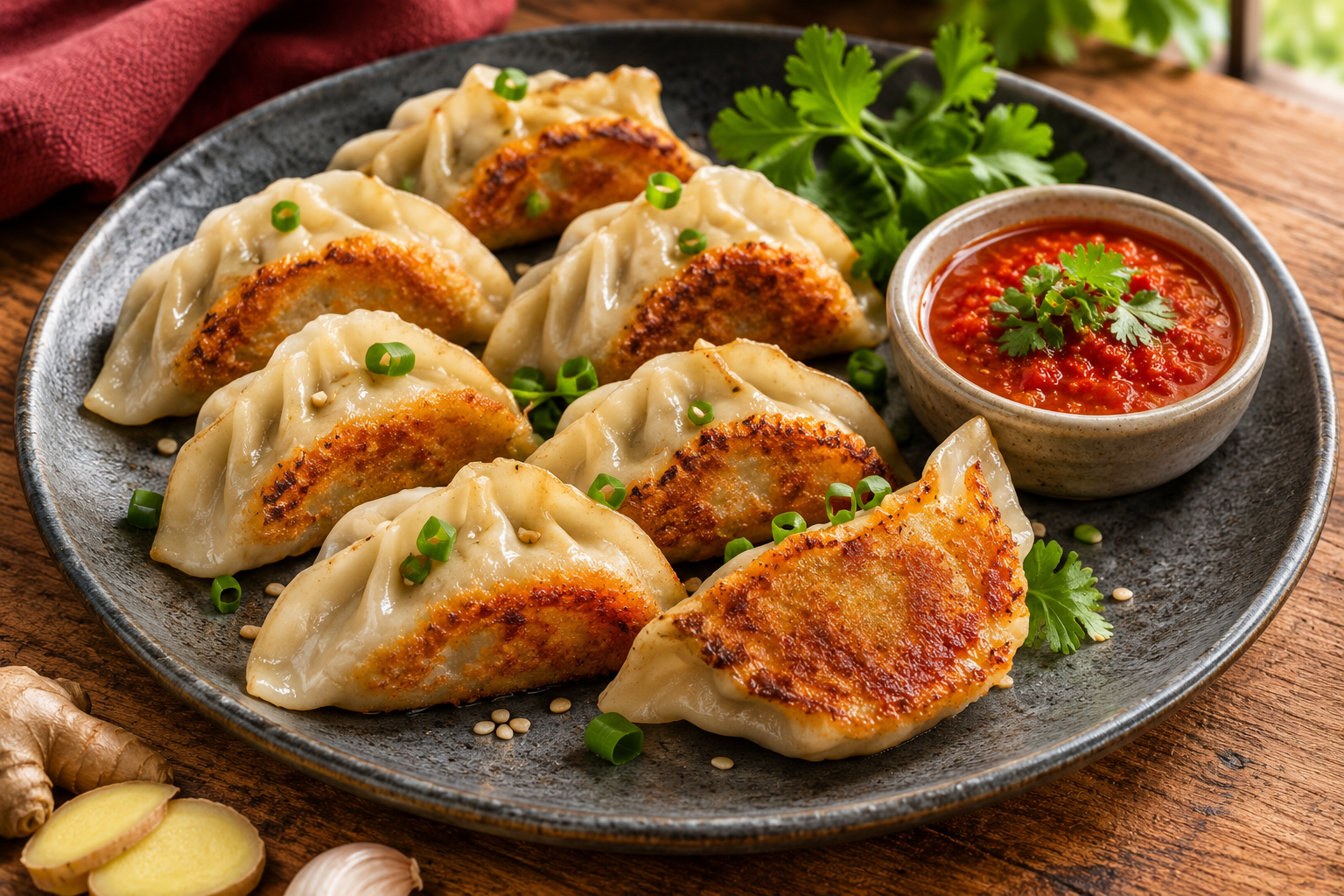
Kothey vs steamed vs fried vs kurkure momos
| Style | Defining treatment | Expected texture | Good fit if you prefer |
|---|---|---|---|
| Steamed | Steam is the main cooking method | Soft wrapper throughout | Delicate wrapper and filling-led flavours |
| Kothey | Pan-seared contact area, often combined with steaming | One crisp side; softer upper wrapper | Crunch and tenderness in one bite |
| Fried | Fried finish applied more broadly | More uniformly crisp outer surface | A fried-snack sensation |
| Kurkure | Additional crunchy coating or crumb treatment | Pronounced rough-textured crunch | Extra coating-led texture |
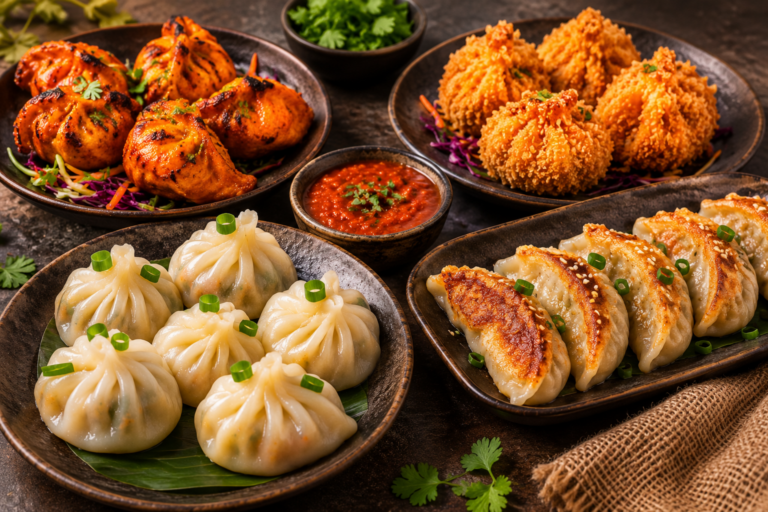
| Tandoori-style | Spiced coating and high-heat roast/grill finish | Roasted, seasoned outer layer | Bold spices and roasting notes |
These terms describe commonly recognised culinary styles, not fixed global standards. A restaurant may combine processes, and food preparation names can vary. Explore broader culinary context in our Himalayan momo differences guide and momos versus dumplings overview.
Why is a kothey momo crispy on one side and soft on the other?
The surface in direct contact with a heated pan experiences a different temperature and moisture environment from the top of the dumpling. As moisture evaporates at the contact area, browning and crisping can develop. The covered or steamed portion retains more moisture, remaining softer. This contrasting treatment—not a special kind of flour or a hidden filling—is the main sensory distinction.
Three details affect the result: the contact area between dumpling and pan, the quantity of water available to steam the rest of the dumpling, and how long the surface remains exposed to heat after excess moisture has evaporated. Wrapper thickness, filling moisture and oil choice also affect eating texture. The method has to be adapted to the actual dumpling: a thick, frozen, raw-filled product is not interchangeable with an already-cooked small vegetable momo.
What makes kothey momos soggy?
A wet dipping sauce poured over the browned area can soften the surface. Condensation inside a closed takeaway box can have the same effect. Overcrowding a pan may also change heat and moisture distribution. These are texture considerations; they do not provide a reliable test for whether the centre is safely cooked.
How can a kitchen preserve the contrast?
Use an appropriate pan and validated batch size, allow a crisp contact side to form, avoid excessive wet sauce before serving, and keep the service delay as short as practical. Restaurants should test the finished texture after their normal takeaway holding period rather than assuming immediate-service quality will persist in a closed box.
Veg kothey and paneer kothey: how the fillings change the dish
A kothey label identifies a cooking style, whereas “veg” and “paneer” identify filling directions. Vegetable fillings may combine cabbage, carrot, onion, ginger and other ingredients; paneer brings a milk-based component and a different texture. There is no universal recipe for either filling. The Momo Delights published menu lists Veg Kothey Momo and Paneer Kothey Momo, but it does not imply that every outlet always has both available.
For a fair tasting comparison, order a steamed and a kothey preparation with comparable fillings if possible. First taste them without much sauce, focusing on the wrapper and filling, then add chutney. This distinguishes cooking style from the influence of a different filling.
If you avoid dairy, paneer is not suitable. Wheat-based wrappers contain gluten, while coatings and sauces can introduce other allergens. Refer to the Momo Delights allergen information and confirm actual recipes with the outlet for medically relevant restrictions.
What chutney pairs with kothey momos?
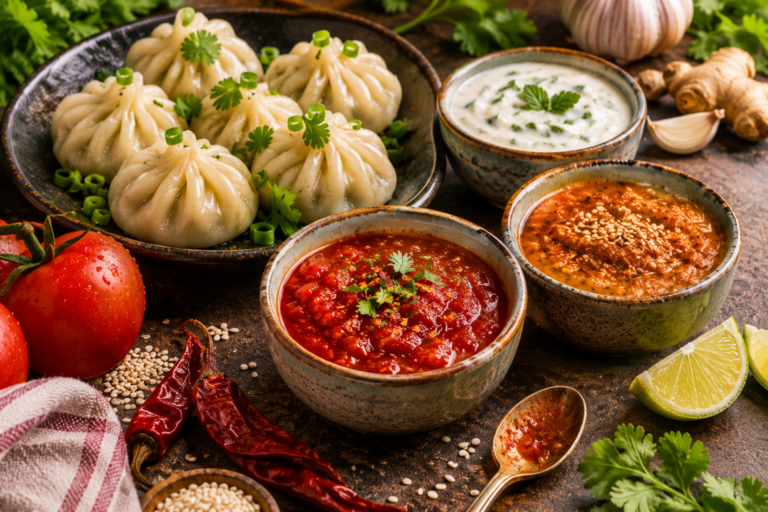
A tangy tomato–chilli chutney or a Nepali-style sesame–tomato achar can give contrast to the browned wrapper and savoury filling. There is no single compulsory sauce. The important practical detail is to serve a wet sauce alongside, rather than soaking the crisp contact area in advance, if crunch is the goal.
Different achar recipes can include sesame and other allergens, so colour alone does not disclose ingredients. If you prefer milder food, ask about the heat level and whether sauce can be served separately. For traditional context, see Sikkim momos and Himalayan food traditions and Tibetan, Nepalese and Himalayan food explained.
Are kothey momos healthier than fried momos?
There is no reliable health ranking based on the cooking name alone. Pan-searing may use a different amount of oil than full frying, but the finished nutrition depends on portion size, wrapper, filling, oil absorbed, sauces and serving format. A paneer kothey plate can differ from a vegetable fried plate in both weight and ingredients. To compare calories or fat, the kitchen would need recipe-level data and a clear serving definition.
Likewise, a golden-brown surface is not a safety indicator. Restaurants and home cooks should ensure the centre is properly cooked using a validated process. FSSAI’s hygiene requirements establish the broader need for documented food-safety controls in food businesses.
How to order kothey momos at Momo Delights
The brand lists Veg Kothey Momo and Paneer Kothey Momo in its Fried & Kothey Momos menu section. Start by selecting the filling you enjoy, then check the current outlet’s availability and whether the dipping sauce can be kept on the side.
| Your preference | Menu direction | Why |
|---|---|---|
| Crisp-and-tender contrast | Veg Kothey Momo | Pan-seared style with vegetable filling |
| Crisp wrapper with dairy-based filling | Paneer Kothey Momo | Contrasting texture around paneer |
| Soft wrapper, minimal crisp finish | Classic Veg Momo | Steamed reference point |
| More widespread fried crunch | Veg Fried Momo | Alternative fried finish |
| Coating-led crunch | Veg Kurkure Momo | Different exterior texture |
All are examples from the broader menu; actual item availability, portions, ingredients and prices must be checked with your chosen restaurant. Visit the Momo Delights outlet directory for verified Panchkula and Mohali contact information.
What restaurant buyers should check about ready-to-cook kothey products
A foodservice buyer must not assume a generic ready-to-cook momo will automatically give a consistent kothey finish. Ask whether the product’s tested cooking method permits pan-searing, what the starting temperature should be, which equipment is suitable and how thoroughly the filling must be cooked. Trial samples across realistic portion sizes and service timings.
The supplier should provide product-state, storage, allergen and cooking details for the actual SKU. Operators seeking foodservice information can contact the Momo Delights HoReCa team to ask what products and specifications are currently available. A consumer menu listing alone does not prove a particular kothey product is sold wholesale.
Kothey momo FAQs
What does kothey momo mean?
It commonly refers to a Nepali-style pan-seared momo with a browned crisp side and softer upper wrapper.
Are kothey momos deep fried?
Usually the defining treatment is pan-searing rather than full deep-frying, although kitchen techniques and terminology differ.
Do kothey momos need steaming first?
Not always. Some recipes steam and then sear, while others cook in a covered pan using steam and oil.
How are kothey momos different from gyoza?
They can share a crisp-base, tender-top cooking effect, but belong to distinct culinary traditions and can differ in wrapper, filling and seasoning.
Are kothey momos spicy?
Not necessarily. Heat depends on the filling and accompanying chutney, which may be much hotter than the dumpling.
Is kothey different from kurkure?
Yes. Kothey emphasises the pan-contact browning; kurkure typically uses an extra crunchy coating.
Does Momo Delights sell paneer kothey momos?
The broader published menu lists Paneer Kothey Momo. Contact the outlet for live availability and ingredients.
Can kothey momos be reheated?
Previously cooked leftovers require safe storage and thorough reheating. Crispness may not be identical to freshly served food, and food-safety rules take priority.
Are kothey momos gluten-free?
Not automatically. Many wrappers use wheat; ask about the complete recipe and cross-contact.
Sources and editorial disclosure
- Foods of Nepal — Traditional & Contemporary Nepali Home-Cooking: example of partially steaming and then frying kothey.
- Manu’s Menu — Kothey Momo: example of pan-steaming with a browned base.
- FSSAI — Hygiene Requirements: general food-safety framework.
- Momo Delights — Official Menu: actual brand menu names, not proprietary instructions.
Reviewed 1 November 2026. Cooking explanations are culinary examples, not tested instructions for a specific packaged Momo Delights SKU. The featured/inline image is an AI-generated illustration, not an actual menu photograph. Product and outlet claims should be reconfirmed before publication.