

Aa Reading preferences
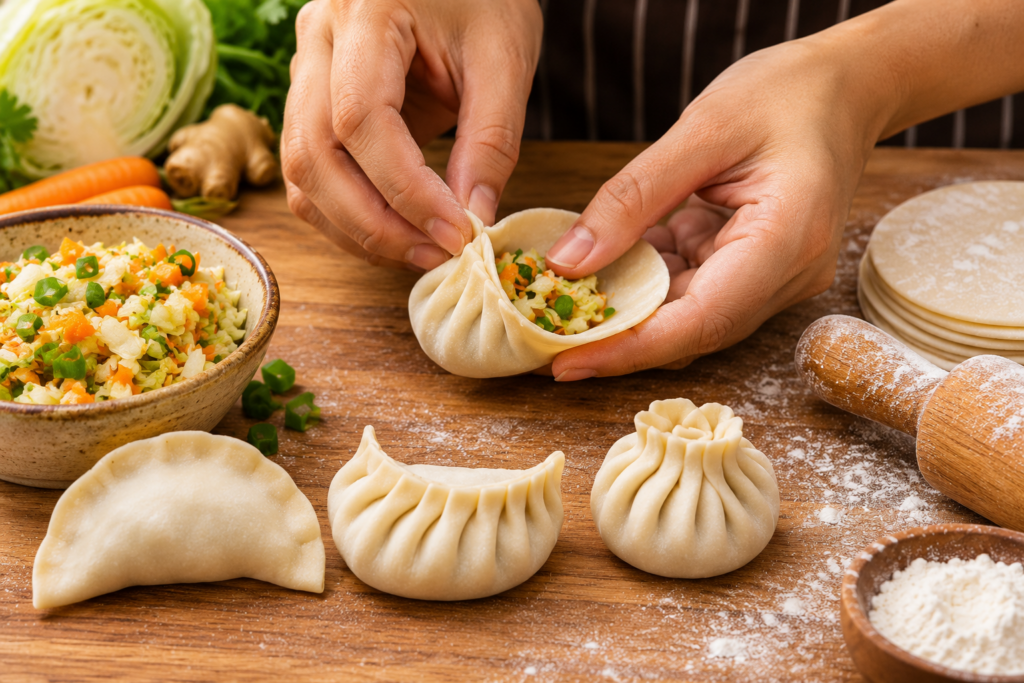
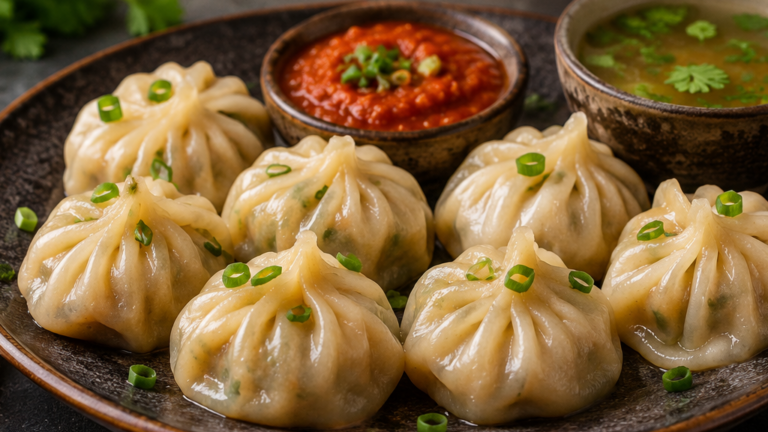
There is a quiet pleasure in a well-folded momo. The dough gathers into small, regular pleats, the filling sits securely inside and the top becomes a little sculpture. It looks decorative, but the technique is practical: it helps transform a flat circle of dough into a sealed three-dimensional parcel.
Visitors sometimes ask whether a particular number of pleats has a universal religious or cultural meaning. That is too broad a claim without evidence from a specific community. The most reliable explanation begins with the craft itself.
Why pleats work
A flat round of wheat dough needs to wrap around a mound of filling. As you draw the edges together, excess perimeter dough must go somewhere. Pleats gather that material in small folds, creating shape while keeping the filling contained. A continuous, clean seal matters more than a decorative exact count.
The centre should be strong enough to support the filling; the rim is often rolled thinner so overlapping folds do not become a thick, doughy knot.
What different shapes do
| Shape | Practical feature | Beginner consideration |
|---|---|---|
| Half-moon | Simple joined edge | Easy to inspect for gaps |
| Pleated crescent | Folds distribute dough along one side | Keep pleats similar in size |
| Round pouch | Edges gather toward a top point | Do not leave a thick raw knob |
| Unpleated pinch | Fast closure for small batches | Needs a clean and strong seam |
All of these can be legitimate practical folds. A momo is not automatically poorly made because it uses fewer pleats.
How to practise without wasting filling
Use a small rested dough ball and roll a round with a fine rim. Put only a modest spoonful of filling in the centre, then pinch the edge in several small sections. If it tears, reduce filling or review dough hydration. If the pleat top becomes a dense knot, roll the rim thinner next time.
Practise three or four dumplings and steam one test piece. Check whether the seam opens and whether the thickest fold cooks through before scaling the batch.
Craft is often learned by watching
Many food skills are transmitted by repetition, family practice and professional training, not by a printed numerical standard. A skilled momo maker can judge dough resistance, filling weight and pleat spacing by feel. Different shaping styles may reflect a kitchen’s tools, habits and desired presentation.
Celebrate the skill without inventing a universal sacred meaning for a fold count. If you are writing about a particular ceremony or community, use that community’s own documented account.
Texture matters at the top
An over-thick gathering of dough may remain chewy or undercooked when the rest of the wrapper is done. A very thin central disc can split from filling weight. Successful pleating balances edge thickness, filling size and cooking. The best result tastes as considered as it looks.
See the published wrapper troubleshooting guide for seam failures, or momos versus dumplings for broader context.
Explore related Momo Delights guides: Sikkim momo traditions and our guide to Himalayan food. Food traditions and folding techniques vary between communities and kitchens.
Frequently asked questions
Does a momo need an exact number of pleats?
No universal count applies to every style or maker.
Are pleats only decorative?
No. They help gather and seal excess wrapper dough.
Can beginners make good momos without pleats?
Yes. A clean, secure half-moon seal is a good starting technique.

Leave a comment