

Aa Reading preferences
A perfect momo changes the moment it leaves the kitchen. Steam meets a lid, crispy edges encounter condensation, and sauces keep doing their work long after the box closes. That is why a momo that tastes beautiful at the table may arrive quite differently after a long journey.
The best takeaway choice is not necessarily the most elaborate menu item. It is the one whose texture and safe serving conditions can survive your actual journey.
Steamed momos: tender, but vulnerable to condensation
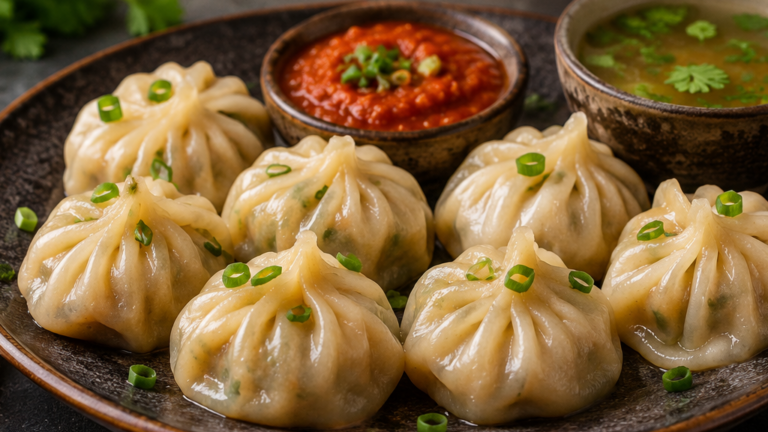
Steamed wrappers are designed to be soft and supple. In a tightly sealed box, escaping moisture condenses on the lid and can return to the food, leaving a wet surface. If the container is too dry or sits too long, the opposite problem appears: wrappers may lose their pleasant softness.
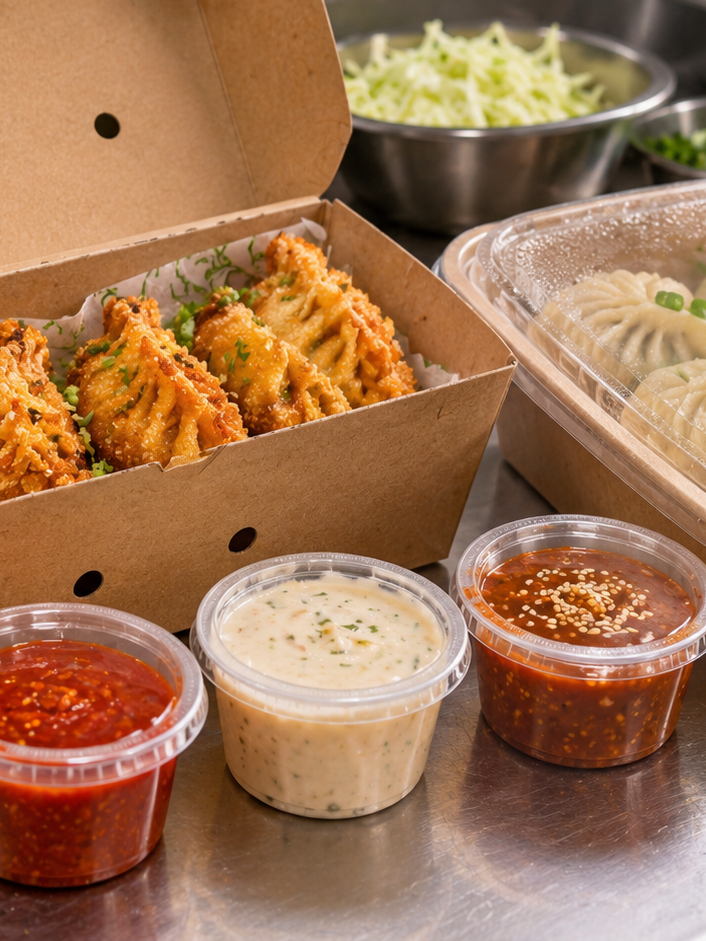
What helps: a food-safe container that is suitable for hot food, careful venting where appropriate, a modest single layer when practical, and sauces packed separately. Foodservice operators must still use packaging that protects food from contamination and maintains safe transport conditions.
Crispy and pan-seared momos: the time-sensitive choices
Crispy coatings and browned pan-seared bases depend on a dry exterior. Closed-box steam softens that surface, especially when hot sauce is poured over it. If crunch is the main reason you are ordering, dine-in is often the better texture experience.
For takeaway, ask for sauces on the side, avoid heavy stacking and eat promptly when safe. Re-crisping at home might improve texture for correctly handled food, but reheating should not be treated as a fix for unsafe time or temperature exposure.
Spiced and saucy styles
Tandoori-style and sauce-tossed momos can carry flavour well, but their wrappers may absorb moisture on the way. A sauce served separately gives you more control over how much is added and when. It also helps diners with different spice preferences.
Not every sauce will be available for separate packing. Ask your outlet what is practical for the specific preparation.
Choose based on your journey
| Situation | Likely better option | Why |
|---|---|---|
| Eating immediately at the restaurant | Any style | Texture is closest to the kitchen’s intended result |
| Short, direct journey | Steamed or carefully packed spiced | Less reliance on an extremely crisp exterior |
| Crunch is your priority | Dine-in, if possible | Coatings soften quickly in humid packaging |
| Mixed spice preferences | Sauce on the side | Each person can add their own amount |
This is a texture guide, not a guarantee of travel quality or safety at any particular distance.
Food safety matters more than the perfect crunch
Perishable cooked food should not remain unrefrigerated for extended periods. FoodSafety.gov advises refrigerating takeout leftovers within two hours of purchase or delivery, and within one hour when outdoor temperatures exceed about 32°C. Keep the manufacturer’s and outlet’s instructions in mind, particularly when transporting frozen or ready-to-cook products.
For leftovers, reheat thoroughly as appropriate. FoodSafety.gov lists 74°C/165°F for reheated leftovers. These limits are safety guidance; they are not an ideal delivery-time target or a license to leave food warm until the deadline.
What to request when placing an order
- Ask whether sauces can be packed in sealed separate cups.
- Choose a direct collection or delivery time close to when you intend to eat.
- Ask whether the packaging is intended for the product’s temperature and texture.
- For allergies, confirm the ingredients and cross-contact measures rather than relying on an order note.
- Open the food carefully—hot steam can burn—and serve promptly.
Explore the official Momo Delights menu for current options, and see our allergen information for ingredient considerations.
For an introduction to related food traditions, read How Long Can Takeaway Momos Sit Out? A Food-Safety Guide and Sharing Momos for Two: Choose Fillings, Textures and Heat Levels. Recipes and customs vary from place to place.
Frequently asked questions
Why do crispy momos become soft in a takeaway box?
Steam and moisture accumulate around the coating and weaken its crunch.
Should a hot momo box be completely airtight?
Packaging must first be food-safe and protect the product; appropriate venting can help texture, but it must not compromise safe transport and hygiene.
Can I leave takeaway momos on the counter for later?
Perishable food should be refrigerated promptly and handled according to applicable food-safety guidance.
Sources: FoodSafety.gov — safe takeout and leftovers; Momo Delights — current menu.

Leave a comment