


Aa Reading preferences
In Sikkim, a momo plate often tells a story about more than dumplings. Warm soup, sharp achar and steamed fillings are part of a wider culinary landscape that also includes noodles, fermented vegetables, mushrooms and local greens. The pairing feels especially natural in the hills, where warm food is both comforting and convivial.
There is no single Sikkimese momo meal that every household eats in the same way. The more interesting approach is to recognise the shared patterns while leaving room for differences between communities and kitchens.
What official Sikkim sources describe
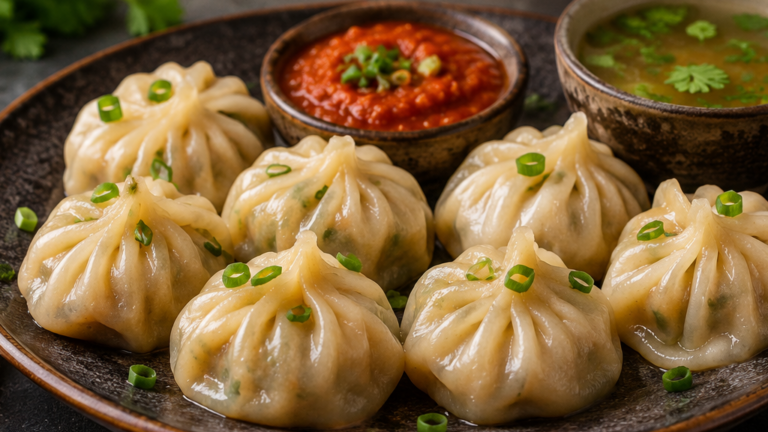
The Government of Sikkim’s cuisine overview identifies momos as steamed flour dumplings with meat, cheese or vegetables, served with homemade chilli sauce and hot soup. The Gangtok district government’s food and recipes page separately names momo, tomato achar, thukpa/gya-thuk and other soups among local preparations. This combination confirms the dishes’ place in the region without implying they are always served as one fixed menu.
These official descriptions are a useful starting point for understanding the relationship between dumplings, warm liquid and condiments.
Soup and achar perform different roles
| Accompaniment | What it adds to momos | What to ask |
|---|---|---|
| Clear hot soup | Warmth and a gentle savoury contrast | Is the stock vegetarian? |
| Tomato achar | Acidity, chilli and aromatics | Does it contain sesame or peanuts? |
| Thukpa | A separate, noodle-based meal | What noodles, stock and filling are used? |
| Fermented vegetable soup | A distinctive sour, savoury dimension | What are the ingredients and preparation? |
Soup should not be confused with jhol achar simply because both are liquids on a momo table.
Why Sikkim’s cuisine needs more than one label
Sikkim includes multiple communities whose food traditions overlap yet differ. Government sources note the use of rice, maize, fresh vegetables, bamboo shoots, mushrooms, nettle leaves and fermented foods. This wider context matters: momos are a familiar entry point to Sikkimese cuisine, not a substitute for learning about its varied dishes.
A responsible food article avoids claiming that one Kathmandu-style chutney represents every kitchen in Gangtok or that every momo dish originated in precisely the same village.
A vegetarian tasting plate
Prepare or order a steamed cabbage-and-ginger momo, a small cup of vegetable broth and a spoonful of tomato achar. Taste them separately, then try a little broth alongside the dumpling. Keep a second mild chutney for guests who dislike intense chilli. If the achar contains sesame, label it clearly and provide its own clean spoon.
The aim is to notice how soup softens the meal while the achar brightens the filling. This is a modern tasting suggestion, not a claim about a universal historic serving ritual.
What about thukpa?
Thukpa or gya-thuk is a noodle-soup preparation, whereas the momo is a filled dumpling. They can be part of the same meal culture without being identical dishes. Sikkim government food listings describe both, with vegetable or meat variants depending on the recipe. Ask about the broth before assuming a bowl with greens is vegetarian.
Explore the tradition respectfully
When dining in Sikkim, ask what an establishment means by “momo soup” or “jhol”, because restaurant language is not entirely standardised. Seek out regional vegetable dishes as well as the most familiar snacks. For further context read Momo Delights’ Sikkim article.
For more on the dishes and places behind these flavours, read Darjeeling momo traditions and types of Himalayan momos. Recipes and serving traditions differ across communities.
Frequently asked questions
Are soup and achar always served with momos in Sikkim?
They are prominent accompaniments in official regional descriptions, but individual kitchens vary.
Is thukpa a momo soup?
No. Thukpa is a noodle-soup dish.
Can Sikkimese momo meals be vegetarian?
Yes, when the dumplings, broth and condiments use suitable ingredients.


Leave a comment