

Aa Reading preferences
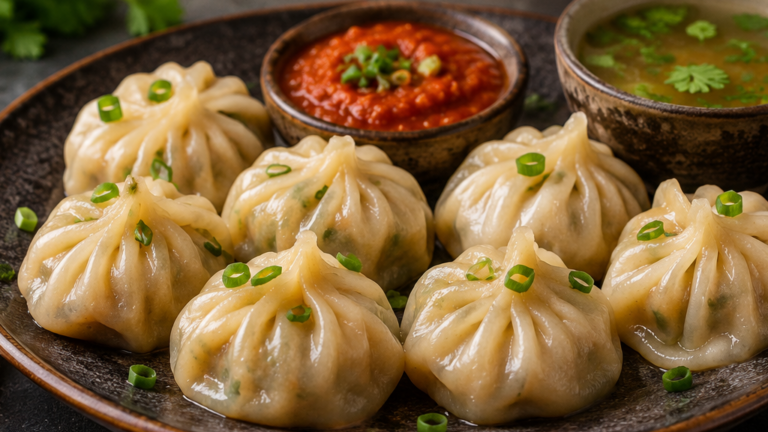
Look at a plate of steamed Korean mandu beside Himalayan momos and you may see close cousins: tender wrappers, savoury fillings and careful folds. The similarity is real, but neither food is a renamed version of the other. Mandu belongs to Korean culinary traditions; momos are closely associated with Himalayan traditions.
The most interesting distinctions emerge from how the dumplings are cooked, what surrounds them and what goes into the filling.
Start with a practical comparison
| Question | Momos | Mandu |
|---|---|---|
| Food setting | Himalayan regions and communities | Korean cuisine |
| Common fillings | Vegetables, paneer and meat variations | Vegetables, tofu, meat, chives, sometimes glass noodles or kimchi |
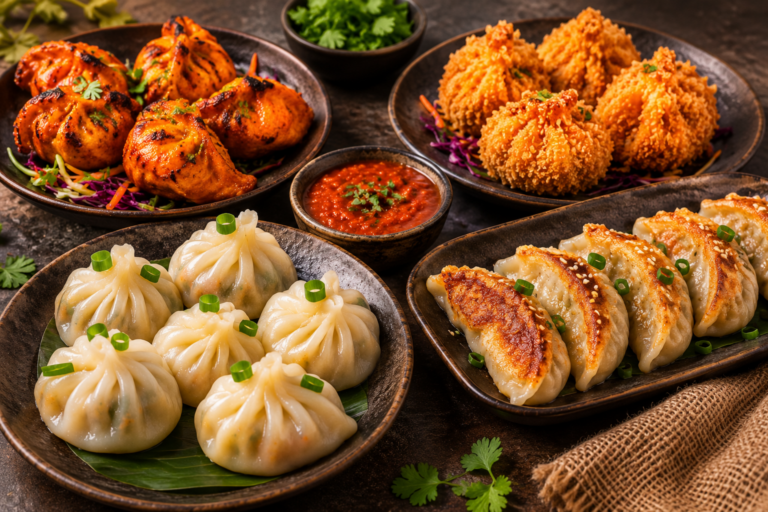
| Cooking | Frequently steamed; also fried or pan-seared | Steamed, pan-fried, boiled or served in soup |
| Dipping | Tomato-chilli or other achar | Often soy-vinegar-based dip |
| Soup context | Jhol or clear momo soups | Mandutguk (mandu soup) |
All of these are associations, not rules for every regional recipe.
What Korea’s tourism authority says
The Korea Tourism Organization describes mandu as thin dough skins stuffed with meat, chives, bean curd or other ingredients and prepared by pan-frying, steaming or boiling in broth. It separately documents mandutguk as a bowl of mandu in clear broth. Pan-fried gunmandu has a golden exterior and is often served with a tangy soy-based dip.
That range makes it misleading to call mandu always fried or always spicy.
What changes inside the wrapper
Common momo fillings may emphasise cabbage, ginger and aromatics, with paneer frequently appearing on vegetarian Indian menus. Korean mandu fillings may use kimchi, glass noodles, tofu and other ingredients. Kimchi itself can contain seafood ingredients depending on the recipe, so a vegetable-forward Korean dish is not automatically vegan.
The wrapper usually contains wheat unless a specific gluten-free preparation is verified. Soy-based dipping sauces may contain wheat as well.
A two-plate tasting idea
To compare the traditions fairly, try plain steamed vegetable examples from each kitchen, without sauce for the first bite. Notice whether the filling is finely chopped or has noodles, how the wrapper handles the centre, and how ginger, garlic and other seasonings appear. Then taste the accompaniments separately. A spicy achar and a soy-vinegar dip can create different impressions even when the dumplings are similar.
Which should a first-time diner order?
If you prefer a tomato-chilli accompaniment and the dumpling itself as the centre of a snack, steamed momos are an accessible starting point. If you want to explore a pan-fried option or a clear soup with dumplings, look for gunmandu or mandutguk in a Korean dining setting. Ask about actual preparation and ingredients rather than relying on category labels.
For momo background, see the Momo Delights dumpling guide.
For more context on regional dishes and momo culture, explore Himalayan food traditions. Regional recipes and traditions are diverse.
Frequently asked questions
Is mandu another word for momo?
No. They are distinct culinary traditions within the wider family of filled dumplings.
Are Korean mandu always made with meat?
No. Vegetarian and tofu-based versions exist, though ingredients need checking.
Do both contain gluten?
Conventional wheat wrappers contain gluten; check product-specific alternatives and cross-contact controls.

Leave a comment