

Aa Reading preferences
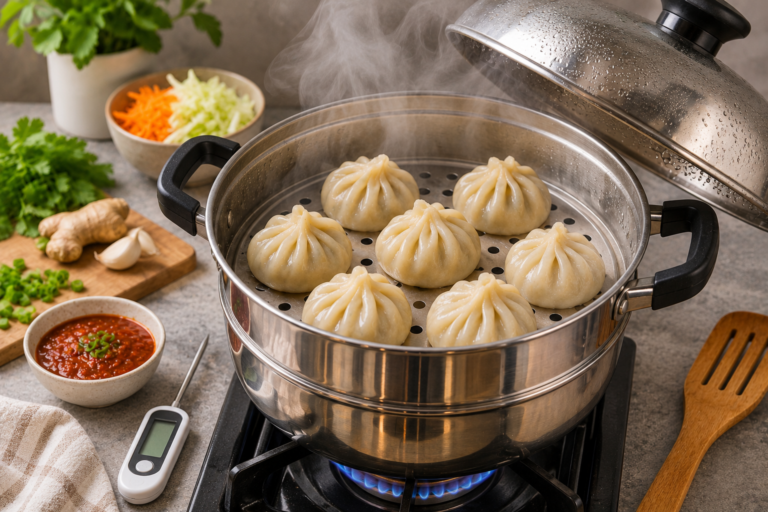
A wedding snack station should be enjoyable to watch and effortless to use. Freshly steamed momos can offer the appealing ritual of a bamboo or stainless-steel steamer opening to reveal neatly folded dumplings. But the very thing that makes the station inviting—hot, fresh food—also creates queues and equipment requirements.
Before choosing a momo counter for a wedding, calculate the demand that will arrive in a short burst, not merely how many guests are on the invitation list.
What makes a momo counter suitable?
Small, hand-held vegetarian snacks suit mingling guests, and different textures or sauce heat levels can accommodate varied tastes. A live-steaming station also signals freshly prepared food. Yet dumplings can tear if rushed, and a narrow serving line may struggle during the peak interval before dinner. A good proposal shows how the caterer will handle a rush without abandoning safe cooking or holding.
Turn guest numbers into a throughput question
Imagine 200 guests, with 40% choosing momos during a 30-minute peak and each taking five small pieces. The example implies 80 guests and 400 momos in that half-hour, or an average rate of about 13.3 pieces per minute. These figures are planning assumptions, not event demand statistics. Compare that requirement with the caterer’s verified steamer capacity, replenishment time and staffing.
If the kitchen cannot deliver the calculated pace, change the menu, add stations or plan staggered service—not just a longer queue.
What to demand in the catering proposal
| Area | Question |
|---|---|
| Menu | Which actual varieties, pieces per portion and sauces? |
| Power/water | What equipment load and safe utilities are required? |
| Staff | How many cooks, servers and a safety supervisor? |
| Cooking and holding | What validated process and logs are used? |
| Dietary | How are allergens and vegan/vegetarian choices handled? |
| Queues | How will guests move around the station? |
| Commercial | What is included in the quoted cost and what triggers extra charges? |
Choose fewer varieties with clearer labels
One steamed vegetable filling, one contrasting paneer or mushroom option and two sauces may serve better than a table of ten varieties that slow each order. Give the guest a clear choice of mild or spicy chutney and identify milk, wheat, soy, sesame and peanuts where relevant. A family member’s allergy should not become a guessing exercise at the counter.
Protect the food and the people
Use food-grade trays, safe live-steamer barriers, hand-washing facilities, stable power cables and surfaces that can be sanitised. Do not place steam exhaust or hot lids at a child’s eye level. FSSAI’s published food-service temperature guidance refers to 65°C or above for hot holding; the operator must confirm current requirements and measure the food itself.
For service quality, replace trays in smaller batches and avoid mixing old and new food under one lid.
When it may not be the right station
Very limited electricity, a narrow reception area, extremely long transport from the cooking facility or a requirement for all snacks to be pre-packed many hours ahead can make other dishes more practical. Ask the caterer to explain its solution rather than relying on photographs of an unrelated event.
For Momo Delights brand information, explore the food menu, but do not assume wedding catering is available without a direct confirmed offer.
FAQ
How many counters does a wedding need?
Base the number on expected peak pieces per minute and the validated capacity per station.
Does a live counter guarantee food safety?
No. Equipment, hygiene, cooking, holding and supervision still matter.

Leave a comment