

Aa Reading preferences
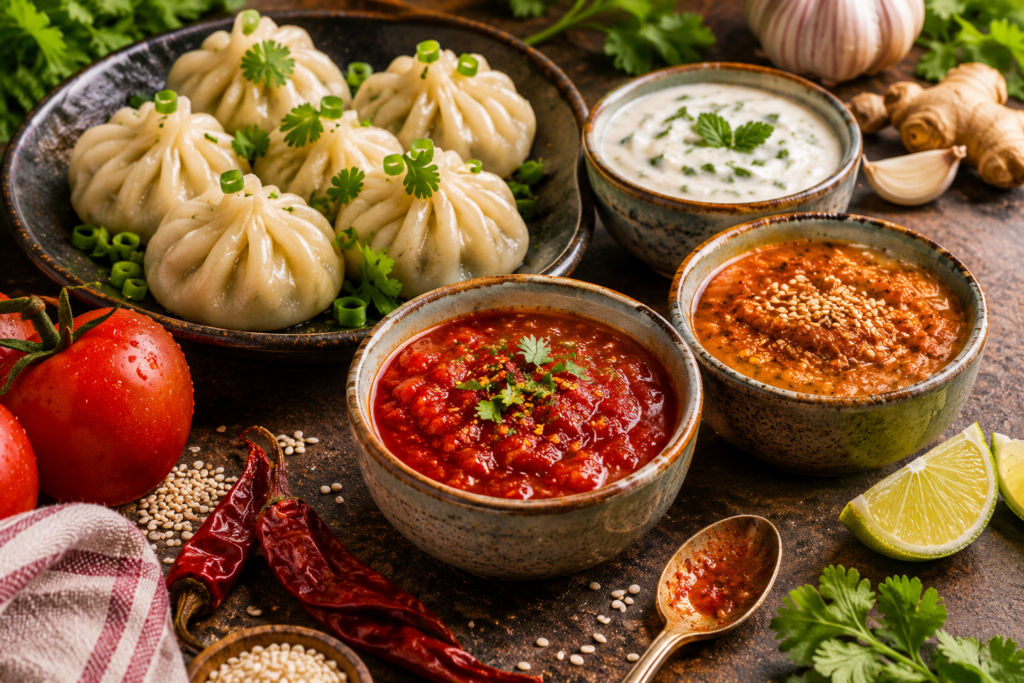
A great momo chutney should cling to the corner of a dumpling rather than run into a puddle at the bottom of the plate. Yet tomato-based dips can turn thin overnight, sesame sauces can separate, and rushed blending can produce more water than flavour.
Before reaching for a thickener, identify whether your sauce is too diluted, insufficiently reduced, separated or simply meant to be thin. Jhol-style liquid achar, for example, is intentionally looser than a dipping chutney.
Tomatoes are not all the same
Ripe tomatoes contain a high proportion of water. A juicy salad tomato may behave differently from a denser cooking tomato. If you add extra water to help the blender move, the thinness increases. Roasting or simmering tomatoes before blending can concentrate flavour and reduce free moisture without relying on starch.
Remove watery cores if a recipe permits, but do not automatically discard all the seeds; they contain flavour and some body. Taste as you adjust.
Four common problems
| Problem | What is happening | Better approach |
|---|---|---|
| Thin immediately after blending | Too much added water | Start with tomatoes alone and add water slowly |
| Watery after chilling | Liquid separation | Stir and evaluate texture; prepare closer to service |
| Thin but strongly flavoured | Not enough solids | Add cooked tomato or suitable roasted seeds if appropriate |
| Thick but dull | Over-reduced and under-seasoned | Rebalance acid and salt, then add water carefully |
Fix one: reduce gently
For a cooked tomato chutney, return the sauce to a clean saucepan and simmer over moderate-low heat, stirring until it reaches the desired consistency. Be patient; high heat may cause splattering, scorching and uneven reduction. Cool the batch safely before refrigerating.
Reducing also concentrates salt and chilli, so taste again after thickening. A chutney that becomes clingy but painfully salty is not an improvement.
Fix two: build body from ingredients
Depending on the recipe, more cooked tomato, toasted sesame or another appropriate ingredient can add body. Sesame and peanuts are allergens, however, and they change the flavour and ingredient declaration. Do not add a nut paste simply to thicken a sauce intended for an allergy-sensitive guest.
A little cooked onion can also contribute texture to a home variation, but it changes the sauce’s character. Choose ingredients for flavour as well as thickness.
Fix three: rethink the blender
Some blenders require a minimum volume to circulate. Instead of adding a large splash of water, cut the tomatoes smaller or use a narrow blending cup designed for small batches. Begin with short pulses. For a rustic achar, leaving a little texture can be more appealing than forcing a fully smooth liquid.
A measured kitchen consistency test
Place a small spoonful of cooled chutney on a clean plate beside a cooked momo. Tilt the plate gently. A regular dip should move somewhat but leave enough sauce on a piece when dipped. Compare the same recipe at the same temperature across batches; a chilled sauce can look thicker than a warm one.
This is a practical sensory test, not a scientifically standardised viscosity measurement or a food-safety check.
Safe storage still comes first
Homemade tomato chutney is perishable unless made under a validated preservation process. Refrigerate promptly in a covered container, use clean serving utensils, and avoid topping up an old communal bowl with a fresh batch. CDC guidance warns against leaving perishable foods in room-temperature conditions for more than two hours, or one hour above 32°C/90°F.
For related sauce ideas, see the current Momo Delights menu; its commercial products may use different recipes and production controls.
For more ways to prepare and enjoy momos, explore Hold Cooked Momos During Restaurant Service: Safety and Texture. Check ingredients and allergens before preparing food for others.
Frequently asked questions
Can flour thicken momo chutney?
It can change the texture, but may leave a starchy taste and add wheat allergens. Try flavour-compatible ingredients first.
Is thin jhol momo sauce a mistake?
No. Liquid achar is meant to be spoonable and may be much thinner than a dip.
Can I leave homemade chutney overnight on the counter?
No. Follow perishable-food refrigeration guidance.


Leave a comment