
Aa Reading preferences
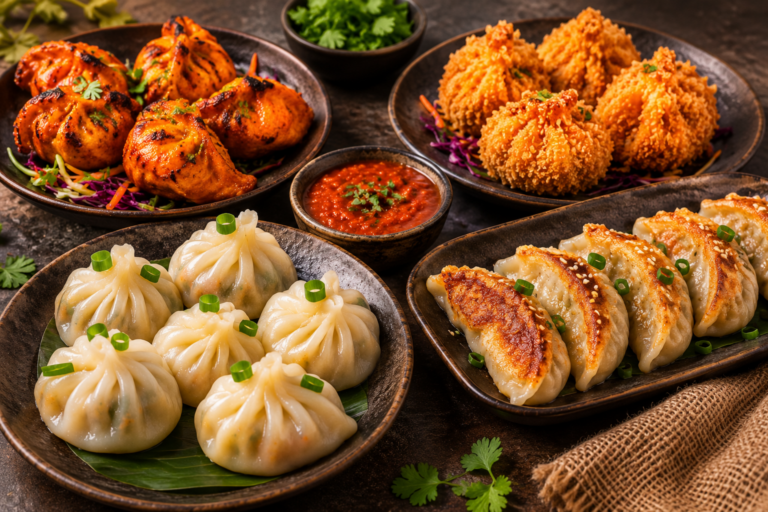
This guide compares the two momo styles through their wrapper texture, coating, fillings, sauce pairings, takeaway performance and ingredient considerations. It also explains why a crunchier-looking plate does not automatically mean a higher-quality momo—and how to choose between the styles on the Momo Delights menu.
Kurkure momos vs fried momos: the differences at a glance
| Feature | Fried momos | Kurkure momos |
|---|---|---|
| Defining process | Frying the dumpling to crisp the wrapper | Adding a crunchy coating and finishing it until crisp |
| Typical outer texture | Firm and crisp dough surface | Rough, crumb-coated, extra-crunchy surface |
| Typical coating | May have no separate crumb layer | Often cereal or crumb mix over a batter/slurry |
| Seasoning | Seasoning may sit mainly in the filling | Coating may add seasoning and extra heat |
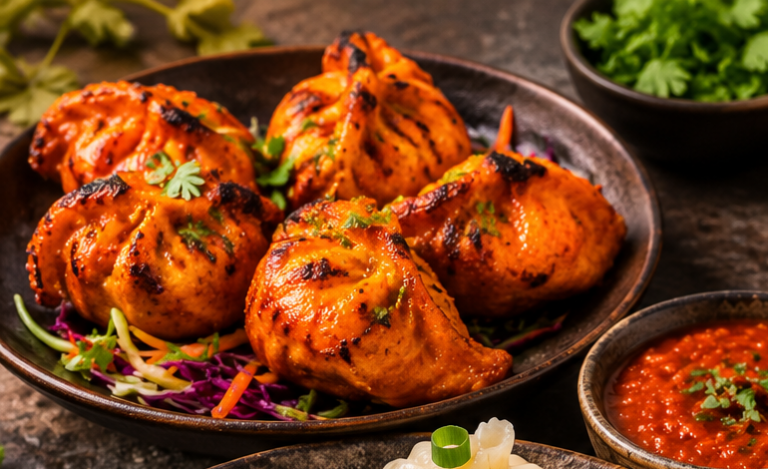
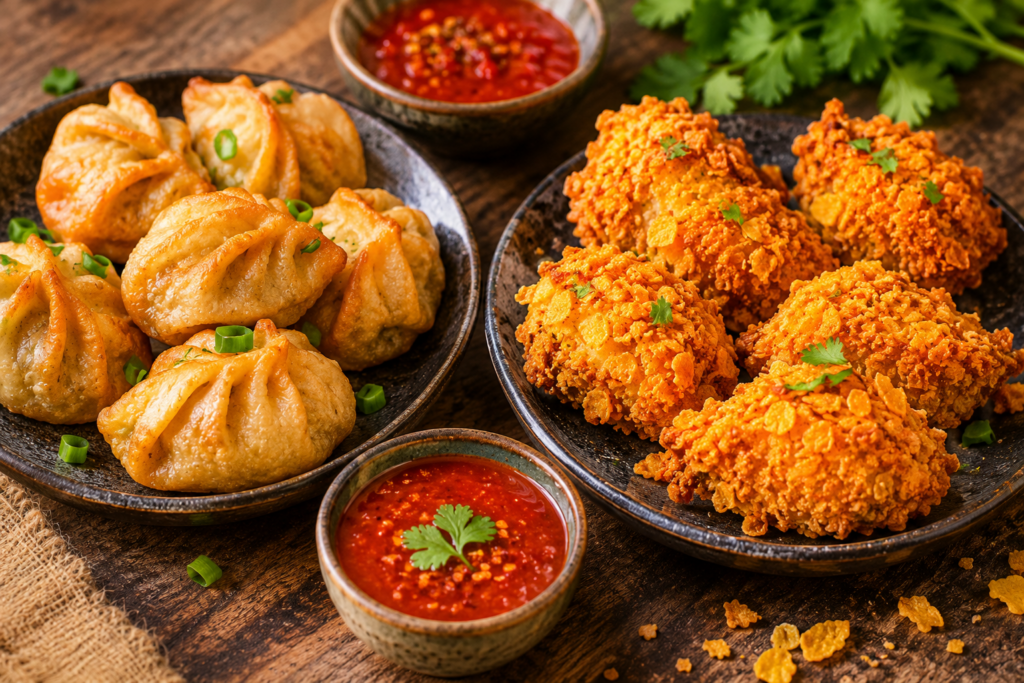
| Appearance | Golden, browned pleated wrapper | Textured, granular golden exterior |
| Takeaway texture | Can soften in closed packaging | Coating may also soften from trapped steam |
| Allergens | Often wheat; other ingredients vary | Wheat may appear in wrapper, batter or crumb; check extras |
The published recipe described by chef Ranveer Brar in NDTV Food’s 2022 feature on kurkure momo uses a batter and a dry coating containing cornflakes and poha, followed by frying. That is one documented method, not a verified Momo Delights formula or proof that every shop uses those ingredients.
What are fried momos?
A fried momo begins with the familiar idea of a filled dumpling: dough is rolled into a wrapper, wrapped around a seasoned filling and sealed. In a fried-style preparation, oil cooks or finishes the outside until the wrapper becomes more golden and firm. Some kitchens use previously steamed momos and fry them afterward; others rely on a recipe and process appropriate for their product. Ask the establishment if the exact method matters to you.
What customers notice: a firmer bite than a steamed momo, a browned surface, and strong contrast when served with a tangy red chutney. The oil temperature, frying time, wrapper thickness, size and amount of moisture in the filling all affect the result.
For someone new to momos, a comparison of steamed and fried versions is a good way to learn what the finishing step changes. Our existing article on momos versus other dumplings explains the bigger dumpling family; here the focus is specifically the difference between two crisp-finished restaurant styles.
What are kurkure momos?
In contemporary Indian restaurant menus, “kurkure” commonly signals a conspicuously crunchy outer layer. The cook may prepare a slurry, coat the dumpling in crushed cereal or other crumb-like ingredients, allow the coating to adhere, then finish it to crispness. The defining eating experience is often the rough, extra-textured bite before you reach the softer wrapper and filling.
For example, the NDTV/Ranveer Brar method combines a seasoned batter with a dry mixture of maida, cornflakes, poha and spices. Other approaches substitute different flours, flakes or cooking equipment. Some modern versions are air-fried; the word kurkure alone does not establish deep-frying or a universal recipe. NDTV Food also documents a non-deep-fried variation, illustrating the range of techniques.
At Momo Delights: the published food menu lists both Veg Kurkure Momo and Paneer Kurkure Momo, alongside Veg Fried Momo. Those are verified menu names; this article does not claim to disclose their exact coating or frying SOP. Confirm availability and allergens with the chosen outlet.
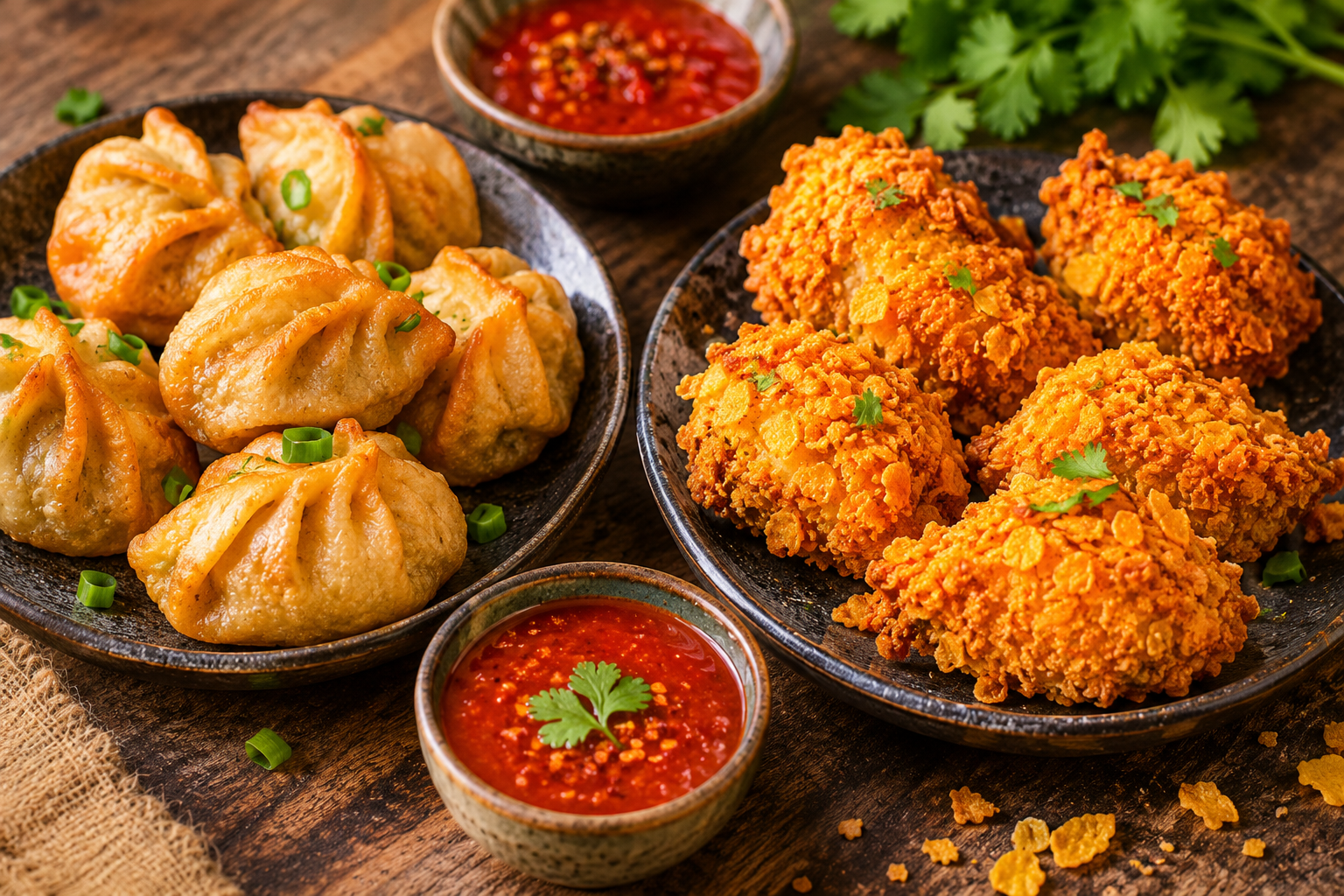
Five details that determine whether a momo stays crisp
1. Wrapper thickness and moisture
Wrappers need enough strength to hold the filling but should not become unpleasantly tough when fried. A filling with too much free water can weaken the seal. This is one reason that product specifications and trained cooking procedures matter more than simply “fry longer.”
2. Slurry and coating coverage
For coated kurkure recipes, thin patches leave exposed wrapper while overly thick patches may dominate the dumpling. Even coverage helps the coating brown more consistently. NDTV Food’s 2024 troubleshooting guide specifically discusses coating coverage and slurry composition.
3. The relationship between temperature and time
Excessively hot oil can brown a surface before a raw centre is cooked. Oil that is too cool can change the way the coating absorbs oil and finishes. Neither the surface colour nor an exact generic fry time establishes food safety for every filling. Food businesses should follow a validated process for the actual product and equipment.
4. Resting and handling
Some coated recipes rest the dumplings briefly before cooking so the coating adheres. The permitted holding time and conditions depend on ingredients and food safety. Perishable filling or batter should not be left at room temperature simply to improve texture.
5. Trapped steam after frying
Once hot dumplings are sealed in takeaway packaging, their own steam can condense. A crisp surface then softens, especially if a wet sauce is poured over it. That does not necessarily indicate that the restaurant cooked it badly; it reflects moisture transfer after cooking.
Why kurkure momos taste different from regular fried momos
The distinctive crunch changes how a bite feels. Extra surface area also changes how seasoning and dipping sauce cling to the food. In a typical fried momo, the wrapper itself provides most of the crispness. In a coated kurkure momo, the coating may contribute its own salt, spices, toasted cereal notes and more pronounced break on biting.
Neither flavour profile is universally superior. A customer who enjoys the dumpling filling may prefer a simple fried version; someone looking for a snack-like crisp coating may prefer kurkure. Try similar fillings when comparing the two, or you will be evaluating the filling as much as the cooking style.
Are kurkure momos healthier or higher in calories?
No reliable blanket comparison can be made from the names alone. Deep frying, quantity of oil retained, wrapper weight, added crumbs, filling composition, portion size and dipping sauce all affect nutrition. A kurkure-style product with a thick crumb layer can have a different energy value from an uncoated fried momo, but the direction and size of that difference must be calculated from the actual formulations and portions.
Likewise, “air-fried” does not guarantee an overall healthy meal, and “vegetarian” does not mean dairy-free. Paneer contains milk; a coating may use wheat, cornflakes, mayonnaise, egg or other ingredients depending on recipe. Review the Momo Delights allergen information and ask the outlet about the specific SKU if you have allergies.
The FSSAI hygiene requirements provide a broader framework for safe food handling and preparation, including controls relevant to frying and ready-to-eat service. They are not a nutrition certificate for either momo style.
Which one should you order?
| If you prefer… | Consider… | Reason |
|---|---|---|
| A clean, wrapper-led crunch | Veg Fried Momo | Fried wrapper without necessarily having a bulky separate coating |
| An extra-crunchy, crumb-like bite | Veg Kurkure Momo | Texture-led restaurant style |
| A paneer filling and crunchy coating | Paneer Kurkure Momo | Combines the coating style with a dairy-based filling |
| Soft texture with minimal coating | Classic Veg Momo | Steamed alternative for contrast |
| Crisp contact side, soft upper portion | Veg Kothey Momo | Pan-seared alternative |
All five are examples of dishes listed on Momo Delights’ published menu. Availability, ingredient details and prices may vary by outlet. The point of the table is to guide texture preferences—not to claim a dish is a bestseller, lower in calories or made using a particular proprietary process.
What sauce goes best with fried and kurkure momos?
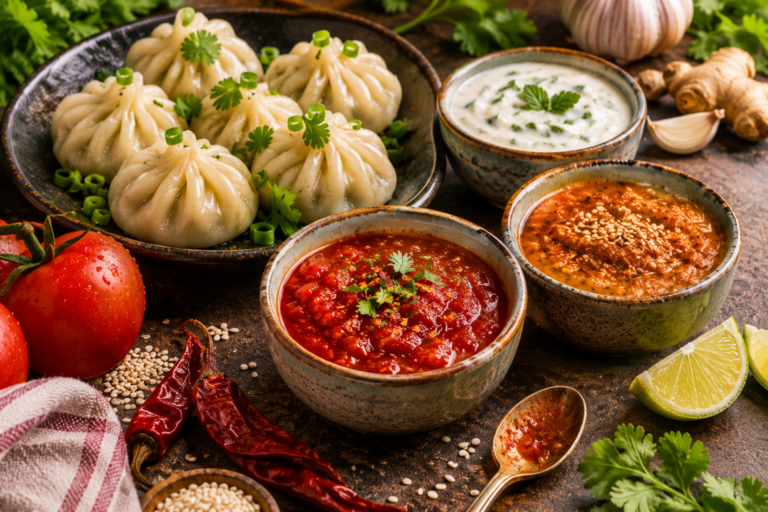
A tomato–chilli chutney can add acidity to a rich or crunchy bite. Creamy dips can provide a contrasting texture, but they often contain milk and can be unsuitable for some diets. A sensible tasting method is to try one bite without sauce, then dip sparingly, rather than soaking the entire plate immediately.
If you want crunch to last, ask whether sauce can be served separately. If you like more heat, check what the kitchen actually means by a “spicy” option; chilli levels are not standardised. The published Sikkim momos article offers background on traditional sauces, while the current menu shows Momo Delights’ available dishes.
Which type travels better for takeaway?
Neither type stays crisp indefinitely. Different coatings, packaging designs, sauce placement, journey duration and ambient moisture all matter. A practical approach is to keep dipping sauce separately, minimise unnecessary holding and consume promptly while the preparation is still at its intended temperature. Do not use these texture suggestions as food-safety holding rules.
For a group order, a contrast of one steamed item and one crunchy item usually provides a more distinctive tasting experience than selecting several near-identical crisp styles. Check official outlet details and the menu before placing the order.
How foodservice kitchens can compare the two styles
A café or cloud kitchen evaluating a new momo category should test portion consistency, wrapper integrity, coating loss, safe cooking endpoints, pickup-to-service time, sauce packaging and cost per sellable plate. Use the same serving size and equipment conditions during comparisons. A supplier’s sample that performs well immediately after frying may behave differently in takeaway packaging.
Momo Delights has a separate HoReCa/B2B supply page for business enquiries. Buyers should request the current product specification and sample-process information rather than assume every menu item is available as a wholesale product.
Frequently asked questions
Are kurkure momos just fried momos?
They can both be fried, but kurkure momos commonly have a distinct added crunchy coating, whereas fried momos can rely on the wrapper itself for their crisp surface.
Do kurkure momos always contain cornflakes?
No. Cornflakes are used in documented recipes, but coatings vary by cook and may use poha or other crumbs.
What is the difference between kurkure and kothey momos?
Kurkure emphasizes an added crunchy outer coating. Kothey typically emphasizes a browned pan-contact side with a softer opposite side.
Which momo is spicier?
The name alone cannot tell you. Heat depends on the filling, coating spices and chutney.
Can kurkure momos be air-fried?
Some recipes use an air fryer, but cook times and food-safety suitability depend on the formulation and equipment.
Are fried momos less healthy than steamed momos?
Frying generally introduces oil into the finishing process, but accurate nutrition comparisons require actual recipe and serving data.
Are paneer kurkure momos vegan?
No. Paneer is a dairy ingredient; other sauces or coatings may introduce additional animal-derived ingredients.
Does Momo Delights offer both fried and kurkure momos?
The published menu lists Veg Fried Momo, Veg Kurkure Momo and Paneer Kurkure Momo. Check the outlet for current availability and ingredients.
Sources and editorial transparency
- NDTV Food — Ranveer Brar’s kurkure momo recipe (example of batter and cereal coating).
- NDTV Food — Tips for kurkure momo crispness (slurry and coating guidance).
- NDTV Food — Air-fried kurkure-style variation (shows different preparations exist).
- Momo Delights — Official food menu (menu-item examples only).
- FSSAI — Hygiene requirements (general food safety).
Reviewed 1 November 2026. This guide describes general culinary styles. It does not reveal or claim to document Momo Delights’ proprietary cooking process. The featured illustration is AI-generated and is not an actual product photograph.