

Aa Reading preferences
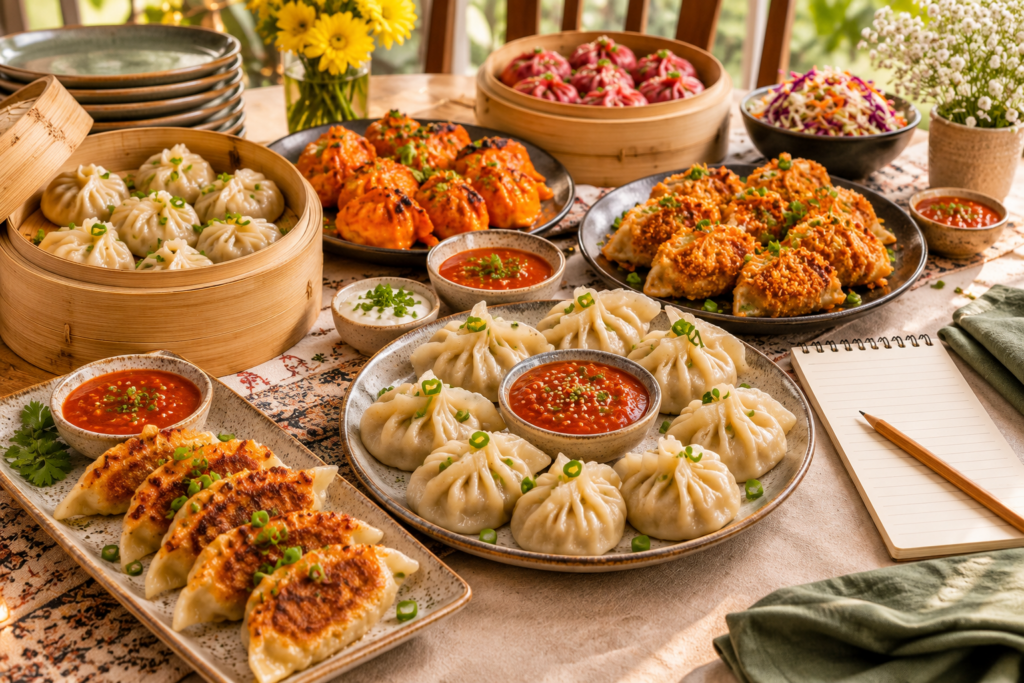
A good momo party runs on timing more than decoration. The first tray should be hot, the last tray should still taste like a fresh batch, and guests should not have to wonder whether a platter has been sitting out all evening. The solution is a simple service plan: cook in controlled batches, protect the food, separate the dips and monitor temperature.
This guide is written for home hosts and event planners. Commercial caterers must follow the food-safety requirements that apply to their business and location, including relevant FSSAI rules in India.
Work backwards from the serving window
Choose a realistic serving start time and the number of guests the kitchen can serve per steaming cycle. Then plan a short sequence of batches rather than steaming everything hours earlier. Each batch should have a clear cooking, temperature-check and service step.
For a larger event, assign one person to cook, one to carry clean trays and another to serve. The goal is to keep the food moving without crowding the steamer or leaving finished pieces unattended on a counter.
Cook completely before placing food in a warmer
Hot-holding equipment is designed to maintain the temperature of properly cooked food, not to finish cooking raw filling or slowly reheat chilled leftovers. Follow the product’s cooking instructions and check doneness before transferring to a service unit. The CDC advises holding cooked foods at 60°C/140°F or hotter and keeping cold foods at 4°C/40°F or cooler in its consumer guidance. Commercial Indian requirements may specify different or stricter temperatures—verify the applicable standard.
Keep wrappers soft without trapping excessive moisture
A covered steamer or appropriate hot-holding setup can protect moisture, but large stacks crush wrappers and create wet spots. Use shallow, manageable layers and avoid continually opening the lid. If your holding method causes heavy condensation, adjust the tray arrangement or move to smaller cooking rounds while preserving safe food temperatures.
For crispy momos, a long steamy hold is especially damaging. Serve close to the finishing step rather than pretending the coating will remain crunchy indefinitely.
Build a simple service station
- One protected tray or warmer for hot momos, with a designated serving utensil.
- Separate labelled dips, especially where sesame, soy, nuts or dairy may be present.
- Clean plates, napkins and a bin that guests can reach without crossing the serving area.
- A food thermometer and written batch/time notes for the person managing service.
- Clear vegetarian and allergen information that staff can confirm, not guess.
For a group with a serious food allergy, a shared buffet is particularly vulnerable to cross-contact. Separate utensils and an honest discussion with the guest matter more than decorative labels.
What if a tray has been left at room temperature?
Do not rely on smell or taste to decide whether it is safe. CDC guidance says perishable food should not be left unrefrigerated beyond two hours, or one hour in ambient heat above 32°C/90°F. Hot-holding and cooling conditions matter, and food that has been mishandled cannot necessarily be rescued by reheating.
For leftovers that were safely handled, refrigerate promptly in shallow containers. FoodSafety.gov recommends reheating leftovers to 74°C/165°F.
Example timeline for a small home gathering
| Before guests eat | Action |
|---|---|
| Earlier in the day | Check product instructions, ingredients, cold storage and equipment |
| About 30 minutes before | Prepare sauces, utensils and safe holding setup |
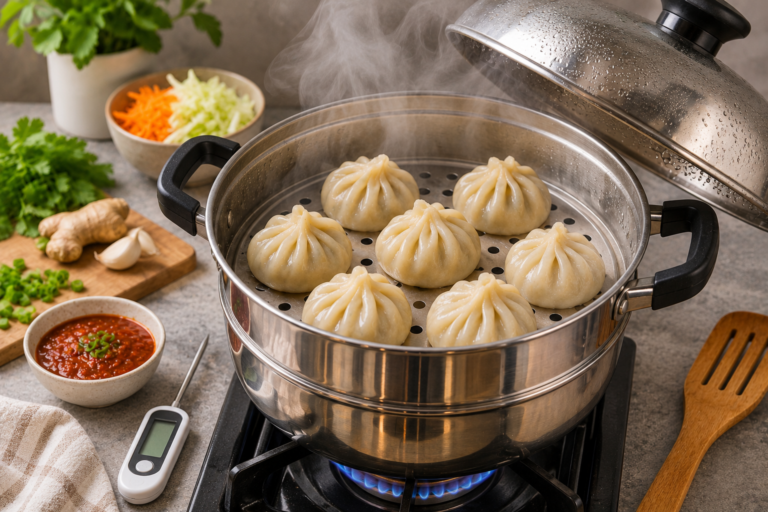
| Shortly before service | Steam the first batch and verify it is cooked |
| During service | Bring out smaller rounds and monitor temperature |
| When service ends | Cool and refrigerate safely handled leftovers promptly |
These are workflow prompts, not validated safe holding times; the actual equipment and serving window determine the plan.
FAQs
Can I put raw momos into a chafing dish?
No. Cook them by a suitable method first; hot holding is not a substitute for cooking.
Can sauces sit next to the steamer for hours?
Not without knowing their ingredients and safe holding conditions. Refrigerate or keep at the appropriate safe temperature.
What is the easiest way to keep quality high?
Smaller, more frequent batches rather than a single enormous early batch.
Sources: CDC — C. perfringens prevention and hot holding; FSSAI — food business hygiene requirements; Momo Delights — allergen information.
For more hands-on momo ideas, explore Make-Ahead Momo Dips: Refrigeration, Serving and Leftovers and Momo Snacks for a College Gathering: A Practical Serving Plan. Always check dietary needs and ingredient labels.

Leave a comment