

Aa Reading preferences
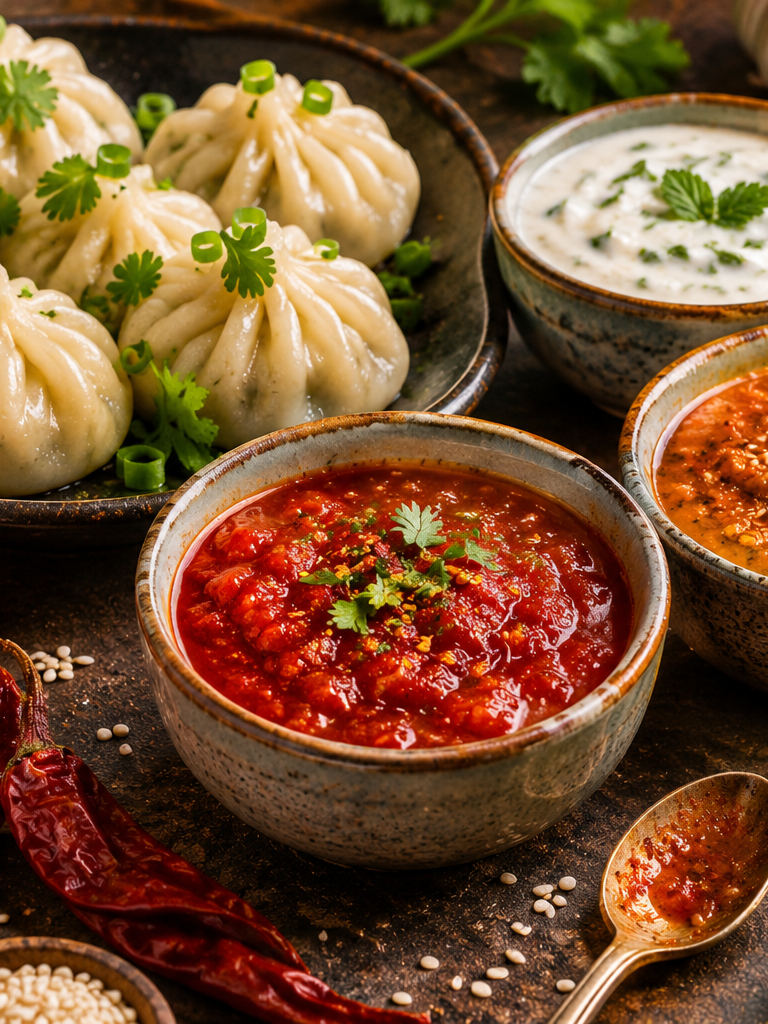
Cooking momos for guests is easier when the sauces are already done. But not every dip has the same storage behaviour: a cooked tomato sauce, a yoghurt-mint dip and a fresh ginger-scallion oil differ in moisture, acidity, allergens and handling risk.
A good make-ahead plan begins with what you will prepare, how you will keep it cold, and when it will enter service—not just how many jars fit in the refrigerator.
Choose sauces that suit the schedule
A cooked tomato-based dip can be prepared in a planned batch and cooled promptly. A yoghurt dip is usually best finished closer to service so herbs stay vibrant. A sauce containing fresh garlic or herbs in oil raises additional food-preservation concerns; do not treat it as a shelf-stable condiment.
Recipes are not interchangeable simply because they all sit next to momos. Their ingredients determine the safe handling approach. See Momo Delights’ allergen information for brand-level ingredient and cross-contact cautions.
Prepare in smaller containers
After cooking a sauce, divide it into clean, shallow containers to encourage prompt cooling. Cover and refrigerate according to food-safety guidance. The USDA recommends refrigerating perishable leftovers at 4°C/40°F or colder as soon as possible and never leaving them out beyond two hours, or one hour when ambient conditions exceed about 32°C/90°F.
Do not leave a large, deep pot of hot chutney on the worktop until morning. The centre cools more slowly than a shallow portion.
Label more than the date
Each prepared container should have a clear product name, preparation date/time where operationally useful, ingredients or allergen reference, and any approved use-by/discard instruction. A creamy white sauce may contain milk; a reddish dip could contain sesame or peanuts. Colour is not reliable allergen information.
At home, writing “sesame-tomato—contains sesame” on tape can prevent a guest from confusing it with plain tomato chutney. In a food business, follow the site’s approved recipe specifications and labelling policy.
A simple party-service plan
- Prepare only the expected quantity, allowing a modest buffer.
- Keep reserve portions in the fridge until needed.
- Bring out a smaller clean serving bowl first.
- Label sesame, peanut, milk and other key allergens clearly.
- Give each sauce its own clean spoon.
- Replace the serving bowl rather than continuously topping it up from fresh stock.
- Return unused, safely handled reserve portions to appropriate storage.
Do not return food that guests have directly dipped into the main reserve batch.
What can you safely keep?
USDA guidance generally allows properly refrigerated cooked leftovers for three to four days, but that is a general household guideline, not a verified shelf life for every homemade dip. Fresh herb oil, dairy sauces and product-specific recipes may need shorter handling limits. Follow authoritative instructions for the specific ingredients and discard anything with doubtful temperature history.
For fresh garlic submerged in oil, consult tested preservation guidance from university extensions because botulism risk is different from an ordinary cooked tomato sauce.
Which dip changes most while waiting?
| Dip | Likely quality change | Plan accordingly |
|---|---|---|
| Cooked tomato | Separation or thicker chilling texture | Stir with clean utensil and taste before serving |
| Yoghurt-herb | Herbs fade, liquid separates | Prepare close to service and keep chilled |
| Sesame-tomato | Thickening or settling | Check consistency; flag sesame |
| Peanut dip | Thickening as it rests | Check texture; flag peanut |
| Fresh aromatic oil | Special preservation concern | Do not assume room-temperature stability |
A useful guest-facing note
If a guest has a food allergy, menu labels alone are not enough. Ask about their specific requirements and explain any shared-preparation limitations. FARE recommends clear communication with the kitchen and notes that shared utensils and buffet arrangements can create cross-contact risk.
For more ways to prepare and enjoy momos, explore Momo Snacks for a College Gathering: A Practical Serving Plan and Momo Delights menu. Check ingredients and allergens before preparing food for others.
Frequently asked questions
Can I freeze any momo chutney?
Some may freeze satisfactorily, but dairy and emulsified dips can separate, and safe handling must be considered.
Is lemon juice a preservative guarantee?
No. A splash of lemon does not validate shelf-stable storage.
Can I reuse sauce from guests’ plates?
No. Discard guest-contact leftovers rather than mixing them with clean sauce.


Leave a comment