

Aa Reading preferences
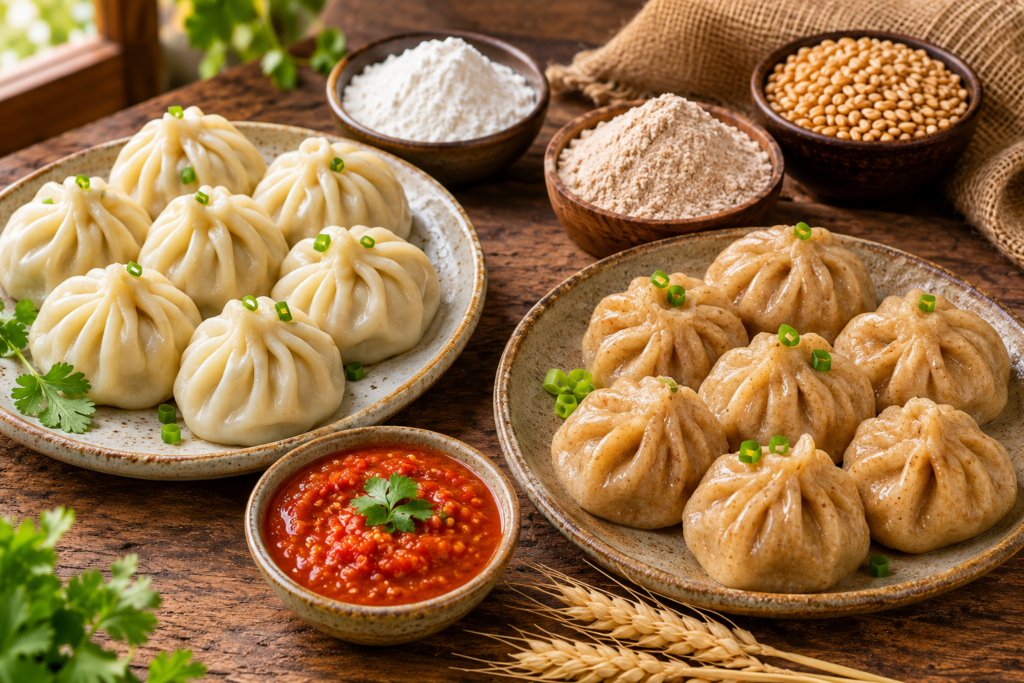
The flour you choose changes how a momo rolls, folds and tastes. A smooth white wheat dough can stretch into delicate pleats; whole-wheat flour brings a more robust flavour and a different bite; alternative grain blends introduce new textures but may be harder to seal.
There is no universal best flour. The right choice depends on the wrapper texture you want, the filling it needs to support, and your dietary requirements.
Why wheat is commonly used
Wheat contains proteins that form gluten when flour is hydrated and worked. That network gives dough the stretch needed for rolling thin rounds and closing pleated seams. Refined wheat flour—often called maida in India—usually produces smoother, finer wrappers than a coarse whole-wheat flour, though actual protein content and milling quality vary by brand.
Whole wheat is also wheat: it contains gluten. An “atta momo” is not suitable for someone avoiding gluten simply because it uses a less refined flour.
A texture comparison
| Flour choice | Likely wrapper character | Common adjustment |
|---|---|---|
| Refined wheat flour | Smooth, elastic, delicate when thin | Control hydration and rest time |
| Whole-wheat atta | More grain flavour, potentially denser texture | Allow extra hydration and gentle rolling tests |
| Refined + whole-wheat blend | Intermediate texture, depending on proportions | Test one small batch before scaling |
| Rice or maize flour | Different structure; may crack without a suitable formula | Use a recipe designed for the flour |
| Millet or ragi blend | Earthier flavour and varied structure | Check whether wheat is still included |
These are broad tendencies, not standardised results. A finely milled atta may behave differently from a coarse blend, and hydration matters as much as the label.
Start with a small test batch
For a basic wheat dough, a convenient trial is 100 g flour with water added gradually while kneading. Record the final amount rather than forcing a fixed number. Cover and rest the dough for approximately 20–30 minutes, then roll two or three wrappers. Observe whether the edge cracks, the circle springs back or the centre becomes too thin.
When comparing flours, keep wrapper weight and filling as similar as practical so you are actually testing the flour, not two unrelated recipes. Write down water added and how the cooked wrapper tastes.
What changes when you use more whole wheat?
Bran and germ alter the flour’s behaviour in dough. A whole-wheat wrapper can taste nuttier and less neutral than a refined-flour wrapper. The dough may need a little more water or more time to absorb it. Avoid solving every crack by pouring water onto the worktop; add moisture in small increments and allow a covered rest.
Roll the rim fine enough to seal while leaving an adequate centre. Thick whole-wheat edges can feel heavy, but an over-thinned centre can leak with a wet filling.
Gluten-free requires more than swapping flour
Rice, maize and certain millet flours are naturally gluten-free in their pure forms, but a commercial “ragi momo” may still contain wheat. Cross-contact in mills, kitchens, rolling equipment and steamers matters for people with coeliac disease. The Celiac Disease Foundation advises checking ingredients and possible gluten exposure carefully.
A gluten-free wrapper usually benefits from a recipe developed specifically for gluten-free structure. Do not assume one-to-one substitution for maida will produce a flexible, sealed dumpling.
Match the flour to the filling
For a light cabbage-and-ginger filling, a thin, neutral wrapper makes the vegetables prominent. Paneer can tolerate a slightly more substantial wrapper, while very juicy fillings require careful moisture control and good seal strength regardless of flour. A flour choice should be tested with the actual finished dish, not judged only by how soft the raw dough feels.
Explore the wrapper troubleshooting guide for problems caused by thickness and hydration after shaping.
Nutrition without sweeping claims
Whole-wheat flour generally retains more of the grain’s fibre than refined wheat flour, but the nutritional impact of a momo meal still depends on wrapper weight, filling, cooking oil, sauces and portion. Avoid treating “whole wheat” as a guarantee of low calories or as a cure for medical conditions. Use actual product nutrition information for quantitative comparisons.
For more ways to prepare and enjoy momos, explore Sharing Momos for Two: Choose Fillings, Textures and Heat Levels and How to Choose Between Steamed, Spiced and Crispy Momos. Check ingredients and allergens before preparing food for others.
Frequently asked questions
Is maida the only flour for momos?
No. Many cooks use blends or other grains, but dough behaviour changes.
Are whole-wheat momos gluten-free?
No. Whole-wheat flour contains gluten.
Can I use 100% ragi flour?
Only with a recipe designed for that flour’s structure; it may not roll and seal like wheat dough.
Which flour gives the softest wrapper?
The result depends on milling, hydration, thickness, resting and cooking—not just the flour name.


Leave a comment