Aa Reading preferences
Momo Delights lists Classic Veg Momo, Whole Wheat Veg Momo and Whole Wheat Paneer Momo on its published menu. This article explains how the wrappers can differ and what diners should verify, without claiming to know the exact flour ratios, nutrition labels or production steps of the brand’s individual products.
What exactly is whole-wheat flour—and how is it different from maida?
A grain of wheat contains three main edible parts. The bran is the fibre-rich outer covering; the germ contains some fats, vitamins and other nutrients; and the endosperm supplies starch and protein. The Whole Grains Council explains that a grain is whole when all three components remain in their original proportions. Refining generally removes much of the bran and germ, leaving more of the endosperm.
That milling difference influences colour, texture, water absorption, flavour and the amount of certain nutrients in the flour. It does not, on its own, establish the amount of whole wheat used in a branded food that might contain a blend of flours. A menu description is a helpful starting point; an ingredient specification is needed to establish the actual composition.
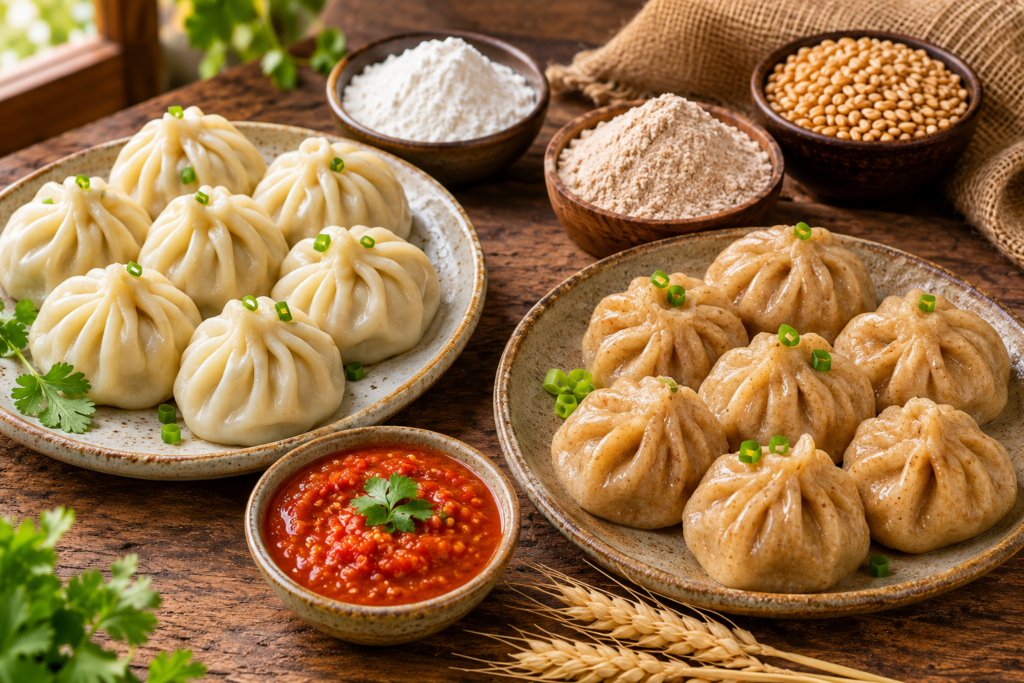
Whole wheat vs regular momos: side-by-side comparison
| Question | Regular refined-wheat momo | Whole-wheat momo |
|---|---|---|
| Typical flour | Refined wheat flour, depending on recipe | Whole-wheat flour, sometimes blended |
| Grain components | Primarily endosperm | Bran, germ and endosperm when genuinely whole grain |
| Wrapper appearance | Usually lighter and smoother | Often darker, with possible bran specks |
| Texture | Can be soft and highly pliable | May feel denser or more grain-forward |
| Fibre in flour | Typically lower after refining | Generally higher due to retained bran |
| Contains gluten? | Yes | Yes |
| Calorie difference? | Not reliably inferable from the name | Not reliably inferable from the name |
| Best comparison | Try with similar filling and cooking method | Compare alongside regular momos using the same conditions |
These are general culinary and grain-science expectations, not independently measured results from Momo Delights. The flour composition, recipe and product handling determine what customers actually experience.
How flour changes the taste and texture of a momo wrapper
Refined-wheat wrappers: soft and flexible
Refined wheat flour is commonly used for dumpling skins because it can make smooth, flexible dough that stretches into thin discs. Water, mixing, resting and rolling all affect the result. The final wrapper should be thin enough to complement the filling but strong enough to stay sealed during steaming. That balance matters more than a decorative fold count.
Whole-wheat wrappers: more grain character
Retained bran particles can interrupt the continuity of a dough and change how water is absorbed. A whole-wheat wrapper may therefore feel slightly more substantial or rustic, although this is not inevitable: flour grind, hydration, resting and rolling technique all matter. Adding more water without testing can make the dough sticky; using too little can make it crack or tear.
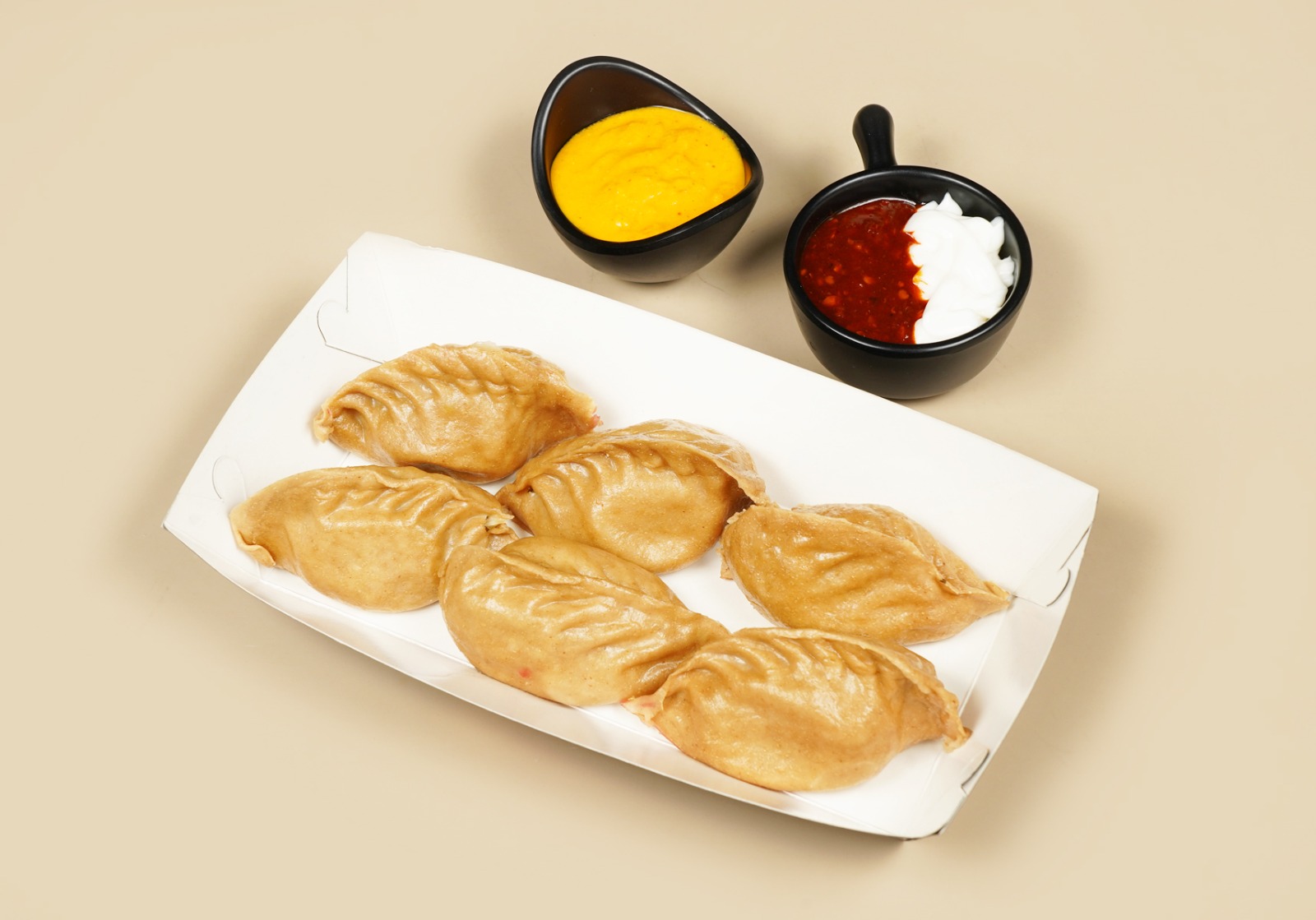
A thoughtful kitchen evaluates whole-wheat dough for rolling strength, pleat integrity, filling leakage and texture after steaming—not simply the darkness of its colour. Dark wrappers can also result from other grains or ingredients, so appearance alone cannot verify the flour percentage.
Are whole-wheat momos healthier than regular momos?
Whole-wheat flour generally retains more of the original grain’s fibre and some micronutrients compared with refined flour, as described by the Whole Grains Council’s grain composition guide. But turning that observation into a claim that every whole-wheat momo is “healthier” requires more information. A full serving contains wrappers, a filling, seasonings and sauces—and sometimes added cooking oil.
For example, a thick whole-wheat wrapper around a high-fat filling might have a very different nutritional profile from a thin refined-flour wrapper filled mainly with vegetables. The two could also have different portion weights. Without reliable serving-level data, saying one has fewer calories or more protein is speculative.
| Common claim | Careful interpretation |
|---|---|
| “Whole-wheat flour retains the whole grain” | Generally correct when the flour truly contains all grain components in the original proportions |
| “Whole-wheat momo always has more fibre per plate” | Not guaranteed: flour proportion, wrapper quantity, filling and portion size matter |
| “Whole-wheat momos are low-calorie” | Not established without finished-product nutritional analysis |
| “Whole-wheat momos contain no maida” | Check the actual formula; a named item could use a blend unless the producer specifies otherwise |
| “Whole-wheat momos are suitable for a gluten-free diet” | Incorrect: wheat contains gluten |
| “Steamed momos contain zero fat” | Not guaranteed: filling and sauces can contain fat even when no frying oil is added |
For customers choosing food for medical reasons or highly specific dietary needs, the correct source is a verified ingredient statement and professional advice where appropriate—not an unsourced menu description.
Are whole-wheat momos gluten-free?
No. Whole-wheat and refined-wheat flours both contain gluten proteins. The Celiac Disease Foundation identifies wheat and its derivatives as sources of gluten and also highlights cross-contact risks from shared equipment. Whole wheat is not interchangeable with a gluten-free flour simply because it is less refined.
Customers avoiding wheat or gluten should review the full ingredients of any wrapper, filling and dipping sauce, and ask about preparation surfaces, flour dust and shared steamer utensils where cross-contact matters. Even alternative-grain momos may include wheat in a blend. See Momo Delights’ allergen information and request confirmation of the precise menu item before ordering.
What changes when a kitchen makes whole-wheat momos?
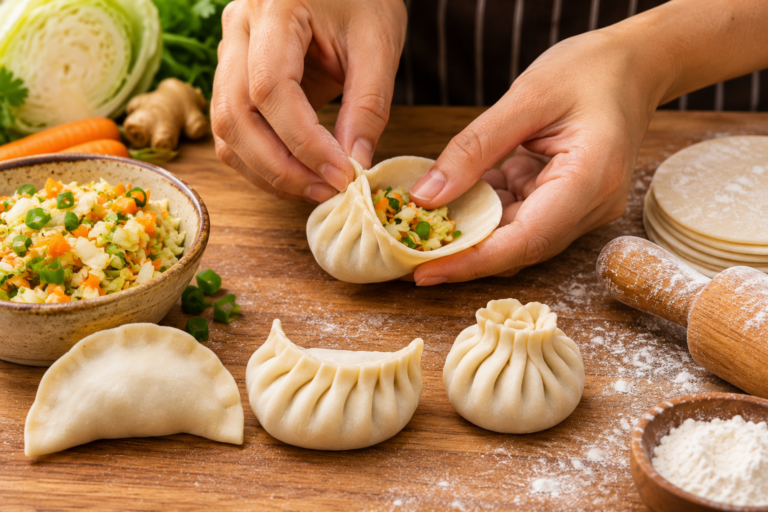
The wrapper recipe must still be designed for a sealed, fully cooked dumpling. In general, a cook should test the following rather than treat whole-wheat dough as a drop-in replacement for every refined-flour dough:
- Flour specification: Verify whether the flour is 100% whole wheat, partially whole wheat or a blend; record the supplier and grind.
- Hydration: Measure flour and water rather than relying on appearance, because different flour lots can absorb water differently.
- Resting: Allow an appropriate rest period to improve handling and rolling, according to the tested recipe.
- Rolling: Keep wrappers even and robust at the edges so pleats seal instead of tearing.
- Filling: Avoid overfilling and excessive free moisture; both can damage any wrapper.
- Cooking: Use a validated steaming procedure for the actual product size and filling, not a universal time taken from another recipe.
- Service: Compare texture immediately after cooking and after realistic takeaway holding to ensure acceptable quality.
These are general food-development principles, not a disclosure of Momo Delights’ internal recipes or production SOPs. Food businesses should follow the FSSAI hygiene framework and apply their own validated preparation procedures.
Whole-wheat vs millet, ragi and beetroot momos: not the same category
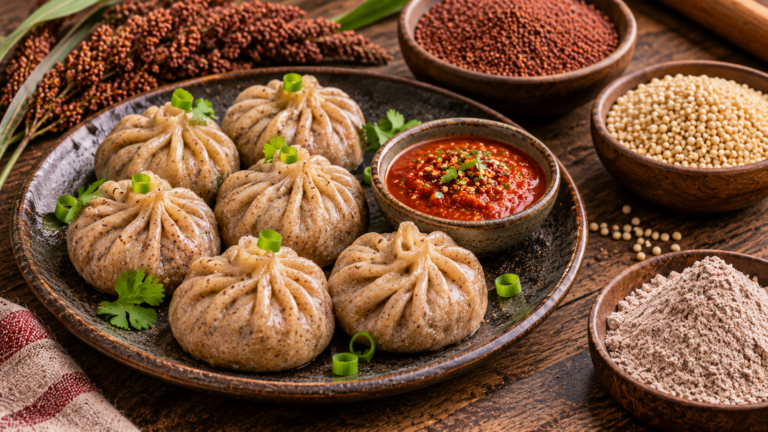
A whole-wheat momo differs from a refined-wheat momo in the degree of wheat-grain processing. Millet or ragi describes a different grain choice, and beetroot usually describes an ingredient or colour variation. These names can overlap: for example, a colourful wrapper could still contain whole-wheat flour, and a millet blend might also contain wheat.
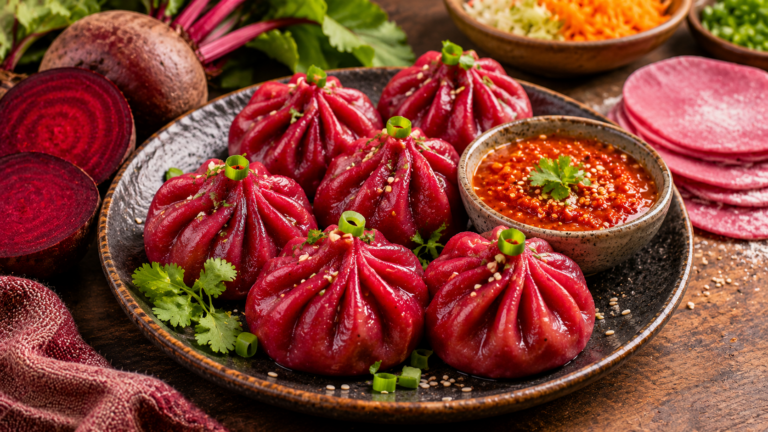
Momo Delights’ wider menu lists Whole Wheat Veg Momo, Whole Wheat Paneer Momo, Beetroot Momo and Millet/Ragi Momo. Do not assume these items are gluten-free, lower in calories or suitable for a specific medical diet from their names. They should be compared using actual ingredients, filling and serving sizes.
Which type should you order at Momo Delights?
If you want a familiar soft-wrapper experience, begin with the published Classic Veg Momo where available. If you enjoy a grainier wrapper or want to explore whole-wheat ingredients, ask the outlet about Whole Wheat Veg Momo or Whole Wheat Paneer Momo. The paneer option contains milk; the wheat wrapper contains gluten.
For a useful tasting comparison, choose steamed preparations with similar fillings and try a first bite without sauce. Then dip each in a little chutney and note how the sauce changes the taste. The brand’s outlet directory is the source for current locations; dish availability and prices must be verified with the relevant outlet.
What restaurants should measure before adding whole-wheat momos
Whole-wheat menu innovation is worthwhile only if it is accurate, consistent and enjoyed by customers. Before launching, document wrapper thickness and portion weight, kitchen preparation time, folding breakage, yield after cooking, availability of suitable flour and storage/holding behaviour. Request specific supplier information if buying ready-to-cook products rather than preparing the dough in-house.
The Momo Delights foodservice enquiry page is suitable for asking what current products and specifications the business can supply. A consumer menu listing is not proof that every whole-wheat product is offered for wholesale.
Frequently asked questions about whole-wheat momos
What is the difference between wheat and maida momos?
Whole-wheat momos use a wrapper containing whole-wheat flour; regular refined-wheat momos commonly use maida, which has less bran and germ. The actual recipe may include blends.
Are whole-wheat momos made without maida?
Not necessarily. Only a verified ingredient specification can establish whether any refined wheat is included.
Are whole-wheat momos always healthier?
Whole-wheat flour often offers more fibre than refined flour, but finished-product nutrition depends on the full recipe and serving.
Do whole-wheat momos contain gluten?
Yes, whole wheat is a gluten-containing grain.
Do whole-wheat momos taste different?
They may taste earthier or feel denser, though flour blend, hydration and preparation change the result.
Are whole-wheat momos suitable for weight loss?
No particular food guarantees weight loss. Portion size and the overall diet matter more than the wrapper name alone.
Are whole-wheat paneer momos vegan?
No. Paneer is dairy, regardless of the wrapper flour.
Does Momo Delights list whole-wheat momos?
Yes, its published menu lists whole-wheat vegetable and paneer variants, subject to current outlet availability.
Research sources and transparency
- Whole Grains Council — What’s a Whole Grain? A Refined Grain?: grain structure, milling and nutritional context.
- Celiac Disease Foundation — Sources of Gluten: gluten-containing grains and cross-contact.
- FSSAI — Food Hygiene Requirements: professional food preparation context.
- Momo Delights — Official Menu: verified item names; not an ingredient specification.
Editorial review: 1 November 2026. General ingredient science does not establish the composition or nutrition of any particular menu SKU. Images include original conceptual AI artwork and an existing Momo Delights media-gallery image. Do not present conceptual artwork as a real product photograph.