

Aa Reading preferences
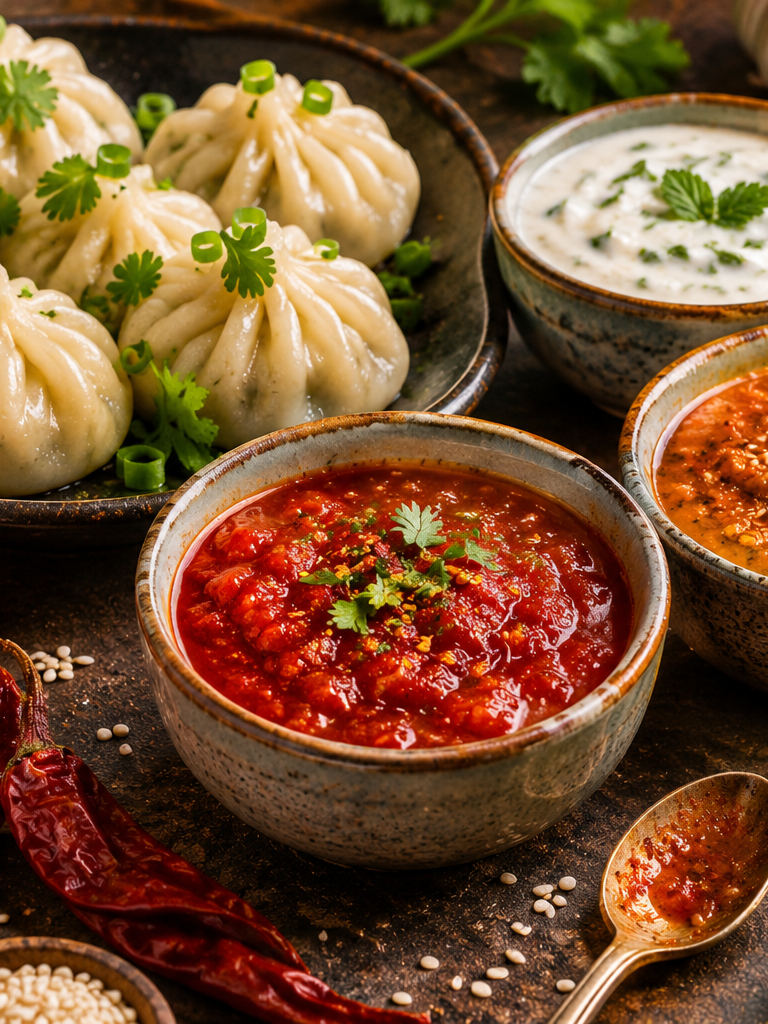
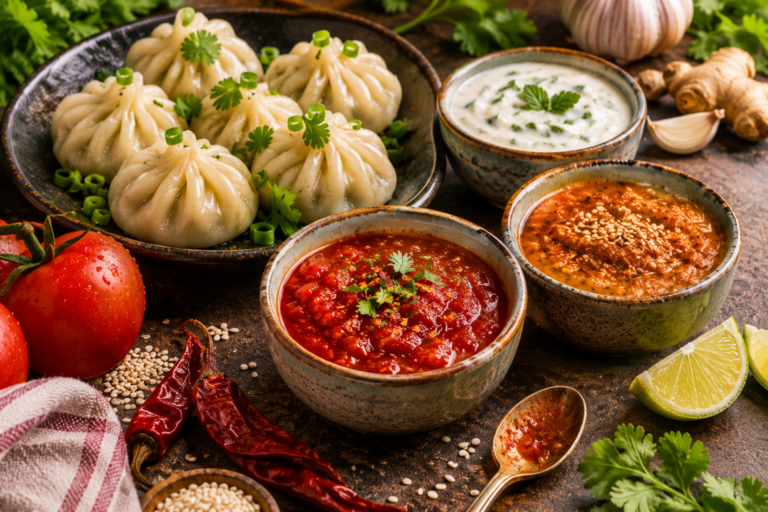
When a plate of momos arrives in Nepal, the accompaniment is rarely an afterthought. A spoonful of achar can turn a gentle, savoury filling into something vivid: tangy tomato, toasted sesame, chilli and aromatic spices in combinations that vary from kitchen to kitchen.
Calling every accompaniment “red momo sauce” misses what makes these pairings interesting. Achar is a broader part of Nepali food culture, and momo preparations draw on that tradition without following one universal formula.
Achar belongs to more than the momo plate
The Nepal Tourism Board describes achar as a common accompaniment to a regular Nepali meal of dal, bhat and tarkari. It also identifies steamed and fried momos as popular snacks. Those two details help explain why the meeting of dumpling and achar feels natural in many Nepali settings: the condiment is part of a wider language of taste, not a sauce invented exclusively for dumplings.
Styles differ across communities, regions and households. It is inaccurate to claim one exact recipe represents all Nepalese cooks.
What achar contributes to a bite
| Element | Contribution |
|---|---|
| Tomato or another sour ingredient | Brightness against savoury filling |
| Chilli | Heat that diners can adjust |
| Toasted sesame | Body, aroma and a nutty note |
| Ginger and garlic | Fragrant depth |
| Water or stock | Changes thick chutney into a looser jhol-style accompaniment |
Not every achar contains all of these. Some use different seeds, nuts, acids or spice blends. A sesame-based sauce also has a real allergen implication.
Thick dipping achar versus jhol
A thick tomato-chilli achar lets the diner dip each momo at the table. A thinner jhol can surround the dumplings, coating the wrapper as the bowl is eaten. The difference changes not only flavour concentration but texture: a dumpling sitting in liquid for a long time may soften at the folds. Serve freshly prepared food promptly for the best contrast.
Why the wrapper is part of the relationship
Many wheat-based momo wrappers are intentionally fairly neutral. They hold a strongly seasoned filling but also leave room for a bright accompaniment. A thin skin allows sauce and filling to meet in each bite. Heavy sauce can overwhelm a delicate cabbage-ginger mixture; a gentler achar may better reveal the vegetables. Taste the first piece plain, then choose the amount of condiment deliberately.
A respectful home tasting
For an educational comparison, serve the same fully cooked vegetable momo with three small cups: plain roasted tomato, tomato-chilli and a sesame-tomato variation. Notice acidity, body, aroma and heat rather than asking which is “most authentic”. Label sesame clearly and provide clean separate spoons. The tasting is an invitation to learn, not a claim of historical authority.
Culture without a single origin story
Himalayan food traditions overlap and have changed through travel, family cooking and urban restaurants. Achar recipes reflect those histories, so a single date or individual “inventor” is rarely supportable for a broad category. It is more accurate to describe the specific kitchen, source or regional example and make room for other versions.
For a broader context see Momo Delights’ overview of Tibetan, Nepalese and Himalayan food.
Buying and allergy notes
Ask whether a restaurant’s achar uses sesame, peanuts, tree nuts, dairy or soy and whether the same blender handles other sauces. “Vegetarian” does not mean allergen-free. Achar served cold also requires appropriate handling and safe storage; strong chilli or acidity is not automatically a preservation process.
FAQ
Is achar the same as chutney?
The terms overlap in everyday menu language, but achar has a wider Nepali culinary role and many preparations.
Does every momo achar use sesame?
No. Check the recipe and allergies.
Is jhol simply watery chutney?
Jhol is a deliberate liquid preparation, not necessarily an accidentally diluted sauce.
For more context on regional dishes and momo culture, explore Momos and Soup in Sikkim: Regional Pairing Traditions and Vegetarian Himalayan Dumplings: Traditions and Variations. Regional recipes and traditions are diverse.



Leave a comment