

Aa Reading preferences
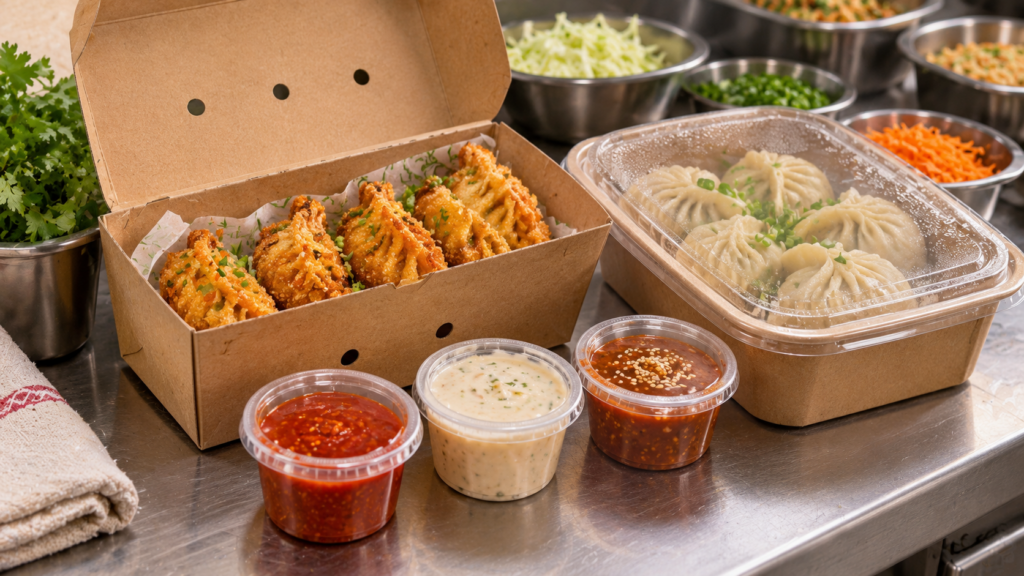
A takeaway box touches the food, travels with the order and becomes the last part of the kitchen experience. If it warps under heat, leaks sauce or traps so much steam that crisp momos turn soft, the problem is not cosmetic. It is an equipment and quality decision that needs evidence.
Indian foodservice operators should select food-contact material suitable for the actual food, temperature and transport conditions—not just a container labelled “eco” or “microwave friendly”.
What FSSAI’s packaging rules require
FSSAI’s Food Safety and Standards (Packaging) Regulations set general requirements for food-contact materials: food-grade quality, suitability for the product and conditions of use, resistance to relevant mechanical, chemical and thermal stresses, hygienic packaging and compatible closures. The official amendments page shows a packaging amendment dated 7 August 2026, so operators should review the current consolidated rules rather than rely on an old supplier brochure.
Printing and inks also matter. The FSSAI compendium says printed package surfaces should not directly contact food, and sealing materials must be compatible with the container and product.
Test the box with the actual menu item
| Check | What to verify |
|---|---|
| Food-contact suitability | Written material declaration and intended food use |
| Heat resistance | No distortion under actual hot-food conditions |
| Venting | Appropriate steam release without unsafe contamination or excessive cooling |
| Base strength | No collapse under realistic stacking and transport |
| Sauce cup closure | Leak resistance after tipping, vibration and handling |
| Allergen separation | Accurate identification of individual sauces and items |
| Disposal claim | Verifiable recycling or compostability information |
Run a realistic 20-minute delivery simulation
Prepare identical fully cooked portions and place them into candidate containers under similar starting conditions. Record food temperature, time sealed, visible condensation, wrapper texture and lid condition after twenty minutes. Tilt and gently move boxes as they might travel in a rider bag. Repeat with the same sauce quantity. This is a quality-development test; a 20-minute result does not validate microbiological safety for every delivery distance.
Venting solves one problem and can create another
A vent may release moist air that would otherwise condense on the lid, but uncontrolled openings can let the food cool too quickly or expose it to dust and physical contamination. The decision should be made with the approved packaging supplier and the food-safety lead. Do not punch arbitrary holes in an untested plastic container and call it an engineering solution.
Know what ‘microwave safe’ does not mean
A symbol indicating microwave suitability is not automatically evidence that a container can withstand prolonged hot filling, direct boiling water, frying oil or a particular sauce composition. Ask the supplier for its declared temperature and intended use. Avoid placing hot food against unknown plastics, printed surfaces, glue or packaging that smells unusual after heating.
A supplier documentation checklist
- Material specification and appropriate food-grade evidence
- Declared permitted temperatures and contact duration
- Relevant testing and compliance documentation
- Available sizes, weight tolerances and closures
- Custom print position relative to food contact
- Sample packs for controlled transport tests
- Process for reporting failures and changing materials
For broader service and cold-chain controls, see the frozen momo receiving guide. A receipt-side check and a hot-food box trial solve different problems.
For foodservice operations and supplier requirements, see foodservice supply overview and quality assurance and traceability. Verify packaging suitability, specifications and food-safety requirements for your operation.
Frequently asked questions
Is paper always safer than plastic?
No. Both require suitability for the intended food, coatings, heat and transport.
Should sauce go into the same compartment?
Separate sealed cups often protect texture and allergens, but must be tested for leaks.
Does “compostable” prove food-contact compliance?
No. Environmental claims and food-contact safety are different checks.

Leave a comment