Aa Reading preferences
Want to discover your preference instead of guessing from the menu? This comparison guide explains what the names mean, how texture and flavour change, how to make a sensible first order, and which variations appear on the Momo Delights menu. It is a companion to our separate beginner’s guide, What Are Momos?, rather than a repeat of momo history.
Types of momos: quick comparison chart
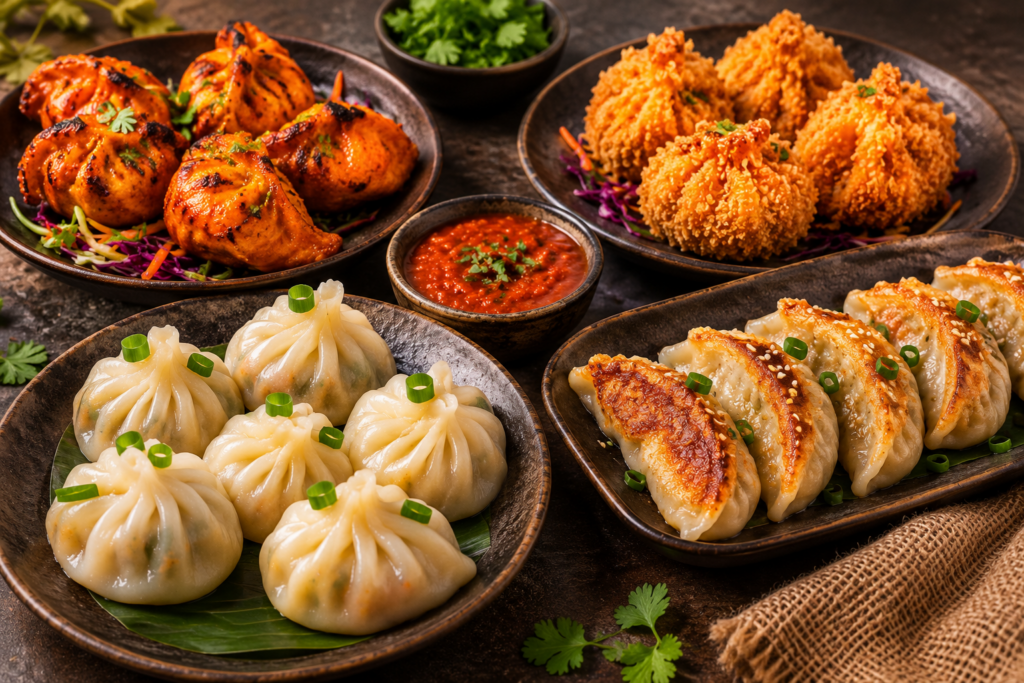
| Type | What defines it | Typical texture | Good choice if you like |
|---|---|---|---|
| Steamed | Cooking with steam | Soft, tender wrapper | Filling-forward flavour |
| Fried | Frying after assembly or pre-cooking, according to the recipe | More uniformly crisp outside | Crunch and richer finish |
| Kothey | Pan-searing, often with some steaming | Crisp browned contact side, softer upper wrapper | Contrast in every bite |
| Tandoori | Spiced marinade and roasted/grilled finish | Seasoned exterior, possible charred notes | Bold spice and roast aroma |
| Kurkure | Crumb/coating and crisp finish | Crunchy outside | Extra-crisp snacks |
| Jhol | Served immersed in a seasoned sauce/broth | Soft wrapper with sauce-soaked bites | Spoonable, tangy or warming flavours |
| Chilli/C-momo | Seasoned or tossed with a chilli-led sauce | Depends on base cooking method | Heat and sauce |
Descriptions are general, not standardised legal definitions. A particular restaurant may use different preparations or names. Sikkim Tourism documents steamed momos as a regional staple; The Indian Express documents several contemporary variations; and Kathmandu-based momo restaurants list steamed, fried, kothey and jhol as separate menu styles (Timure Mo:Mo menu).
The major momo cooking styles
1. Steamed momos: the reference point
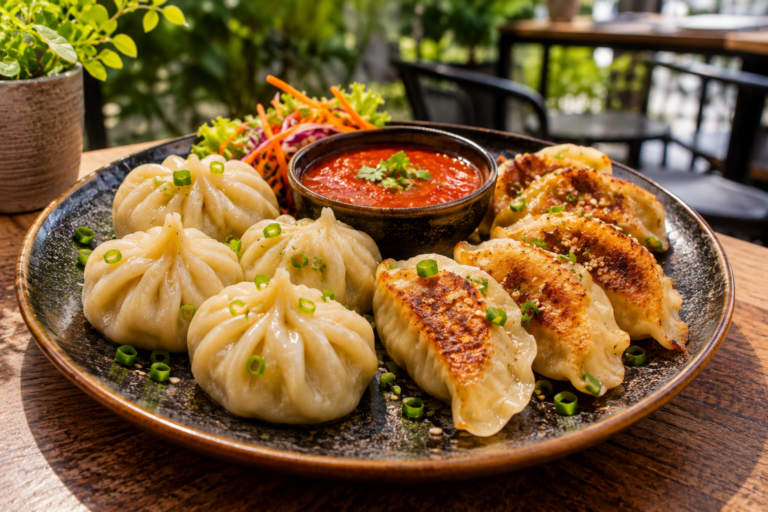
For a classic steamed momo, a seasoned filling is enclosed in dough and cooked above boiling water, not immersed in it. Steam sets the wrapper and helps the filling cook inside the sealed parcel. The result is generally soft and moist, which makes it a useful starting point for comparing fillings. Steam cooking does not, by itself, guarantee low calories or a ‘healthy’ food: nutrition depends on the actual filling, wrapper, portion and condiments.
What to notice: Wrapper thickness, the balance between dough and filling, whether the centre is properly cooked, and the taste of the accompanying chutney. A soggy, split or dry momo can reflect preparation and handling factors; appearance alone does not establish food-safety compliance.
2. Fried momos: a crisper finish
Fried momos are prepared with oil to create a more substantial outer texture. Depending on the kitchen, a momo may be cooked first and fried afterward or cooked using another validated method. This is why menus often describe the style rather than one universal technique. The resulting wrapper can be crisp, though a long wait in closed takeaway packaging can soften it with steam.
Best for: People who prefer a crunchy exterior and a dipping sauce on the side. Veg Fried Momo is among the menu entries currently listed by Momo Delights.
3. Kothey momos: pan-seared contrast
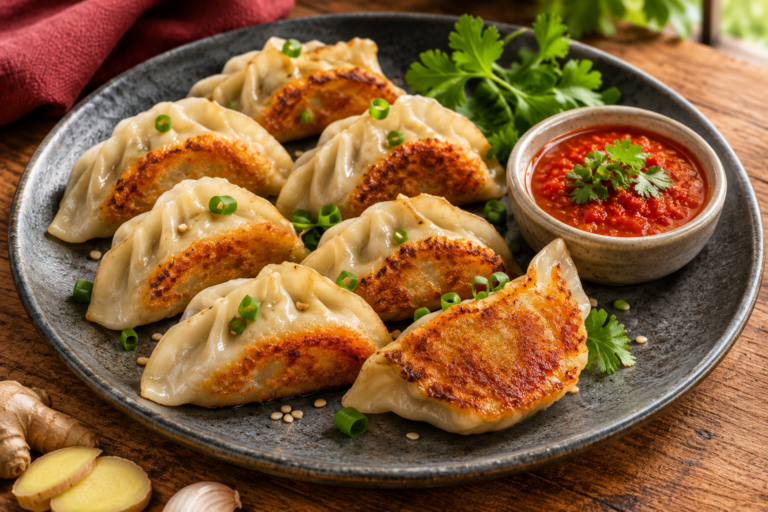
Kothey-style momos are associated with a pan-cooked finish: the side touching the pan develops colour while the rest remains tender, commonly through steam retained in the covered pan. This differs from a fully fried momo because the texture is intentionally uneven—in a good way. Some restaurants use crescent-shaped wrappers, but shape and method can vary.
What to notice: The crisp base should complement rather than overwhelm the dumpling. The Momo Delights menu lists Veg Kothey Momo and Paneer Kothey Momo. Verify current item availability when ordering.
4. Tandoori momos: a contemporary Indian restaurant adaptation
Tandoori momo is not a single centuries-old Himalayan recipe; it is a modern restaurant approach that combines the dumpling with tandoori-style seasoning. Many recipes cook the momo first, coat or marinate it with spiced ingredients—sometimes yogurt-based—and then finish it over high heat, in a tandoor, oven or grill. The flavour depends on the spice blend, fat, heat exposure and sauce.
Because a tandoor is not used by every restaurant, do not assume a specific cooking appliance from a name alone. The relevant question is: what seasoning and finishing technique does this kitchen actually use? Momo Delights lists a Tandoori Momo Platter, Classic Masala Momo, Afghani Momo and Malai Momo in its current published menu. These are restaurant variations with different flavour treatments—not interchangeable labels.
5. Kurkure momos: texture-led innovation
In many Indian restaurant preparations, kurkure momos are wrapped or coated with crisp crumbs, flakes or a batter and finished for crunch. The exact coating can differ and may include ingredients that matter to people with allergies. Kurkure is primarily a texture description, not a guarantee of which ingredients are used. Ask for the kitchen’s ingredient list if you need to avoid wheat, dairy or another allergen.
On the Momo Delights menu, both Veg Kurkure Momo and Paneer Kurkure Momo are listed. For a fair tasting comparison, try a steamed vegetable momo alongside a crispy version and note the contrast in wrapper texture and sauce intensity.
6. Jhol momos: when the sauce becomes part of the dish
Jhol momo is especially associated with Nepali momo food culture. Instead of simply dipping a dumpling in sauce, the momos arrive with a pourable, seasoned sauce or broth. Common versions can draw on tomato, sesame, spices and other local ingredients, but there is no one fixed jhol recipe. The texture changes as the wrapper picks up the surrounding liquid. Timure Mo:Mo describes jhol momo as momos served with sesame-tomato soup.
Jhol is included here for education, not as a claim that Momo Delights currently sells jhol momos. Check the menu for actual availability.
7. Chilli momos: a sauce-led variation
Chilli or C-momo typically describes momos in a hot, tangy sauce, sometimes tossed with onions, capsicum or aromatics. Unlike ‘steamed’, the term tells you more about the seasoning than the dumpling’s original cooking method. The same principle applies to Schezwan and peri-peri labels: the ingredients and heat level are kitchen-specific.
Momo fillings: a separate way to classify types
It is common to order the same cooking style with different fillings. That is why ‘paneer momo’ and ‘kothey momo’ are not directly opposing categories: one identifies a filling, and the other a preparation style.
Vegetable momo
Vegetarian fillings frequently contain combinations of cabbage, carrot, onion, ginger and other vegetables; recipes vary. A properly balanced filling keeps some bite without feeling watery. Whole-wheat, beetroot and millet/ragi variants may change the dough rather than the core filling.
Paneer momo
Paneer brings a dairy-based filling with a different texture and richness compared with chopped vegetables. It is not automatically high-protein or low-fat without nutrition data, and it is unsuitable for someone with a milk allergy. Momo Delights’ current menu includes Paneer Momo and several paneer-based variants.
Meat-filled momos
Different Himalayan communities prepare momos with meats such as buffalo, pork, chicken or others according to local practices and preferences. Never assume a restaurant carries a meat version without checking its published menu. Food handling and complete cooking are especially important with raw meat fillings.
Alternative wrappers and modern combinations
Whole wheat, beetroot-coloured dough, spinach-based dough, and blends that include millet or ragi can offer variety in taste and appearance. But a colourful or grain-based wrapper does not establish gluten-free status or a particular health benefit. Check ingredients and cross-contact information before making dietary decisions; read Momo Delights’ allergen information.
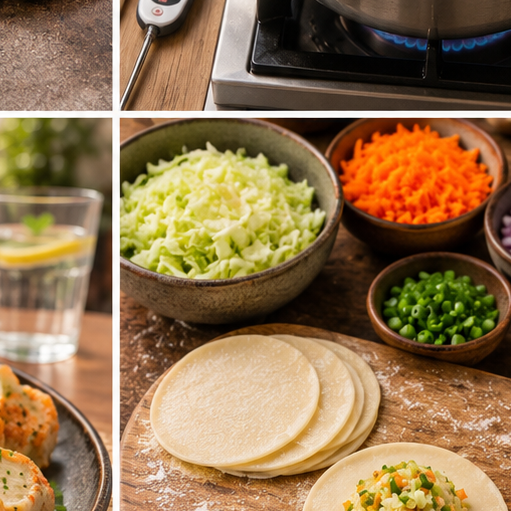
Chutneys and sauces change how each momo tastes
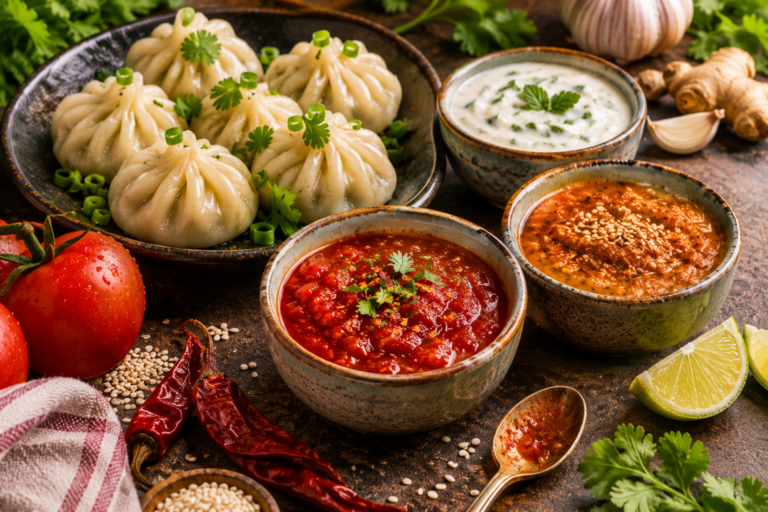
A spoon of tomato-chilli chutney can sharpen an otherwise mild steamed momo, while creamier or roasted spice treatments can make a plate taste richer. Traditional serving accompaniments vary widely; the Gangtok district’s regional cuisine guide lists momo and tomato achar among local dishes. There is no reliable universal ‘momo sauce recipe’ shared by all Nepalese, Tibetan and Indian kitchens.
- Steamed plus tangy sauce: Highlights the wrapper and filling.
- Kothey plus dip: Preserves crisp contact areas when sauce is served separately.
- Kurkure plus dip: Protects crunch until the moment you eat.
- Tandoori plus creamy or spicy sauce: Creates a bolder, coating-led experience.
- Jhol: The sauce is integral; a spoon may be useful.
How to choose the right momo for your taste
| Your preference | Start with | Why |
|---|---|---|
| Soft, delicate wrapper | Classic steamed veg or paneer | Lets the filling lead |
| Crisp bottom, tender top | Kothey | Two textures in one dumpling |
| All-over crunch | Fried or kurkure | More texture from the outer finish |
| Roasted spice flavour | Tandoori-style | Heat-finished marinade and seasonings |
| Sauce in every bite | Jhol where sold | Broth and dumpling eaten together |
| Trying several styles | A sampler, if available | Direct comparison on one occasion |
Keep dietary choices separate from texture preferences. ‘Steamed’ does not necessarily mean vegetarian; ‘paneer’ indicates dairy; and a flavoured momo may have several additional ingredients. Ask about the actual recipe where important.
Which types of momos are on the Momo Delights menu?
The published menu currently groups dishes under Steamed Momos, Fried & Kothey Momos and Tandoori Momos. Examples shown include Classic Veg Momo, Paneer Momo, Darjeeling Momo, Whole Wheat Veg Momo, Beetroot Momo, Millet/Ragi Momo, Veg Kothey Momo, Paneer Kothey Momo, Veg Fried Momo, Veg Kurkure Momo, Paneer Kurkure Momo, Classic Masala Momo, Afghani Momo, Malai Momo and the Tandoori Momo Platter.
The listing is a menu snapshot, not a guarantee that every product is sold at every location at every moment. Explore the current Momo Delights menu before visiting. For outlets and contact details, use Find Us. In-depth background can be found in our articles on Himalayan momo preparation, Sikkim momo traditions and momos versus dumplings.
Frequently asked questions about momo types
How many types of momos are there?
No authoritative fixed number exists. Because a momo can be defined by cooking method, filling, sauce or wrapper, menus may contain dozens of combinations and local traditions have many additional variants.
What is the difference between fried and kothey momos?
Fried momos have a more broadly crisp outer finish; kothey momos tend to emphasise a browned pan-contact side while leaving the other side softer.
Are tandoori momos traditional Himalayan momos?
They are better described as a contemporary Indian restaurant adaptation of the momo, with spiced and often roasted or grilled finishing methods.
Which momos are least spicy?
Steamed momos often allow a milder tasting experience, but spice depends on the filling and sauce. Ask for the dip separately if you prefer less heat.
Are kurkure momos the same as fried momos?
They may both be fried, but kurkure preparations commonly add an extra crisp coating. Exact preparation varies by restaurant.
Are whole-wheat or millet momos gluten-free?
Whole wheat contains gluten. A momo described as millet or ragi may also contain wheat in a blended wrapper or through cross-contact; verify the full recipe.
Which momo should a first-time customer order?
A steamed vegetable or paneer momo is a practical introduction, followed by kothey or tandoori if you want to experience a contrasting finish.
Do all Himalayan communities make the same style of momos?
No. Recipes and serving customs differ between communities, households and restaurants. The shared name should not erase those culinary differences.
Sources and editorial context
- Sikkim Tourism — Cuisine (traditional steamed momo description).
- Government of Sikkim, Gangtok District — People and Recipes (regional momo and achar context).
- The Indian Express, March 2026 — Types of Momos (modern variants including tandoori, kurkure and jhol).
- Timure Mo:Mo, Kathmandu — Menu (restaurant use of steamed, fried, jhol and kothey names).
- Momo Delights — Current Food Menu (examples of dishes explicitly listed by the brand).
Editorial transparency: Reviewed 1 November 2026. Preparation names can vary by kitchen; verify ingredients, availability and cooking methods with the provider. The supporting images are AI-generated editorial illustrations, not photographs of Momo Delights’ finished products.