

Aa Reading preferences
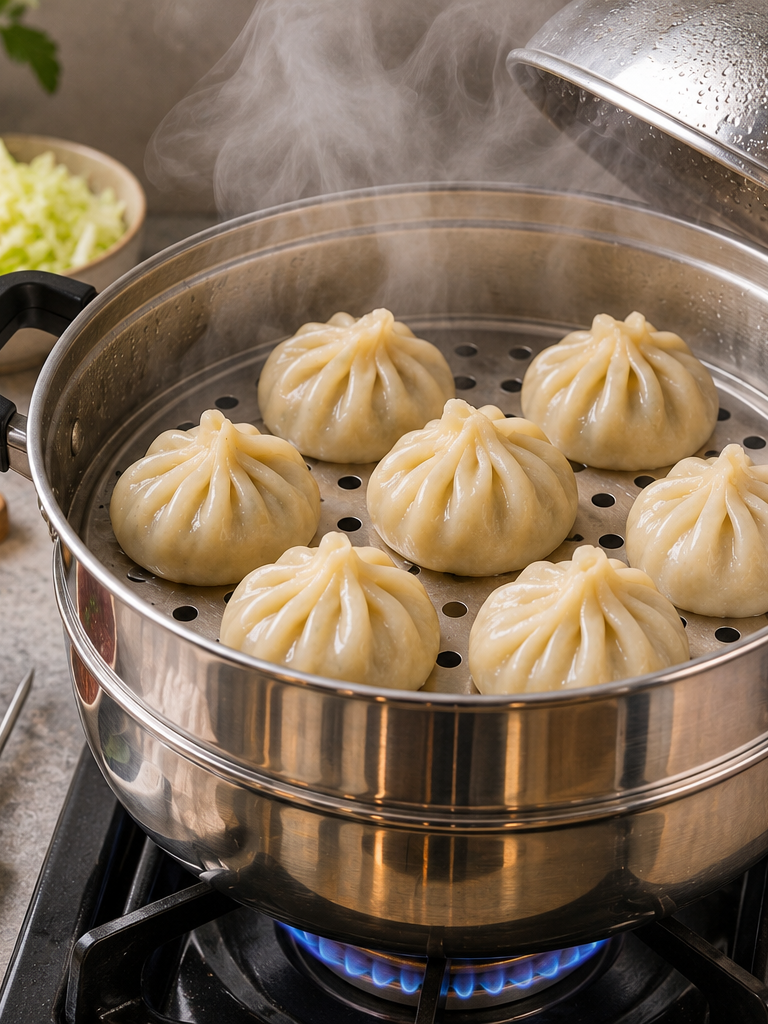
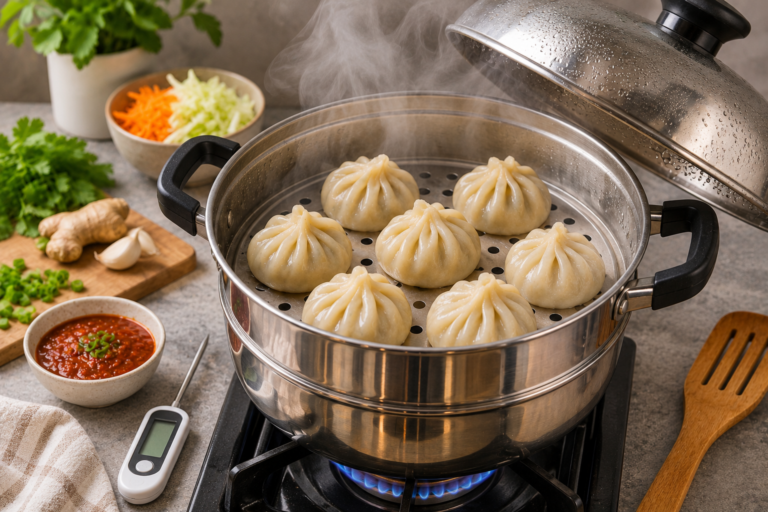
A dedicated bamboo or stainless-steel steamer is convenient, but it is not essential for making momos at home. What you need is a covered pot, a stable food-safe platform that keeps the dumplings above boiling water, and enough room for steam to circulate.
The principle is simple: steam, not boiling water, cooks the momos. These three setups give you a workable starting point without special equipment. Cooking time will depend on size, filling, whether the dumplings are fresh or frozen, and the manufacturer’s instructions.
Setup 1: A metal sieve or colander over a pot
Choose a stainless-steel sieve or colander that sits securely over a saucepan, without dropping into the water. Add water below the sieve, bring it to a steady simmer, place the momos in a single spaced layer and cover with a well-fitting heatproof lid. If the lid does not seal neatly, use a pot and colander that fit together more safely rather than attempting an unstable balancing act.
Best for: a small batch when you have a sturdy metal colander. Avoid plastic or other materials not rated for steam and stovetop heat.
Setup 2: A trivet and heatproof steel plate
Put a stable stainless-steel rack or trivet inside a broad pot. Pour in enough water to create steam while keeping its level below the plate. Set a heatproof steel plate on the rack, arrange lightly oiled or lined momos with gaps between them, and cover.
Check the water level before starting and keep the pot from boiling dry. A plate with small perforations gives steam a more direct path; a solid plate works less evenly and may collect condensation, so check the centre of the batch carefully.
Setup 3: An idli stand or multicooker steam basket
An idli stand can be surprisingly useful for compact momos. Lightly oil the wells or use a suitable food-grade liner, leave space for expansion and cook with the vessel’s lid in place. A multicooker steam basket is another option if its instructions allow steaming dumplings. Follow the appliance manual, including its minimum-water and pressure-release requirements.
Best for: families that already own Indian steaming equipment and want a repeatable method.
A six-step method that works across all three
- Inspect equipment for stability, cleanliness and heat resistance.
- Add water below the food platform, never over it.
- Bring the water to a steady steam before placing the dumplings inside.
- Space the momos so wrappers do not press together.
- Cover and avoid lifting the lid unnecessarily; use the packaging or recipe as the starting cooking guidance.
- Verify that the centre and filling are fully cooked before serving. For a commercial frozen product, the label instructions take priority.
For a simple vegetable filling, the wrapper should appear set and no raw dough should remain in the seam. Appearance alone, however, does not establish food safety for raw meat or other high-risk fillings. The FoodSafety.gov temperature chart lists 74°C/165°F for poultry and for reheated leftovers; follow the applicable temperature for the actual filling.
Troubleshooting: why homemade steaming goes wrong
Wet, sticky bottoms? The water may be touching the dumplings, or condensation may be pooling on a solid plate. Raise the platform and use a correctly sized steamer insert.
Torn skins? Too little oil or lining, overcrowding and thin dough are common culprits. See the Momo Delights wrapper troubleshooting guide.
Dry or uneven filling? Steam may not be reaching every dumpling, the pot may be boiling dry, or the batch may be too crowded. Divide it into smaller rounds and keep water simmering.
Condensation dripping? Keep the lid securely positioned and take care removing it so hot droplets fall away from you. Never block a pressure vent to keep steam in.
Fresh and frozen momos need different handling
Fresh raw momos and commercially frozen ready-to-cook momos may have different cooking needs. Some frozen products are intended to cook directly from frozen. Others specify thawing or different equipment. Do not substitute a generic ’10-minute’ promise for the package directions. If food was left warm during transport, review its safety before cooking; reheating cannot make all mishandling safe.
For more recipe and serving ideas, read Why Momos Stick to the Steamer: Causes and Practical Fixes and How to Clean and Maintain a Home Momo Steamer. Read labels and allergen information where needed.
Frequently asked questions
Can I steam momos in a normal saucepan?
Yes, if it has a stable heatproof insert that holds food above the water and a suitable lid.
Can I use baking paper?
Only parchment or liner expressly suitable for the intended temperature, arranged so steam can move and no paper touches the flame.
Should I add oil to the steaming water?
It is more useful to prevent sticking at the food-contact surface than to add oil to the water.
Sources: FoodSafety.gov, safe minimum cooking temperatures; Momo Delights, wrapper troubleshooting.

Leave a comment