

Aa Reading preferences
Everything can go right with a momo until the final moment: you lift it from the steamer and the bottom stays behind. The filling and pleats may be perfect, but one patch of wrapper has bonded to the tray. Fortunately, most sticking comes from a small number of manageable issues.
Start with the steamer surface, spacing and moisture. Trying to pull harder is usually the least effective solution.
The short answer: damp starch bonds to surfaces
Wheat-based momo dough contains starch that becomes hydrated and soft during cooking. Where a raw wrapper touches a bare tray, especially if the tray has not been prepared, it can cling. Crowded dumplings may also attach to one another as their wrappers expand slightly. A weak, wet bottom or a torn seam makes release harder still.
The solution is not to coat everything in oil; it is to combine a suitable contact surface with enough circulation and careful removal.
Fix 1: Prepare the tray before arranging the momos
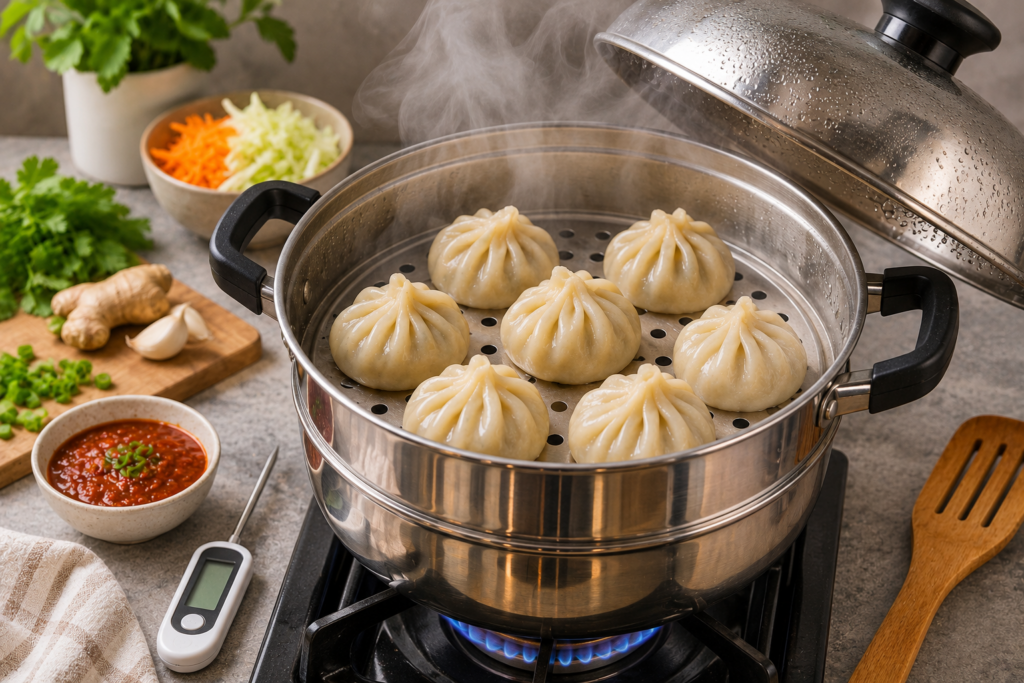
For a compatible metal steamer, wipe a thin layer of neutral cooking oil over the food-contact points. You want a light film, not a pool. A suitable perforated food-grade liner can work too, provided it is rated for steaming and installed according to its instructions.
Do not use arbitrary plastic sheets, coloured paper, printed paper or mystery-coated packaging. Materials used with hot food must be suitable for that temperature and purpose. If using parchment, ensure it is designed for food use and does not obstruct steam flow or reach a flame.
Fix 2: Leave space around each dumpling
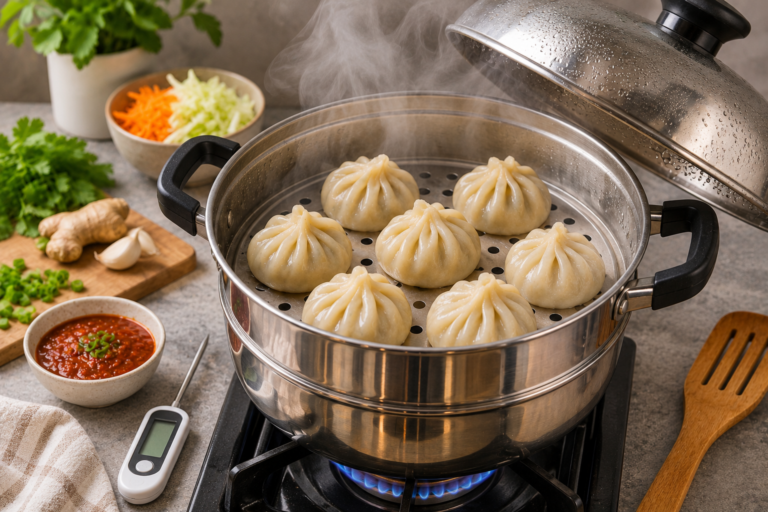
Arrange the momos so their sides are not pressed together. The exact gap depends on size; in a small home steamer, roughly a finger-width between pieces is a reasonable starting observation. If wrappers swell and touch once hot, make smaller batches.
Overcrowding also changes how steam circulates. A large steamer can still deliver uneven results if the tray is piled high.
Fix 3: Keep the water below the food
Boiling water should not splash against the underside of the dumplings. Check that the food platform sits above the water level at the start, and keep a steady simmer rather than a violent rolling boil that sprays moisture. If water pools on an unperforated plate, the bottoms may turn pasty.
Avoid lifting a large, heavy lid toward your face. Hot condensation can burn; tilt the lid away from your hands and body.
Fix 4: Improve the wrapper and filling
If the dough is far too wet, the wrapper may cling even to a well-prepared tray. Excess moisture from cabbage, mushrooms or sauces can weaken the bottom after steaming. Keep the filling balanced, prevent overstuffing and roll wrappers evenly. For more detailed dough guidance, see why momo wrappers tear.
Fix 5: Release gently after cooking
When the dumplings are fully cooked, reduce the steam and give them a brief moment to settle. Slide a clean, thin, heat-resistant utensil under the base rather than pulling by a pleat. If a piece resists, loosen the perimeter slowly. Do not splash cold water onto a hot steamer as a shortcut; thermal shock and burns are avoidable.
Food must be thoroughly cooked before service. If you are using packaged frozen momos, the manufacturer’s equipment and cooking instructions take precedence over generic timing recommendations.
A troubleshooting checklist
| Problem | Likely cause | Better next attempt |
|---|---|---|
| Bottom tears, top stays intact | Unprepared contact surface | Light oil or proper liner |
| Two momos tear apart | Overcrowding | Leave gaps between pieces |
| Wet, pasty undersides | Water contact or trapped condensation | Raise platform; use perforation |
| Wrapper rips at seam | Overfilling or wet edges | Use less filling; seal cleanly |
| Dry patches and sticking | Uneven steam or long exposed holding | Keep covered during cooking; serve promptly |
What about cabbage leaves or bamboo steamers?
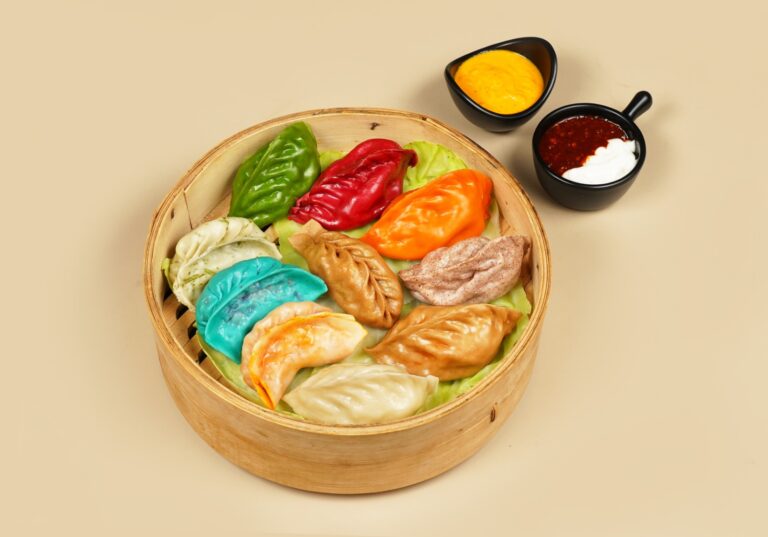
Some cooks line steamers with clean vegetable leaves to create a barrier between dough and metal or bamboo. If you do, wash leaves thoroughly, arrange them so steam can circulate and expect a little vegetal aroma to transfer. Bamboo steamers also require thorough cleaning and complete drying after use to avoid odours and mould.
The lining should be a cooking aid, not a substitute for hygiene and proper cooking.
FAQs
Do I need to oil every momo?
Usually, preparing the contact surface is enough. Heavy oiling can alter texture.
Can I use a non-stick tray?
Only if its material and coating are approved for the appliance and steaming temperatures.
Why do frozen momos stick?
Surface condensation, crowding and an unprepared tray can contribute. Follow the package instructions, including whether to steam directly from frozen.
For more hands-on momo ideas, explore How to Clean and Maintain a Home Momo Steamer and Momo Kitchen Equipment Checklist: Steamer, Freezer, Layout & Setup Guide. Always check dietary needs and ingredient labels.


Leave a comment