

Aa Reading preferences
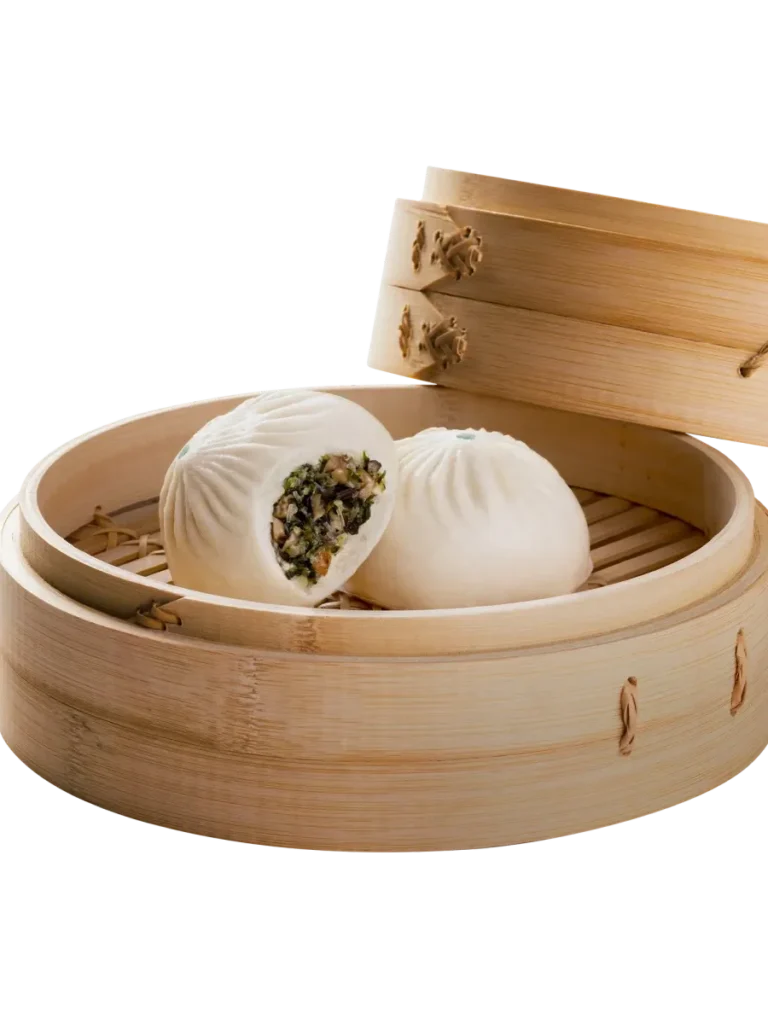
Two dishes can emerge from a steamer and tell completely different stories. Tingmo is a soft, usually unfilled steamed bread with a tender, airy crumb. A momo wraps a savoury filling in a comparatively thin dough skin. Both feature in Tibetan and wider Himalayan food cultures, but they perform different jobs at the table.
For a diner seeing both names on a menu, the quickest question is simple: are you looking for bread to accompany a dish, or a filled dumpling that can be the snack itself?
The distinction in one glance
| Detail | Tingmo | Momos |
|---|---|---|
| What it is | Steamed bread | Filled dumpling |
| Typical inside | Unfilled, soft crumb | Vegetables, dairy, meat or other savoury filling |
| Texture | Fluffy and bread-like | Thin wrapper around a distinct filling |
| Common role | Accompaniment for savoury dishes | Snack, appetiser or part of a meal |
| Common presentation | Twisted, coiled or folded bread shapes | Pleated pouch or crescent |
These are common patterns; recipes and shaping traditions vary across households.
Why tingmo looks so different
Many modern tingmo recipes use a leavened wheat dough, shaped into twists or spirals before steaming. This process creates a bread-like texture that is designed to absorb sauce and accompany stews or vegetable dishes. In Taste Tibet, Julie Kleeman and Yeshi Jampa describe tingmo as a light accompaniment that soaks up the juices of a meal. A different preparation can have its own ingredients and method, so a spiral is not a universal authenticity test.
What the momo wrapper is asked to do
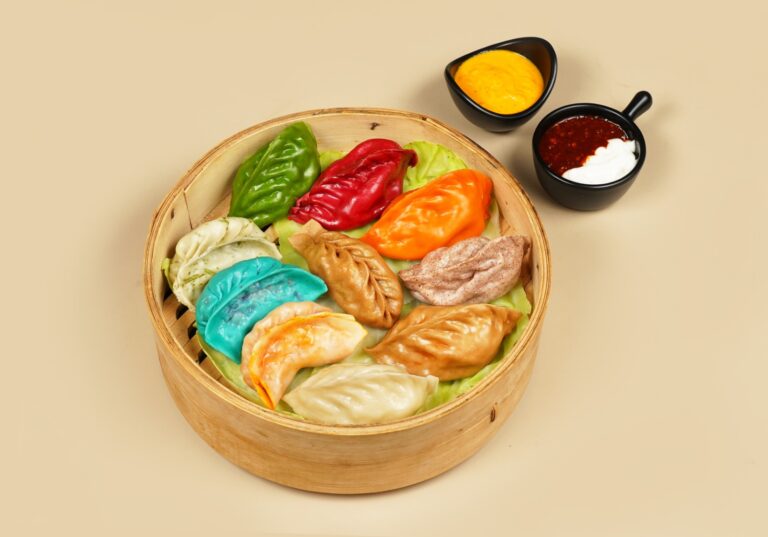
A momo wrapper has a different responsibility: stretch around a portion of filling, hold a sealed edge and cook without splitting. It is usually thinner than a serving of bread. In a steamed vegetable momo, you should notice the aromatic centre and the wrapper together, with chutney or achar added to taste.
The Darjeeling district government’s food guide describes momos as steamed dumplings with clear soup and achar. This is a useful example, not a claim that all momos everywhere have identical accompaniments.
How to choose between them
Choose tingmo when the rest of your meal has a rich vegetable stew, gravy or another savoury dish that would benefit from bread. Choose momos when you want discrete filled bites with a dip, perhaps accompanied by a light soup. If both are served, eat a little of each plain before adding sauce: the contrast between airy bread and tender wrapper becomes immediately clear.
Wheat, egg and dairy questions
Conventional tingmo commonly contains wheat flour, and momo wrappers often use wheat too. Some tingmo recipes use oil, sugar, egg or butter; individual versions differ. Paneer-filled momos contain milk. Neither item is automatically gluten-free, vegan or suitable for an allergy because it is steamed. Confirm the actual ingredients and shared equipment.
For broader comparisons, see Momo Delights’ guide to momos and dumplings.
For more context on regional dishes and momo culture, explore How to Choose Between Steamed, Spiced and Crispy Momos and Vegetarian Himalayan Dumplings: Traditions and Variations. Regional recipes and traditions are diverse.
Frequently asked questions
Is tingmo a giant momo?
No. Tingmo is a steamed bread rather than a filled dumpling.
Are all tingmo breads made with yeast?
Many contemporary recipes are leavened, but preparations differ; confirm the recipe rather than imposing a universal rule.
Does tingmo have a filling?
It is typically unfilled; a filled steamed bun is a different preparation.

Leave a comment