
Aa Reading preferences
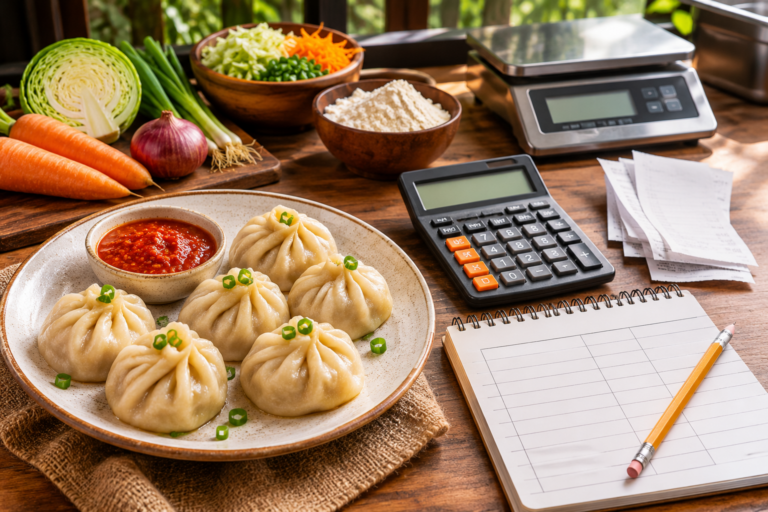
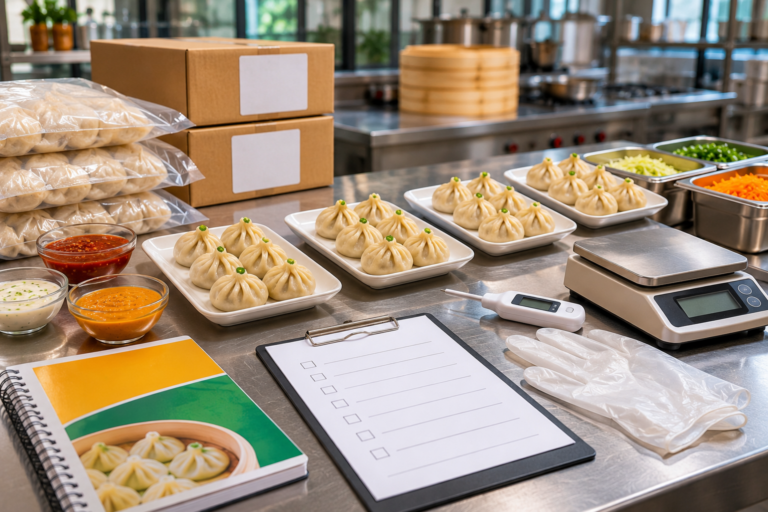
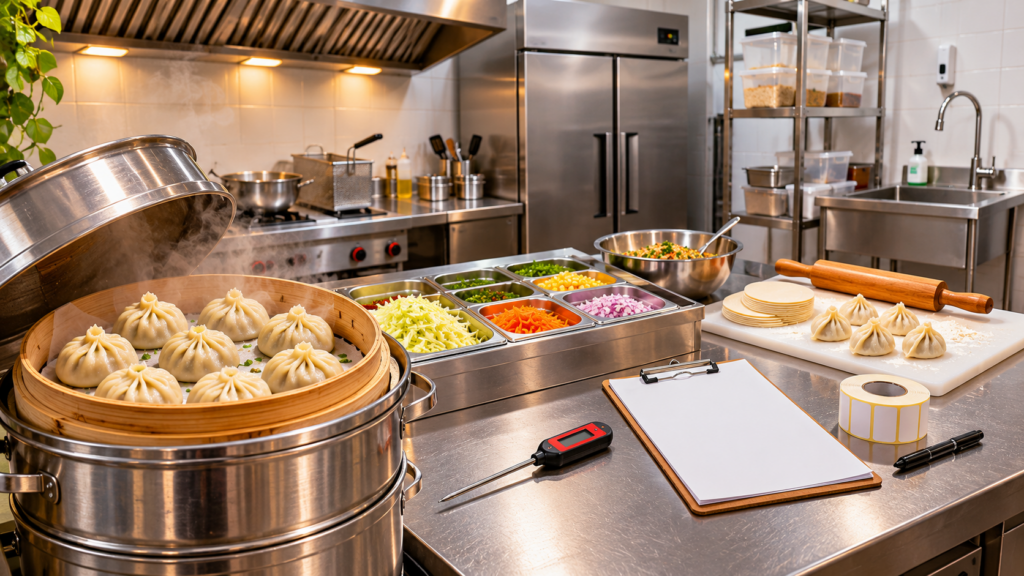
A practical momo kitchen equipment setup starts with a food-safe workspace, reliable refrigeration or freezing where the products require it, a steamer sized for realistic peak demand, approved finishing equipment for the styles on the menu, washing and hand-hygiene facilities, storage racks, accurate measuring tools and a controlled packing/service area. There is no universal equipment package for every momo restaurant. A kitchen making wrappers from scratch needs different equipment and space from a compact counter that prepares supplied ready-to-cook products.
Before buying a steamer or designing a new cloud kitchen, write down the intended menu, product starting state (raw, partly cooked or fully cooked), average and peak order flow, available space and technical constraints. This guide explains what equipment a momo shop may need, how to plan safe workflows, how to evaluate a steamer and how to avoid expensive purchasing mistakes. It is an educational procurement framework, not an itemised Momo Delights franchise equipment promise or an approved architectural plan.
Food businesses in India must consider the applicable FSSAI hygiene requirements and Schedule 4, which require a suitable Food Safety Management System (FSMS), good manufacturing practices and good hygiene practices. For actual Momo Delights operating proposals, use its official franchise enquiry or foodservice supply page.
First decide what kind of momo kitchen you are building
Three common models have very different requirements. The first makes dumplings from flour and filling ingredients on site; the second receives approved ready-to-cook dumplings and cooks them as ordered; the third finishes and sells products in a compact service format. None of these descriptions changes the need for suitable hygiene, storage and food safety.
| Operating format | Equipment that becomes more important | Key operational question |
|---|---|---|
| From-scratch kitchen | Ingredient washing, vegetable preparation, dough mixing, rolling, filling assembly, adequate clean work surfaces and cold storage | Can the team produce enough consistent pieces without compromising hygiene or service? |
| Ready-to-cook restaurant | Verified cold-chain receiving, freezer/chiller, steamer, approved finishing stations, portion control and packaging | Does each supplied SKU have validated storage and cooking instructions? |
| Compact takeaway/QSR | Efficient steamer and service layout, menu-appropriate finishing, POS and dispatch space | Can safe preparation and pickup fit in the actual approved premises? |
Central product supply may reduce dough and filling preparation tasks, but it does not eliminate storage, receiving, hygiene, cooking checks, cleaning or customer service. Conversely, a from-scratch kitchen should not buy industrial dough equipment without first comparing actual demand and labour requirements. See the existing Momo Delights article on momo machine versus ready-made momos for a separate make-or-buy discussion.
Essential momo kitchen equipment: a planning matrix
| Work area | Potential equipment | How to choose |
|---|---|---|
| Receiving and storage | Approved freezer/chiller as needed, shelving, thermometers, labels and inventory controls | Product storage specifications, capacity, monitoring and safe unloading |
| Hand hygiene and cleaning | Appropriate handwashing and utensil-washing facilities, approved cleaning supplies and sanitation tools | Applicable FSSAI/local requirements and practical workflow |
| Preparation | Food-safe worktable, cutting boards, knives, weighing scale and covered containers | Cleaning, cross-contact control, portion repeatability |
| Dough and assembly (if on site) | Dough mixer, rolling tools, suitable boards, food-contact trays and optional specialised machinery | Validated recipe, actual batch size and maintenance needs |
| Steaming | Foodservice steamer, baskets/trays, compatible heat and water supply, cooking monitoring | Peak throughput, load pattern, safe cooking and cleanability |
| Finishing (if offered) | Approved pan, fryer or roasting/grilling equipment; ventilation and fire controls | Only buy for real menu items and approved processes |
| Sauce service | Portioning tools, approved food-contact containers, suitable hot/cold holding | Ingredient, allergen and validated temperature needs |
| Packaging and dispatch | Order assembly counter, suitable packs, POS/order display, labels | Accuracy, rider/customer access and temperature control |
This is a menu-dependent equipment matrix, not a compulsory purchase list for all outlets. Where a supplied product has a different cooking state or preparation requirement, its actual specification may add or remove tasks.
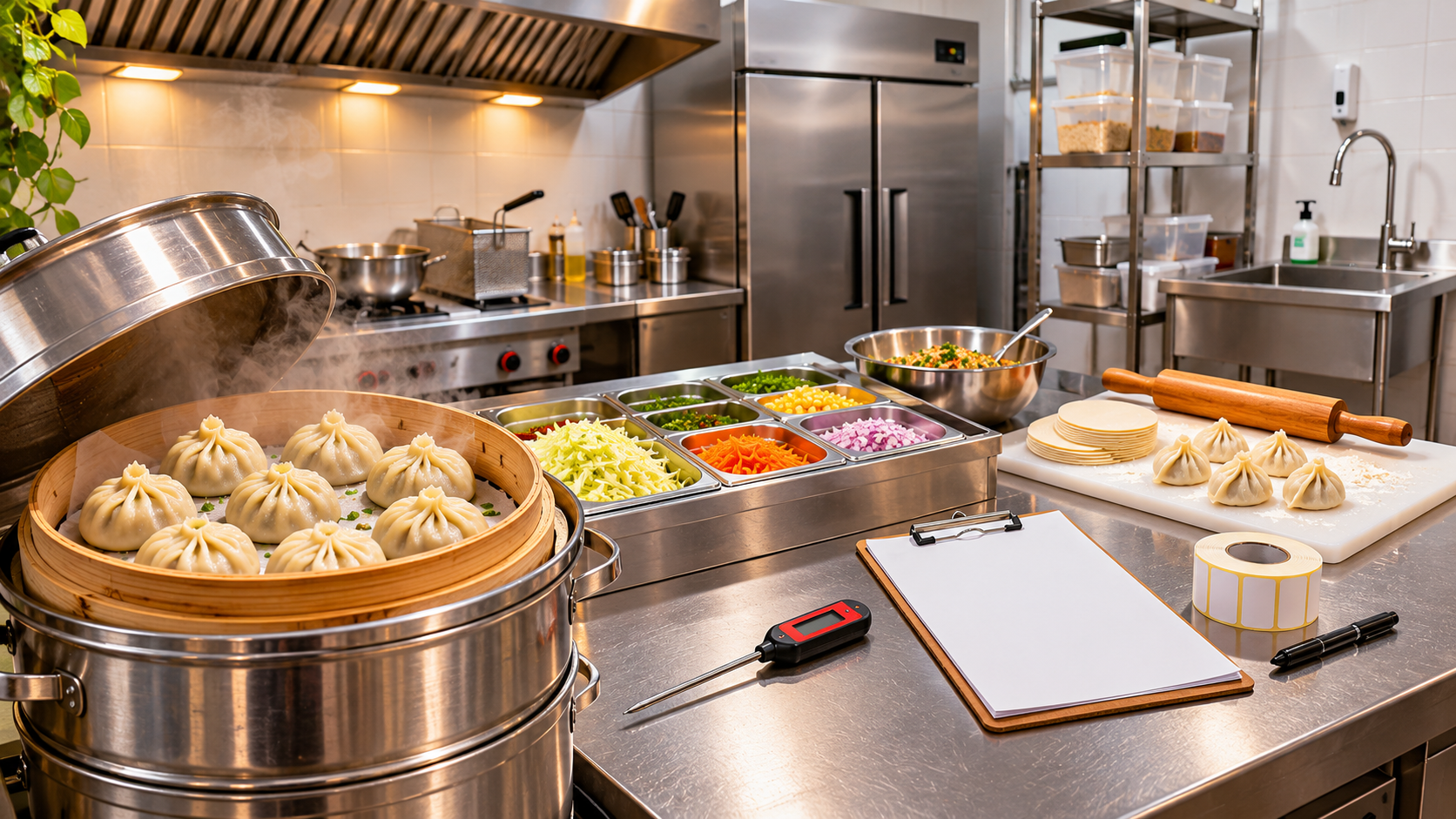
How to choose a momo steamer
The useful question is not simply “How many tiers?” but how many correctly cooked, saleable pieces can the complete cooking station produce during peak demand? Basket diameter, piece size, tray separation, steam supply, batch-loading procedure, safe cooking endpoint and staff capacity all influence output.
Questions to ask the equipment seller
- What is the usable tray area, and how many of the intended momo SKU fit without unsafe overcrowding?
- Which heat source, electrical load, water connection and ventilation arrangements are required?
- Are product-contact surfaces suitable for food, accessible for cleaning and supported by documentation?
- Can operators clean seals, trays, drains and the steam-generating system safely?
- What spare parts, service support, warranty exclusions and downtime response are available?
- What operator-training, burn-prevention and maintenance instructions are supplied?
Illustrative capacity calculation: If a hypothetical steamer tray fits 24 dumplings and a validated complete batch cycle—including loading and unloading—takes 10 minutes, the theoretical output is 144 pieces per hour for one such tray. This is only arithmetic: real output may be lower owing to staggered orders, service, product type, cleaning, holds and staffing. It is not a tested equipment performance claim or a safe cooking time for any product.
Always validate the actual cooking process. A raw filling and a fully cooked chilled dumpling may need very different treatment; attractive wrapper colour is not a reliable food-safety endpoint.
Plan the workflow before placing equipment
A compact kitchen can still be inefficient if staff cross paths between receiving, thawing, cooking, saucing and dispatch. Design around a logical flow such as receive → store → prepare/portion → cook → finish → pack → serve, while keeping dirty cleaning work and waste from contaminating ready-to-eat food. This is an illustrative workflow, not a legally approved one-way plan for every building.
| Zone | Design consideration |
|---|---|
| Goods receiving | Safe access to inspect deliveries and move stock promptly to the correct storage |
| Cold storage | Capacity, monitored temperatures, maintenance access, stock rotation |
| Ingredient preparation | Cleanable surfaces, raw/cooked separation and labelled utensils |
| Steam/finish station | Equipment clearances, safe access, ventilation and validated cooking controls |
| Order assembly | Consistent portions, sauce segregation, allergen checks and packaging |
| Pickup/customer area | Rider collection without blocking hygiene, staff circulation or emergency access |
| Wash/waste area | Appropriate drainage, approved washing and waste containment |
The FSSAI FoSTaC Basic Catering programme highlights general sanitary practice, staff training and food safety in the catering environment. For an actual commercial site, verify permitted use, water, drainage, exhaust, electrical capacity, fire safety and accessibility with qualified professionals and local authorities.
Estimate peak-hour capacity before investing
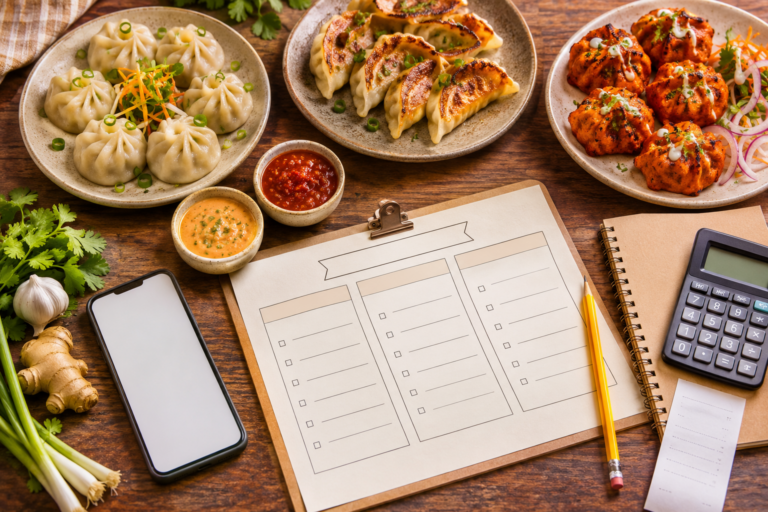
A kitchen should test demand in orders, not just theoretical dumpling pieces. A six-piece plate, a mixed sampler, a paneer kothey and a tandoori finish may all require different station times. Record actual preparation and packaging steps rather than assuming one employee can do everything simultaneously.
In a controlled trial, list the proposed menu items and count: time to retrieve stock, safe cooking cycle, finish time, sauce portioning, packing, handoff and cleaning. Then simulate realistic mixed orders. The slowest necessary station may set the throughput for the whole kitchen, even when the steamer itself has spare capacity.
For example, if a hypothetical restaurant plans 40 orders in a busy hour with an average of six momos, it requires 240 saleable momos plus suitable contingency and finishing capacity in that hour. That does not imply a specific steamer model is adequate without tested equipment and staff data.
Food-safe equipment, maintenance and compliance
Under FSSAI’s hygiene requirements, food-business operators must maintain appropriate food safety and hygiene systems. Equipment design should allow cleaning and maintenance, and the site must support sanitary food handling. FoSTaC training materials discuss suitable food-contact materials, cleanability, separation of non-food chemicals and orderly storage.
A purchase checklist should cover more than the equipment sales price: ask about cleaning access, validated use temperatures, repair frequency, calibration needs, electric and water compatibility, safe operating instructions, staff training and consumables. A poorly accessible machine can create substantial ongoing sanitation labour and service interruptions.
What should be recorded?
- Equipment make, serial number, installation date and owner/responsible staff.
- Manufacturer instructions, safe operating limits, service contacts and warranty terms.
- Cleaning and sanitation schedules, with who signs them.
- Thermometer/calibration and freezer-temperature verification records as applicable.
- Breakdown, maintenance and corrective action logs.
- Staff training and product-specific cooking SOP versions.
Do not improvise a cooking temperature or shelf life because a new steamer seems faster. Follow validated product and safety requirements.
Equipment procurement: compare total cost, not sticker price
| Question | What to request in writing |
|---|---|
| Capacity | Usable trays, compatible portions, heat/water load, credible demonstration |
| Installation | Site preparation, plumbing, electrical and exhaust responsibilities |
| Hygiene | Material suitability, dismantling/cleaning procedures and manuals |
| Reliability | Warranty, preventive maintenance, parts and local service coverage |
| Training | Operator induction and safety procedures |
| Commercial | Equipment, installation, taxes, shipping, service and consumable costs |
Do not confuse a supplier’s generic demonstration with a performance test using your intended product. If purchasing several identical machines, trial one under real conditions before a large rollout. Compare equipment availability and life-cycle cost, not only list price.
Pre-opening commissioning checklist
- Verify legal use of premises and required approvals; check utility and exhaust suitability.
- Install equipment using qualified technicians and written instructions.
- Complete cleaning, sanitation, safe storage and temperature-monitoring procedures.
- Confirm each raw or ready-to-cook product’s exact specification and validated cooking method.
- Run peak-hour trials using the actual staffing and expected order mix.
- Test packaging and customer/rider handoff at representative service conditions.
- Train employees, document corrective actions and resolve critical safety issues before opening.
For franchise investors, the published Momo Delights franchise page is the proper route to request the current outlet fit-out specification and equipment inclusions. For restaurant buyers considering product supply, visit HoReCa/B2B. Nothing in this guide guarantees the brand includes or approves a particular machine.
Momo kitchen equipment FAQs
What equipment does a momo shop need?
It depends on production format, but commonly includes suitable storage, food-safe prep surfaces, steamer, safe cleaning/handwashing facilities, packaging and appropriate finish equipment.
Do I need a momo-making machine?
Not necessarily. Restaurants using approved supplied ready-to-cook products may not need dough and folding machinery.
How large should the steamer be?
Size it from tested peak-demand throughput, product loading limits and complete cooking cycles rather than advertised tray count alone.
Can a momo outlet run without a freezer?
Only if its actual supplied and prepared products can be stored and served safely with the approved alternative arrangements. Product requirements govern.
Is stainless steel compulsory for all equipment?
Choose suitable, hygienic food-contact materials and meet the applicable rules; not every component must be stainless steel, but cleanability and food suitability are essential.
Do fried and kothey momos need the same equipment?
No. Pan-searing and broader frying can require different appliances and validated processes.
What is the biggest kitchen layout mistake?
A common risk is buying equipment before checking menu flow, utilities, cold storage, cleaning access and staffing.
What should I ask about equipment warranties?
Ask about installation, labour, parts, service travel, response times, maintenance exclusions and spare-part availability.
Does this describe the actual Momo Delights franchise equipment kit?
No. It is an educational planning matrix. Request the current written brand package and site-approved specification.
Research sources and disclosure
- FSSAI — Hygiene Requirements and Schedule 4: food safety systems, hygienic premises and good practices.
- FSSAI FoSTaC — Basic food safety training: food-handler hygiene and supervision.
- FSSAI — Basic Catering Training Manual: equipment and storage practices.
- Momo Delights — Momo Machine vs Ready-Made Momos: complementary make-or-buy discussion.