Aa Reading preferences
This guide focuses on why momo wrappers tear, open, become rubbery, turn thick or stick. It follows the dumpling from dough mixing to serving, using documented dumpling-making techniques from King Arthur Baking and The Woks of Life. These are general culinary references, not Momo Delights’ proprietary wrapper formula or a validated ready-to-cook product instruction.
Why do momo wrappers break? A quick troubleshooting table
| Problem you see | Likely possibilities | First action to test |
|---|---|---|
| Cracks before folding | Dough too dry, exposed to air or insufficiently rested | Protect dough from drying; review hydration and rest |
| Tears when filling | Thin spot, rough filling pieces, too much filling | Roll more evenly and reduce portion |
| Seam opens in steamer | Filling in seal, flour-coated edge, weak pinch | Clear rim and seal from end to end |
| Base sticks and tears | Unlined tray, insufficient separation or unsuitable release | Test appropriate food-safe liner or tray treatment |
| Wrapper feels thick or chewy | Uneven rolling or oversized pleated top | Thin the rim and control gathered dough |
| Wrapper becomes mushy | Excess liquid, prolonged wet holding or unsuitable cooking | Assess filling moisture and product-specific cook process |
| Cracked or split frozen dumpling | Handling damage, poor packaging, processing or temperature variation | Review batch and storage evidence before use |
Symptoms can have several causes at once. Do not make a food-safety decision using the appearance of the wrapper: a good-looking dumpling can still contain undercooked filling.
1. Hydration and resting: the two questions to ask first
Wheat-flour dumpling dough needs water distributed through the flour and enough rest to become workable. The Woks of Life’s wrapper method explains the benefits of allowing dough to rest until smooth and pliable; King Arthur Baking’s recipe also specifies a rested dough and covering unused portions. These principles help explain why a stiff, freshly mixed dough can be difficult to pleat.
Too little water may create cracks at the edges, while too much can make the wrapper sticky and difficult to handle. The amount required depends on the flour and method. A dough made with whole wheat or millet blends can behave differently from refined wheat flour; simply adding exactly the same amount of water does not guarantee the same handling properties.
Practical test: Mix a small trial batch, let it rest according to a reliable recipe, and fold a few wrappers. Record flour weight, added water, dough temperature, rest time and how often rims crack. Change one variable at a time so you can identify what improved the result.
2. How thick should a momo wrapper be?
No exact millimetre measurement is universally right. The centre must support filling, but excessive dough at the edge creates a heavy seam. King Arthur Baking advises rolling wrappers with edges slightly thinner than the centre, and the King Arthur shaping guide demonstrates how different shapes affect the gathered dough.
Thin wrappers can provide a delicate bite, but a very thin patch beneath a heavy filling may rupture. Very thick wrappers can take longer to cook and may overshadow a subtle vegetable filling. Commercial operations should define a tested target range suited to their product rather than using a generic number from another manufacturer.
| Wrapper characteristic | What to observe |
|---|---|
| Centre | Does it hold filling without thinning into a transparent weak spot? |
| Rim | Can edges overlap and seal without an unpleasant heavy bite? |
| Diameter | Is there room for filling and a complete border? |
| Uniformity | Are thickness variations causing repeatable tears in the same place? |
| Final texture | Is the cooked dumpling tender and fully cooked under the approved process? |
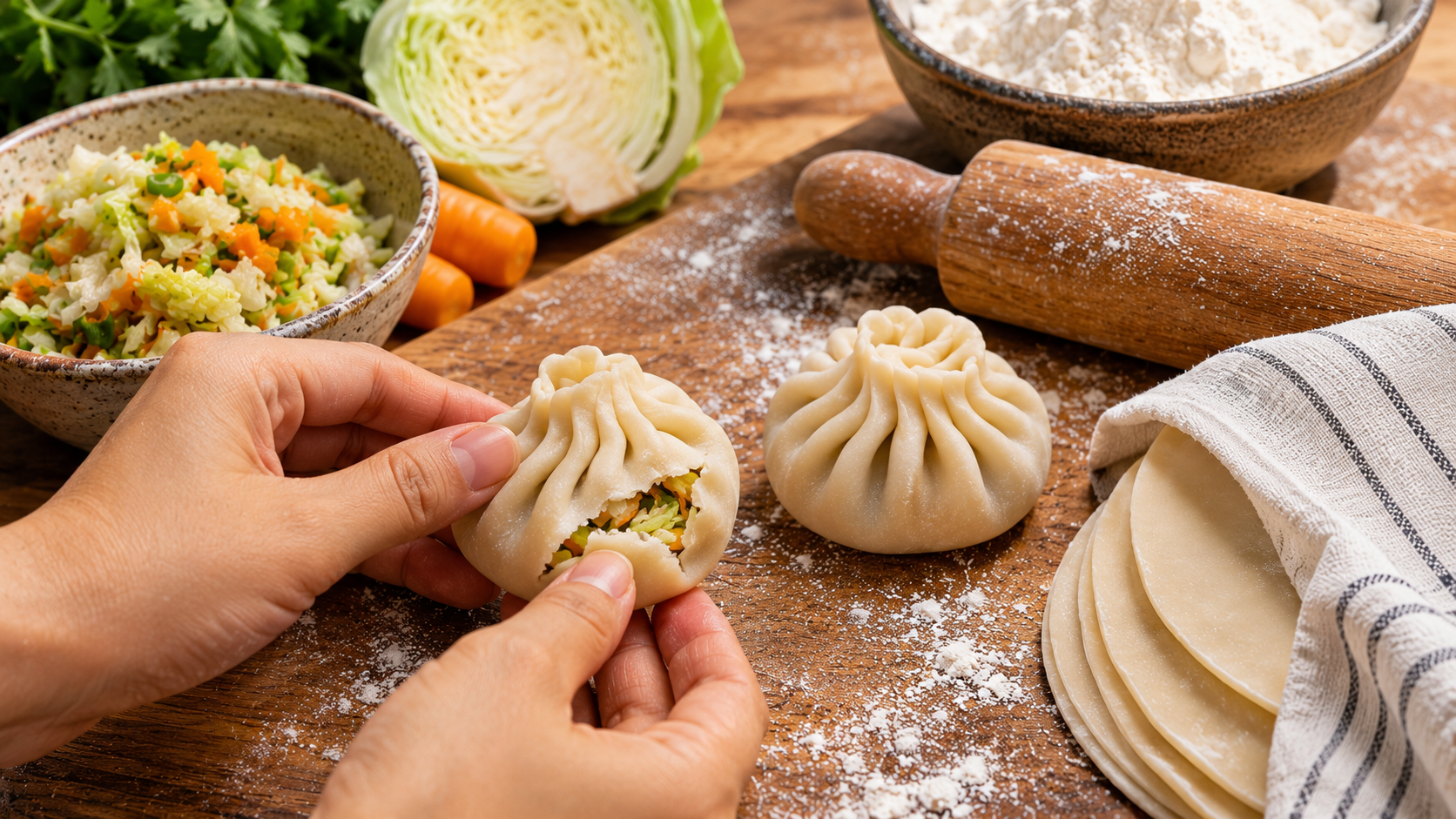
3. Wet or excessive filling can defeat a well-made wrapper
Even good dough can split when overfilled. Cabbage and leafy vegetables release moisture when prepared or salted, while large chopped pieces can catch in a fold. King Arthur Baking’s cabbage-dumpling recipe demonstrates managing released vegetable liquid before filling. That is an example of recipe-specific moisture control, not a rule that every momo filling must be dry or squeezed.
Use a measured filling portion and keep enough border clear to seal. If a test batch repeatedly leaks, investigate whether moisture accumulates during waiting, whether the chop size is uneven, or whether the filling portion is too heavy for the wrapper. Moisture is necessary for pleasant flavour; the objective is controlled free liquid, not a dry dumpling.
For distinctions between vegetable, paneer and other fillings, see the official Momo Delights menu. Actual ingredient compositions vary and should not be inferred from dish names alone.
4. Why momo seams open during folding and cooking
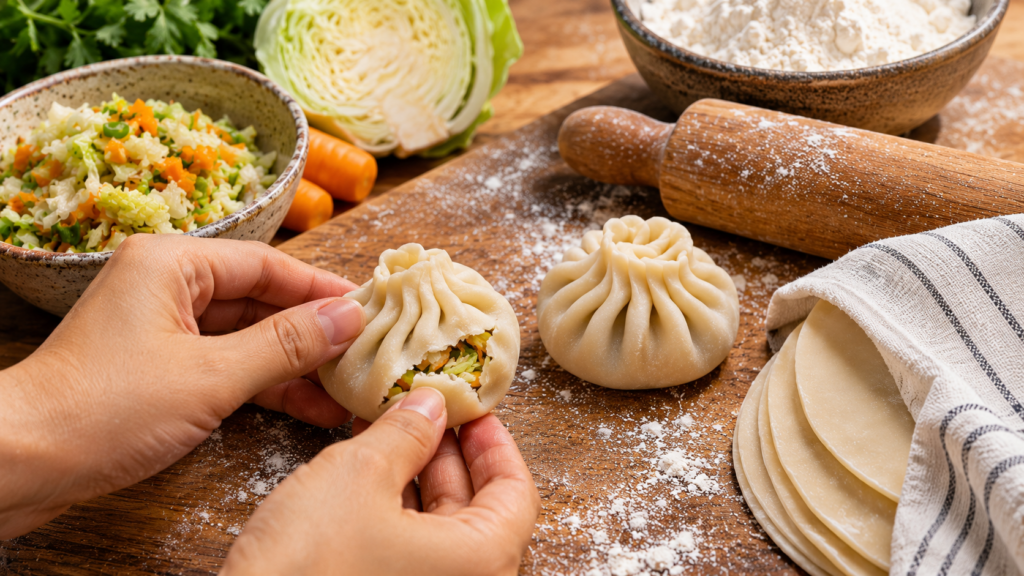
The two wrapper edges must make proper contact. Loose flour, oil, wet filling or a fold that was never pressed shut can leave weak points. A half-moon is an accessible technique for learning a complete seal; decorative pleats can be added once the basic closure is reliable. The King Arthur shaping tutorial recommends protecting waiting dumplings from drying, which also helps prevent brittle edges.
- Leave a clean dough border around the filling.
- Bring the opposite edges together and pinch the centre.
- Work outwards in small sections, checking the entire seam.
- If the recipe allows, use a minimal amount of water where an edge needs help bonding; do not soak it.
- Keep shaped dumplings covered while working, under appropriate food-safe handling conditions.
More pleats are not automatically better. An overloaded rosette top can form a thick lump of dough, and excessively aggressive pleating can thin the adjacent wrapper. The important result is a strong seal and good eating texture.
5. Tearing in the steamer, pan or freezer
Steaming
Dumplings may stick to an unsuitable steamer surface. Test an appropriate clean, food-safe perforated liner or other approved release technique so that steam can circulate. Avoid rough removal and overloading. The proper cooking endpoint is product-specific: do not assume a wrapper becoming translucent or tender proves that its filling is safe.
Pan-searing
Kothey momos rely on a crisp contact surface and a tender upper wrapper. If the bottom adheres firmly to the pan, forcing a metal utensil under it may rip the dough. Match the cooking surface, oil quantity and release procedure to the actual recipe. Browse the Momo Delights menu for the brand’s published kothey-style choices, but do not infer its internal pan method.
Frozen ready-to-cook products
Commercially frozen momos can be raw, partially cooked or fully cooked. Their handling and cooking instructions depend on the particular product. Cracks or broken seals found at receiving should be recorded against the batch and investigated, especially where package damage or temperature deviation is suspected. Do not repair a questionable commercial frozen product and return it to sale without the approved quality procedure.
FSSAI’s hygiene framework requires suitable food-safety controls for food businesses. Safe storage, raw/cooked segregation and validated cooking remain essential even if a wrapper looks perfect.
A practical 20-dumpling wrapper test for kitchens
A small, recorded trial can help isolate a recurring technique issue. The table below is a suggested development exercise, not a formal laboratory protocol or Momo Delights production specification.
| Trial variable | What to keep consistent | Measure |
|---|---|---|
| Flour/hydration | Same filling and shape | Cracks during rolling, folding and cooking |
| Wrapper diameter | Same dough and filling portion | Seam defects and eating texture |
| Filling portion | Same wrapper and cooking process | Leakage and wrapper failure |
| Filling moisture | Same portion size | Free liquid and broken seals |
| Tray/release method | Same approved cooking endpoint | Sticking and tear rate on removal |
Start with 20 pieces per test condition only as an easily counted example; more extensive validation may be necessary. Note the number damaged during folding, during cooking and during removal separately. If 3 of 20 tear during folding, that is a 15% folding defect rate in the sample, not a claimed normal rate for any momo brand.
Are wheat, whole-wheat and millet wrappers equally easy to fold?
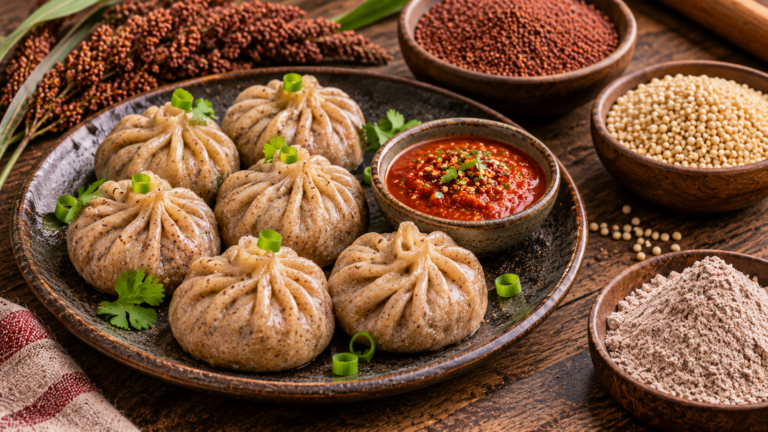
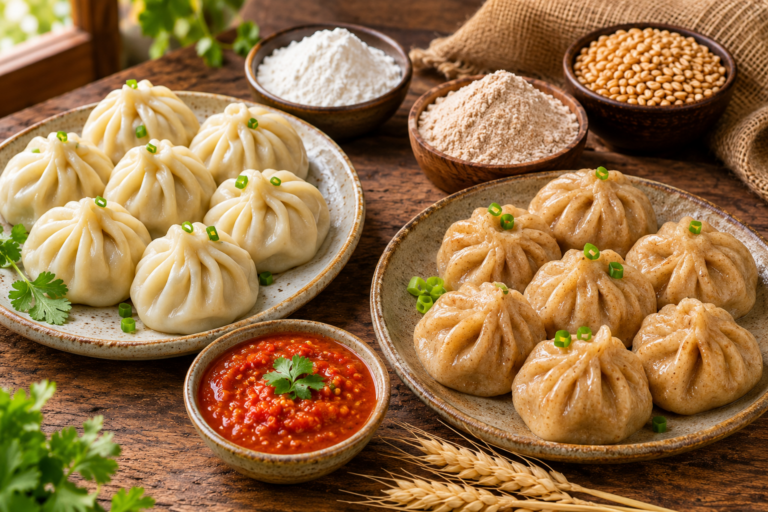
Not necessarily. Wheat gluten contributes a type of dough structure that other flours may not reproduce without formulation adjustments. Whole-wheat bran can influence water absorption and handling; millet or ragi blends have different properties. A grain name does not disclose the precise blend or dietary suitability. A millet-labelled momo may still contain wheat; whole wheat definitely contains gluten. For allergy-related needs, use the Momo Delights allergen information page and ask for the actual SKU ingredients.
What customers should do if restaurant momos arrive broken
A small cosmetic crack can be a texture concern; a visibly leaking or badly damaged order may warrant contacting the outlet. If there is a food-safety concern, do not rely on a photograph or the wrapper’s colour alone to decide whether the filling was fully cooked. Document the item and order details, and ask the business to review the issue.
Momo Delights lists its current dining outlets on Find Us. Foodservice buyers can contact the HoReCa/B2B team for product-specific standards, packaging requirements and claims procedures.
Frequently asked questions about momo wrappers
Why does my momo dough crack when I fold it?
Possible causes include insufficient hydration, limited resting time or exposure to dry air. Test these variables using a trusted recipe.
Why do momo wrappers tear while steaming?
Common causes include weak seams, overfilling, uneven dough and sticking to the steamer surface. Cooking procedure and filling state must also be assessed.
How thin should a momo wrapper be?
There is no single universal thickness. Aim for a wrapper that supports the filling and seals without an overly bulky rim, then validate cooking.
Why do my momo edges become thick?
Extra dough from overlapping folds or uneven rolling can collect at the seam or pouch top.
Can I rescue dry wrappers with water?
A very small amount may help some recipes seal, but severely dried or brittle dough often needs proper handling and recipe adjustments.
Should I put more filling in a larger momo?
Only if the wrapper, portion and cooking process are suitable. Overfilling can create leaks and undercooked centres.
Why do frozen momos break?
Potential factors include handling damage, packaging or storage issues and manufacturing variation; investigate using batch information.
Do broken wrappers mean the momo is unsafe?
Not always, but appearance cannot establish safety. If raw ingredients may be undercooked or storage is questionable, follow appropriate food-safety procedures.
Are alternative-grain wrappers gluten-free?
Not by name alone. Flour blends and cross-contact must be verified; whole wheat contains gluten.