
Aa Reading preferences
Millet-based wrappers are one way to explore new momo textures without losing the familiar combination of pleated dumpling, savoury filling and chutney. This guide explains the difference between ragi and other millets, how they behave in dough, the nutrition facts that can responsibly be cited, what to ask before ordering, and how Momo Delights’ listed Millet/Ragi Momo fits into its wider menu.
Ragi, bajra, jowar and millet: what is the difference?
The word “millet” can refer to a number of small-grained cereal crops rather than a single species. Some are specifically called millets, while others such as sorghum are grouped with them for policy or culinary discussion. ICAR–Indian Institute of Millets Research (IIMR) lists and describes major Indian millets and their food composition.
| Common name | Botanical/other name | Potential culinary character |
|---|---|---|
| Ragi | Finger millet | Earthy taste, darker colour, different dough elasticity from wheat |
| Bajra | Pearl millet | Nutty/earthy grain flavour and a different texture |
| Jowar | Sorghum | Relatively mild grain character depending on flour and processing |
| Foxtail millet | Kangni in several Indian languages | Can be milled into flour for composite doughs |
| Little millet | Kutki and regional names | Another small-grained option with distinct milling properties |
The taste descriptors are general culinary expectations, not results of a controlled tasting of Momo Delights’ specific recipe. “Millet/Ragi Momo” is a menu name, not a disclosure of the grain percentage. An operator should supply the exact ingredient list when a customer or foodservice buyer needs that detail.
Why use millet flour in momo wrappers?
Traditional wheat-based dough is attractive to many dumpling makers because wheat gluten contributes stretch and resilience. Many millet flours do not form the same gluten network. When replacing wheat, the wrapper can become more prone to cracking, sticking or tearing if the recipe, hydration and handling methods are not adjusted.
Possible approaches include blending millet flour with other flours, using warm-water techniques, controlling resting conditions and rolling smaller discs. For a commercial kitchen, the relevant success criteria are wrapper integrity, stable filling, repeatability in the steamer and a pleasant eating texture—not merely a high-sounding percentage of an unfamiliar grain.
Important: If a manufacturer adds wheat flour to make a more flexible dough, the finished momo is not gluten-free. A mixture that uses only naturally gluten-free grains can still be subject to contamination from shared milling or preparation equipment. Ingredient declaration and verification take priority over assumptions.
How a millet momo wrapper can be developed
This is a general product-development overview, not a tested Momo Delights recipe. The actual dough ratios and processing steps need trialling and food-safety validation.
- Select the flour: Decide whether the product uses ragi, bajra, jowar, another millet or a blend. Test the flour for quality and suitability.
- Set a formulation goal: Determine whether the priority is grain flavour, texture, a verified nutrient target or an allergen-related requirement. These goals are not interchangeable.
- Control hydration: Millet flours can take up water differently from refined wheat flour. Hydration and dough temperature need deliberate adjustment.
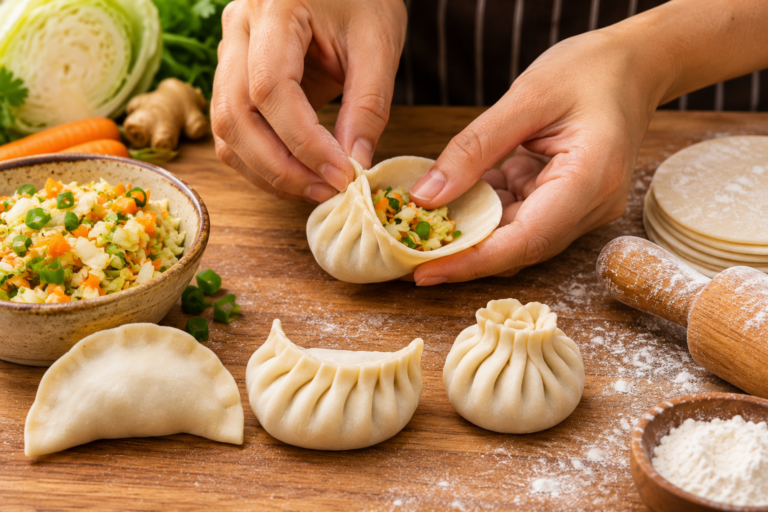
- Develop rolling and folding steps: Test whether the wrapper remains intact when flattened, folded and sealed around moist filling.
- Validate steaming: Assess wrapper behaviour, centre cooking and service texture with the actual equipment and batch size.
- Document the composition: Finalise the ingredient declaration, allergen controls and any substantiated nutrition claims, rather than working backward from a marketing slogan.
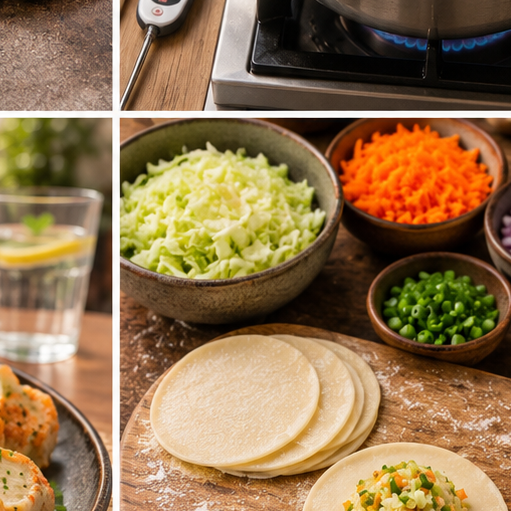
What do millet and ragi momos taste like?
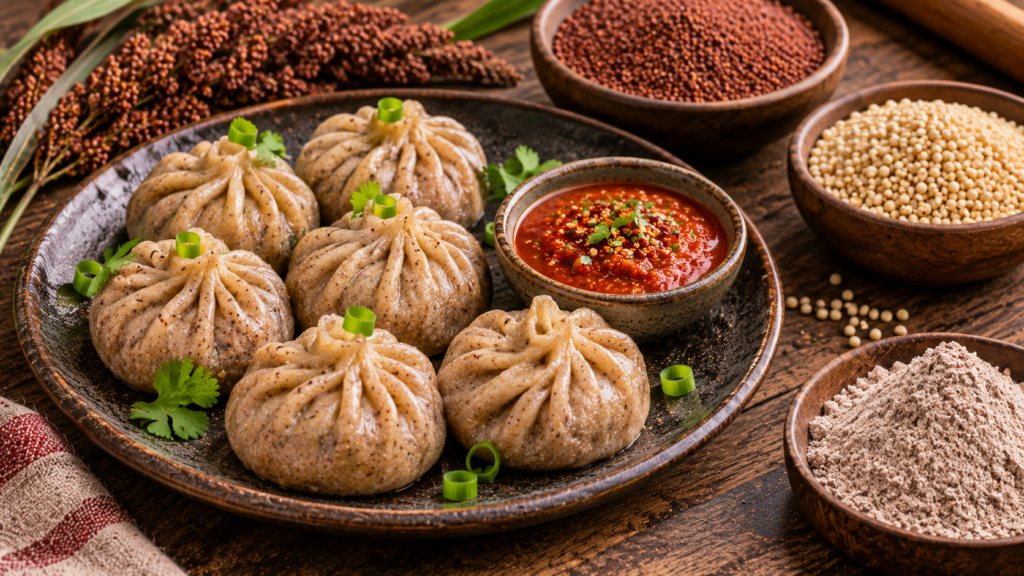
A wrapper made with a meaningful proportion of ragi may have a more earthy, grain-forward character and darker appearance than a refined-wheat wrapper. A blended dough may remain closer to familiar momo texture, depending on the proportions and method. The filling—such as vegetables or paneer—and the chutney can change how prominently the grain flavour is noticed.
When sampling different wrappers, use the same filling if possible and taste with little sauce first. Compare softness, elasticity, chew, whether the folded seams remain comfortable to bite and how the wrapper holds up during service. Only then add a sauce. Otherwise, an intense chutney may overwhelm subtle differences between flours.
Millet nutrition: what the evidence actually supports
Millets are not identical in nutrient composition. The Indian Institute of Millets Research reports approximate composition per 100 grams of raw grains, including roughly 344 mg calcium per 100 g of finger millet in its cited table, compared with approximately 38 mg for pearl millet. This demonstrates a genuine grain-specific difference; it does not mean that six ragi momos contain 344 mg calcium or meet a particular daily requirement.
A finished momo contains water, filling and other ingredients. If the wrapper includes only a fraction of ragi flour, its nutrient contribution may be considerably less than that of 100 g dry grain. Processing can also affect nutrient availability. A NITI Aayog compilation of food-composition tables illustrates the differences between finger millet, pearl millet and other grains. Use final-product data for claims about the actual serving.
| Popular statement | What is supported |
|---|---|
| “Ragi is a calcium-containing grain” | Supported by grain-composition data; exact intake depends on quantity and bioavailability |
| “Every millet momo is high in calcium” | Not established without its recipe, portion and analysis |
| “Millet momos are always low in calories” | Not established; calories depend on the whole recipe and serving |
| “All millets have the same protein and fibre” | Incorrect; nutrient levels differ across millet species |
| “Millet momos cure diabetes” | Not a supported medical claim; individual dietary choices require appropriate advice |
| “Ragi momos must be gluten-free” | Not necessarily; wheat blending or cross-contact can introduce gluten |
Are millet and ragi momos gluten-free?
Not by default. Millet and ragi grains are naturally gluten-free, but a manufactured momo can include wheat flour, and contamination can occur in shared mills or kitchens. The FSSAI gluten-free guidance note explains that a product labelled gluten-free must meet the applicable standard and that manufacturers need to prevent contamination when producing alongside gluten-containing foods.
For people with coeliac disease or significant wheat allergy, a vague “millet” menu label is not a safe substitute for a complete ingredient and cross-contact assessment. Consult Momo Delights’ allergen information and ask the outlet directly about the precise product and preparation environment. Whole-wheat momos contain gluten because wheat does.
Do millet momos have a lower glycaemic impact?
A single grain name is not sufficient to predict the blood-sugar response to a complete momo meal. Milling, starch structure, cooking, portion size, filling, added fat, sauce and the individual’s physiology all matter. Evidence about a grain or a laboratory ingredient is not interchangeable with a glycaemic index for a finished restaurant dumpling. Do not give individual medical advice or market a specific momo as diabetes-safe without suitable evidence and compliance review.
Millet/Ragi Momos vs whole-wheat and classic momos
| Style | Common differentiator | Buying question |
|---|---|---|
| Classic Veg Momo | Traditional-style wrapper and vegetable filling | Which flour and filling are actually used? |
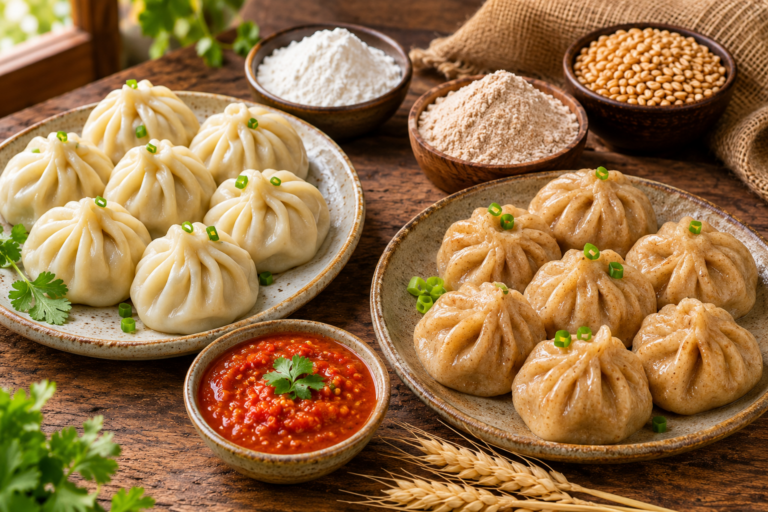
| Whole Wheat Veg Momo | Whole-wheat flour component | Is it fully whole wheat or blended; what is the allergen declaration? |
| Millet/Ragi Momo | Millet/finger millet may be incorporated into wrapper | Which grain, what percentage and is wheat also present? |
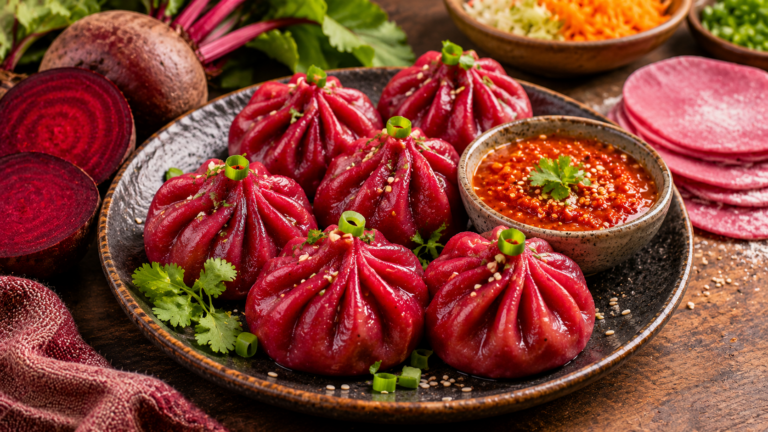
| Beetroot Momo | Beetroot-related colour or filling variation | Is beetroot in the wrapper, filling or both? |
All four names appear on the wider Momo Delights menu. This article does not claim they were analysed by a laboratory or available at each outlet today. For a broader overview of momo preparation, see Himalayan-style momos versus regular momos.
Which sauces work with ragi and millet momos?
An earthy wrapper may pair well with a lively tomato–chilli chutney, a tangy sesame-style achar or a milder herb-based sauce, depending on the filling. Those are suggested flavour comparisons, not guarantees about what accompanies the branded menu item. People avoiding dairy or sesame should ask about the actual sauce before ordering.
How to choose millet/ragi momos at Momo Delights
- Check the published menu for the Millet/Ragi Momo listing.
- Use Find Us to select the appropriate Panchkula or Mohali outlet and confirm live availability.
- Ask the team which grain or blend is used and whether the wrapper includes wheat if that matters to your diet.
- Check the filling and sauce ingredients, including milk or other allergens.
- Order based on taste and texture preferences, not unverified claims about weight loss, glucose control or disease prevention.
Why alternative-grain momos matter to restaurant operators
For a foodservice business, a new wrapper type introduces operational questions: consistency of flour sourcing, batching, water absorption, wrapper resilience, preparation time and customer feedback. An alternative-grain claim that sounds good on a menu can create complaints if the actual product tears, cooks unevenly or contains ingredients customers did not expect.
A supplier evaluation should cover both culinary performance and documentation. Restaurants can review Momo Delights’ ingredient sourcing, quality assurance and traceability and foodservice supply pages, then request written SKU-specific information. A retail item is not necessarily available as a wholesale product.
Frequently asked questions about millet and ragi momos
Is ragi a type of millet?
Yes. Ragi is finger millet.
Are ragi and bajra the same grain?
No. Ragi is finger millet; bajra is pearl millet, with different characteristics and compositions.
What do ragi momos taste like?
A meaningful ragi component may create an earthier grain flavour, but the filling and exact flour blend change the overall taste.
Are all millet momos wheat-free?
No. Many doughs may blend millet flour with wheat; always check the actual formulation.
Are millet momos safe for someone with coeliac disease?
Only if the finished product and preparation controls satisfy the relevant gluten-free requirements. A menu name alone is insufficient.
Do ragi momos contain calcium?
Finger millet naturally contains calcium, but the amount in a plate of momos depends on the ragi quantity and whole recipe.
Are millet momos lower in calories?
Not necessarily. The filling, flour blend, oil, sauces and portion determine the energy content.
Does Momo Delights list a Millet/Ragi Momo?
Yes, on its published menu, subject to outlet availability and verification of the exact ingredients.
Can a restaurant use millet momos for a special diet menu?
Only after verifying the actual ingredients, allergen cross-contact, relevant labelling and any nutrition claims.
Research sources
- ICAR–Indian Institute of Millets Research — Millets and Nutrition: grain types and indicative nutrient composition.
- NITI Aayog — Nutritional composition of millets, rice and wheat: reference data, not finished momo nutrition.
- FSSAI — Gluten-Free Guidance Note: standards and cross-contamination considerations.
- Momo Delights — Food Menu: evidence of the listed Millet/Ragi Momo.
Editorial review: 1 November 2026. Data cited for millets refer to raw grain reference values, not the proprietary composition of a Momo Delights product. No clinical outcomes, gluten-free certification or nutrition values are claimed for the menu item. The featured image is AI-generated and illustrative.