
Aa Reading preferences
For many food lovers, beetroot momos are a fun way to explore a familiar dish in a new visual form. This guide looks at the science of their colour, the ways a cook might make them, how cooking affects that colour, what to expect from the taste and texture, and which nutritional or dietary assumptions are worth questioning. It also explains the Beetroot Momo listing on the Momo Delights menu without pretending to know the brand’s confidential formulation.
What makes beetroot momos different from classic momos?
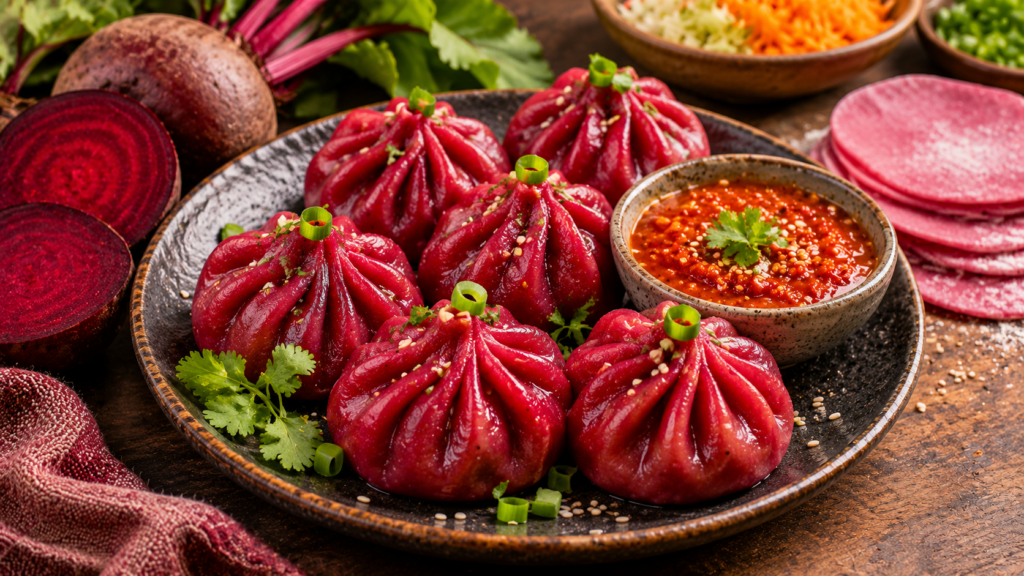
A classic steamed momo has a dough wrapper around a seasoned filling, typically closed with folds and cooked by steaming. A beetroot momo is a variation on that basic dumpling format. Beetroot might be blended into the dough as juice or puree, added as grated vegetable to the filling, or used in both components. In some recipes, beetroot powder supplies colour without the additional water of a puree. A restaurant might also add other ingredients for flavour and dough handling.
That means two beetroot momos can look similarly magenta while tasting and behaving differently in the steamer. One may be mostly wheat-flour dough with a small amount of beetroot juice; another could use a larger portion of grated beetroot in a vegetable filling. Neither is automatically the same as the other.
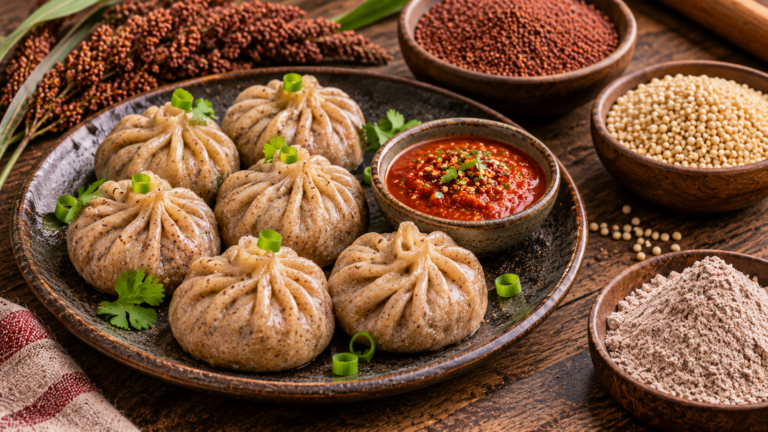
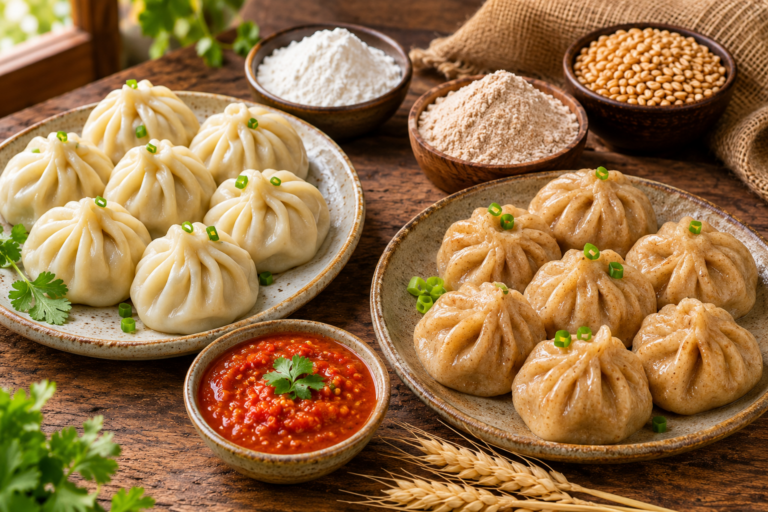
The Momo Delights food menu lists Beetroot Momo alongside Classic Veg Momo, Whole Wheat Veg Momo and Millet/Ragi Momo. The menu name confirms the item is presented by the brand; it does not by itself establish an exact beetroot percentage or the absence of other colours, flours or allergens. Ask the outlet for precise ingredients if those details matter to you.
Why are beetroot momos naturally pink or red?
Beetroot contains betalains, a group of water-soluble pigments. Red-violet betacyanins, including betanin, are especially important to the characteristic red appearance, while yellow-orange betaxanthins can contribute other tones. An overview in the Journal of Agricultural and Food Chemistry describes these pigment groups and explains that their stability is affected by heat, acidity, light and oxygen.
That’s why beetroot dough doesn’t always look exactly the same before and after cooking. A bright uncooked pink wrapper may become darker, duller or more muted after steaming or other processing. The amount of beetroot, dough formulation, cooking environment and storage all influence its final appearance. A change in shade is not automatically evidence that a product is unsafe or artificial. Conversely, a vivid colour does not prove that no additional food colouring was used.
Does beetroot colour survive steaming?
Some colour can survive, but pigment loss or shade changes are possible. A peer-reviewed study of betalain stability during thermal processing shows why heat, oxygen and other processing conditions matter. These studies investigate pigments, not the exact Momo Delights wrapper. They explain the science without providing a guarantee of how any single recipe will look.
Can a beetroot momo be made without artificial colouring?
Yes, beetroot itself can supply colour in suitable recipes. But whether a particular commercially sold item uses only beetroot colour is a product-specific formulation question, not something a photograph can confirm. Look for the ingredient statement or ask the producer before making a ‘no artificial colours’ claim.
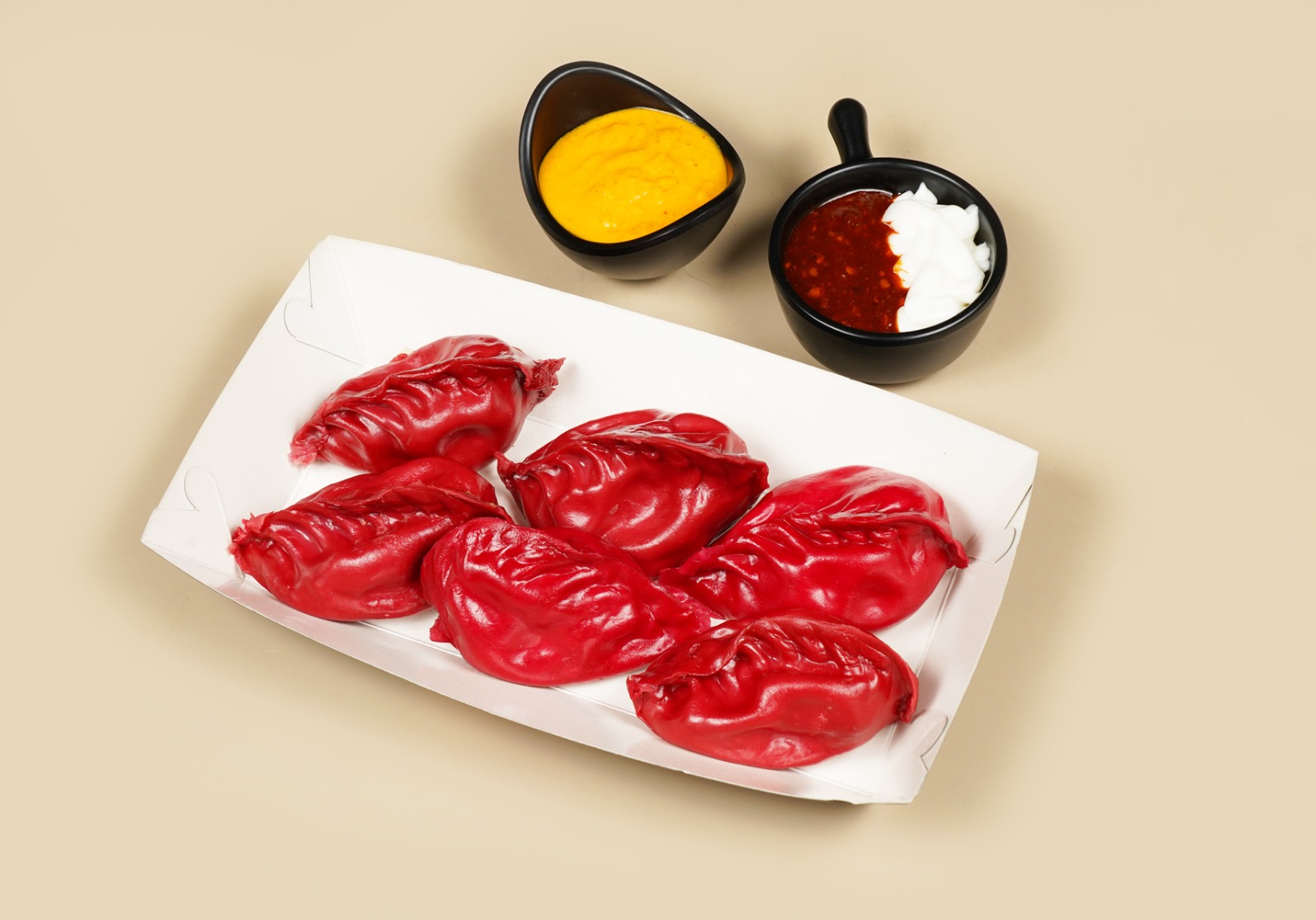
How beetroot momos can be prepared: an educational overview
Recipes differ across homes and kitchens, but a typical beetroot-wrapper process has six stages. This is a technique explainer, not the official Momo Delights manufacturing recipe or a validated commercial cooking SOP.
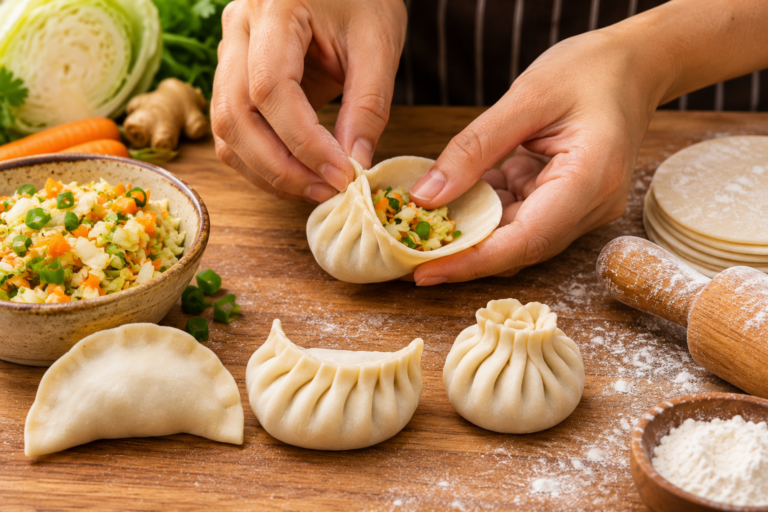
- Prepare the beetroot: Wash thoroughly, peel if appropriate for the recipe, then cook, puree, juice or grate the beetroot using clean equipment. Different approaches add different quantities of moisture and fibre.
- Make the dough: Combine the chosen flour blend with beetroot liquid/puree and any other dough ingredients. If beetroot puree adds water, the cook generally adjusts added water and kneads until pliable.
- Rest and roll: Let the dough relax, then roll into small discs. Excessive thickness can make the wrapper heavy; too-thin dough can tear when filled.
- Prepare a suitable filling: Depending on the recipe, this may include cabbage, carrot, onion, paneer or other ingredients. A moist but not watery filling works better inside a sealed wrapper.
- Fill and fold: Add a suitable amount of filling and pinch the edges securely. Decorative folds are optional; a dependable seal matters more.
- Cook safely: Steam using a tested recipe and ensure the centre is thoroughly cooked. Product size, filling and temperature at the start all affect the cooking process.
Beetroot does not eliminate ordinary food-safety requirements. Keep raw and ready-to-eat foods separate, use potable water and clean utensils, and follow FSSAI hygiene requirements for relevant food-business operations.
Do beetroot momos taste like beetroot?
They can have a mild earthy note, but not every beetroot momo tastes strongly of the vegetable. The result depends on how much is included, whether it is in the wrapper or filling, and the other ingredients. The filling and chutney may dominate the overall taste. A small amount of beetroot used mainly for colour can behave differently from a filling with substantial grated beetroot.
Compare a beetroot momo with a classic vegetable momo by first tasting both with minimal sauce. Notice wrapper elasticity, thickness, filling-to-dough ratio and any earthy or sweet notes; then add chutney. This is a suggested tasting method, not a claim that the brand’s two products were independently tested against each other.
Are beetroot momos healthy? What the evidence can and cannot tell us
Beetroot is a vegetable with naturally occurring nutrients and pigments. But the nutritional content of a finished momo is determined by the whole serving: its wrapper flour, actual amount of beetroot, filling, oil or other finishing ingredients, sauce and portion size. Adding beetroot does not automatically make a wheat-flour dumpling gluten-free, low-calorie, ‘detoxifying’ or suitable for treating disease.
| Common claim | Evidence-based interpretation |
|---|---|
| “Pink momos are healthier than regular momos” | Not established without ingredient amounts and nutrition data for both recipes |
| “Beetroot momos detox the body” | A marketing claim, not a validated benefit of eating a momo |
| “The colour proves there’s lots of beetroot” | No; pigment concentration and recipe formulation both affect appearance |
| “Beetroot momos are gluten-free” | Not necessarily; the wrapper may contain wheat and there may be cross-contact |
| “Steamed beetroot momos have no fat” | The final steaming step may need little added oil, but fillings and sauces can still contain fat |
| “Beetroot is the same as a beetroot supplement” | No; the amount, preparation and resulting nutrient exposure are different |
Research into betalain pigments is interesting, but studies of purified pigments or beetroot extracts do not demonstrate that a small amount of beetroot in a dumpling will prevent or treat a medical condition. For medically relevant dietary decisions, rely on the individual’s needs and accurate product information.
Are beetroot momos vegetarian, vegan or gluten-free?
The answer depends on the complete formulation. A vegetable filling can be vegetarian, but a paneer filling contains milk. Some sauces use yoghurt; some wrappers use wheat. A ‘beetroot’ label refers to an ingredient or a presentation style, not a complete allergen or dietary certification. Consult the Momo Delights allergen information page and ask the team about the actual item.
Beetroot momos vs classic, whole-wheat and millet momos
| Menu variety | Main distinction | What not to assume |
|---|---|---|
| Classic Veg Momo | Standard vegetable filling/wrapper combination according to the recipe | That every restaurant makes the same formulation |
| Beetroot Momo | Beetroot-related dough or filling variation, often colourful | A fixed beetroot percentage or medical benefit |
| Whole Wheat Veg Momo | Wheat flour choice differs from a refined-flour recipe | That whole-wheat foods are gluten-free |
| Millet/Ragi Momo | May use millet or finger-millet flour in the wrapper | That the entire wrapper is 100% millet or gluten-free |
These are example product names appearing on the brand’s menu, not claims that every product has been laboratory analysed. Browse the current menu and confirm availability with the outlet.
Which chutney pairs with beetroot momos?
A tangy tomato–chilli chutney can balance an earthy wrapper, while a milder, herb-led sauce can let the filling remain central. Sauce combinations depend on individual preference and the actual filling. If you’re comparing multiple wrapper types, taste each one first without a large amount of sauce. For traditions behind momo accompaniments, see the Momo Delights article on Sikkim momos and Himalayan food.
How to order beetroot momos from Momo Delights
The online menu includes Beetroot Momo among steamed momo options. Check Find Us for outlets in Panchkula and Mohali, then contact the relevant location to verify today’s item availability, portion size, ingredients and price. This article deliberately avoids claiming that beetroot momos are always in stock, that they are a bestseller, or that they meet a particular nutrition target.
What a restaurant should check before launching coloured momos
For restaurant buyers or chefs, it is worth trialling beetroot-coloured wrappers over several production runs. Measure wrapper consistency, appearance after steaming, storage performance, filling compatibility and customer acceptance. Document ingredients and allergen controls; validate claims such as “natural colour” against the actual formulation and labels.
Businesses exploring supplied momo products can contact Momo Delights HoReCa/B2B for current options, but a retail menu listing does not itself establish a wholesale SKU or formulation.
Frequently asked questions about beetroot momos
What are beetroot momos made from?
They are filled dumplings that use beetroot in the dough, filling or both. Exact flours, filling ingredients and sauces vary.
Why are beetroot momos pink?
Beetroot contains red-violet betalain pigments that can impart colour to a wrapper or filling.
Do beetroot momos always contain artificial colour?
No. Beetroot itself can provide colour. But only the actual ingredient statement can establish whether a particular product also uses other colour ingredients.
Are beetroot momos sweet?
They may have subtle earthy or sweet notes, but the filling and seasonings often dominate the taste.
Do beetroot momos lose colour after cooking?
They can change shade because betalain pigments are sensitive to heat, pH, light and oxygen.
Are beetroot momos gluten-free?
Not automatically. Wheat-flour wrappers remain common; confirm the exact formulation and cross-contact details.
Are beetroot momos healthier than normal momos?
That cannot be established from colour or the presence of one ingredient. Compare full recipe and serving nutrition.
Where can I try Beetroot Momo from Momo Delights?
It appears on the published menu; confirm stock at the outlet of your choice.
Research sources
- Red Beetroot Betalains: Perspectives on Extraction, Processing, and Potential Health Benefits — research review of colour pigments and processing sensitivity.
- Thermal Processing and Betalain Stability — study of pigment behaviour under processing conditions.
- FSSAI — Hygiene requirements — safe preparation context.
- Momo Delights — Food Menu — the source for the brand’s listed Beetroot Momo option.
Editorial note, 1 November 2026: This article is educational and includes general formulation examples, not a claim of access to Momo Delights’ recipe, nutrient analysis or manufacturing process. The featured image is AI-generated and clearly illustrative; the inline product image comes from the website’s existing media library.