

Aa Reading preferences
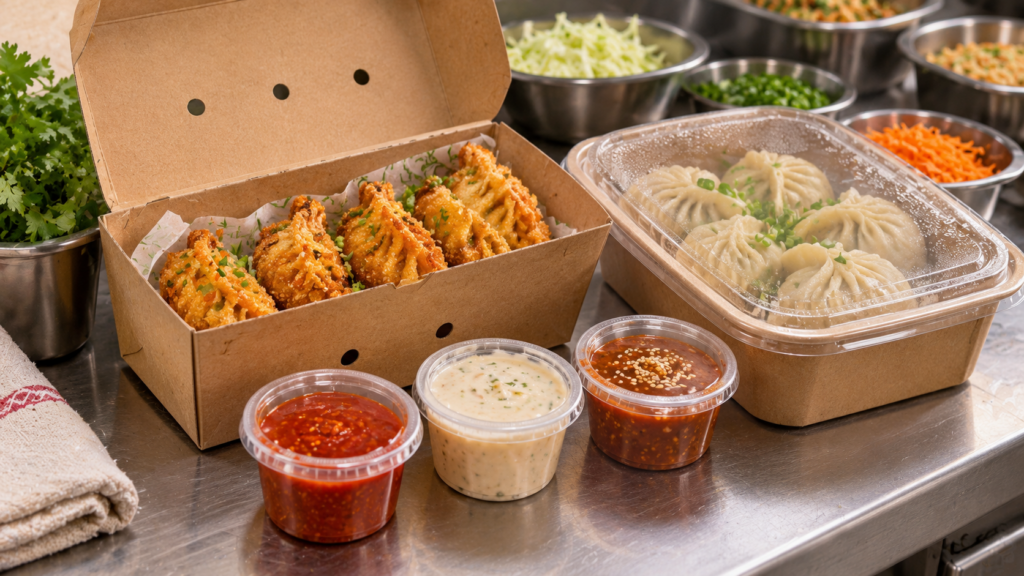
A little extra chutney can be a generous gesture. Multiplied across hundreds of orders, an undefined pour becomes a purchasing, packaging and guest-experience problem. Some customers want a fiery red sauce; others want a tiny dip or none at all. Portion control should support choice while keeping preparation predictable.
Restaurants can solve this without making the meal feel rationed. Begin with a measured standard, offer a clear extra-sauce option and watch how much returns unused.
Measure what is actually being served
For a week, weigh or measure sauce cups from a representative sample of orders. Record the portion in grams or millilitres, noting that these units are not interchangeable for every thick sauce. Use a suitable kitchen scale and deduct the empty container’s weight.
Compare actual portions with customer feedback and the serving’s number and size of momos. A large platter may justify more sauce than a small snack.
An illustrative sauce-cost calculation
Suppose a prepared chutney batch costs ₹240 and yields 1,200 g after normal processing. Ingredient cost is ₹0.20 per gram. At a hypothetical 30 g portion, ingredient cost is ₹6; at 45 g, it becomes ₹9. That’s ₹3 more per order before counting cup, lid, wastage or labour.
If 200 orders received that larger portion, the additional illustrative ingredient cost would be ₹600. These are teaching figures, not Momo Delights’ recipe cost, margin or standard serving.
Choose a repeatable dispensing method
Portion pumps, measured ladles, pre-portioned cups and controlled bottle squeezes can all work if compatible with the sauce. Dense sesame-based achar may flow differently from a thin tomato dip, so a universal squeeze count is unreliable. Calibrate the equipment at the start of a shift and after recipe viscosity changes.
Use clean, food-grade, correctly sized cups and lids. A leak-proof closure is particularly important for delivery; extra sauce does not delight a customer when it ends up on the box.
Run a 20-order test before changing policy
- Select one SKU and a proposed base sauce amount.
- Serve a documented set of 20 representative orders, without compromising existing menu promises.
- Record requests for more sauce, untouched leftovers and packaging leaks.
- Check whether the flavour balance feels appropriate to the filling.
- Compare serving cost including cup and lid.
- Revise the portion and repeat if the feedback is mixed.
A small pilot reveals workflow issues but is not a statistically representative prediction of all future diners.
Account for allergens and guest preferences
Red chilli chutney may be vegan-friendly in some recipes, while sesame achar or creamy dips may introduce allergens such as sesame or milk. A sauce change can alter an allergen statement; update the specification and train staff before switching ingredients. The Momo Delights allergen guidance explains why product-specific verification is necessary.
Offer mild, spicy and no-sauce choices when operationally practical. Do not automatically mix sauces in the same cup if that creates ingredient or cross-contact confusion.
Reduce waste without compromising hygiene
Use smaller batches that can be chilled, held and served safely. Keep protected sauce containers at the correct temperature for their ingredients and avoid topping old product with new sauce unless the validated SOP specifically permits it. Observe expiry or discard times rather than relying on smell.
FSSAI’s hygiene requirements address contamination control, equipment and safe food handling. Portion-cost improvement never justifies unsafe storage or reusing chutney from guest-contact plates.
A weekly dashboard worth keeping
| Metric | Why track it |
|---|---|
| Average grams per order | Consistency |
| Extra-sauce requests | Customer satisfaction |
| Returned unused sauce | Waste |
| Leak incidents | Packaging quality |
| Cost per portion | Menu contribution |
| Allergen query incidents | Communication and training |
FAQs
Is there an ideal universal momo sauce portion?
No. Piece count, filling, sauce intensity and customer preference vary.
Should restaurants charge for extra sauce?
That is a commercial decision; make the policy transparent and consistent.
Does changing sauce packaging affect SEO?
Only make factual menu-description updates; guest experience and accurate information matter more than keyword repetition.
For related foodservice resources, see Frozen Momo Delivery Checklist for Restaurants: Receiving, Storage & Batch Controls and Momo Machine vs Ready-Made Momos: What Is Better for Restaurants, Cafés, Hotels and Cloud Kitchens?. Follow current safe-handling requirements and supplier guidance.

Leave a comment