

Aa Reading preferences
A Hot-Holding Plan for a Momo Buffet: Temperatures, Trays and Timing is an editorial guide for readers and food businesses. Product composition and operating requirements must be checked for the specific item and location.
A warm tray is not a safe-temperature record
For a commercial Indian foodservice operation, food should be held under its validated temperature and time controls. FSSAI’s published catering Schedule 4 guidance specifies 65°C or above for hot food and 5°C or below for cold food. The USDA’s 60°C/140°F guidance is a separate US consumer benchmark, not the Indian requirement. Confirm current rules and site SOP before operating the buffet.
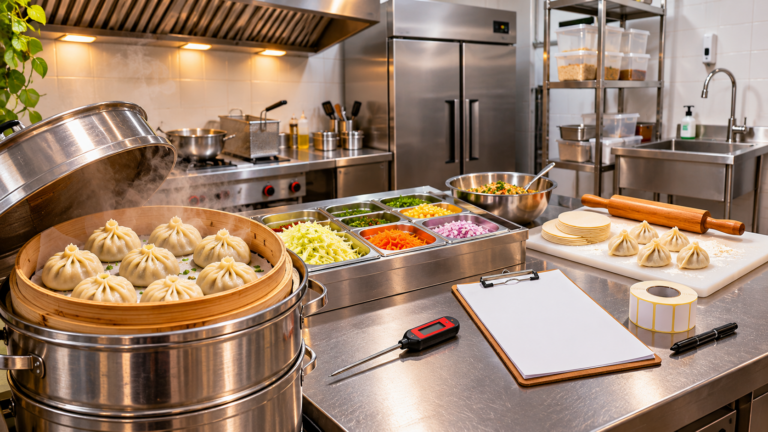
Measure the actual food, not only the steamer’s dial or the water bath. Some attractive warming equipment cannot maintain the correct food temperature.
Design the flow before the event begins
Use a clear sequence: verified cooked batch, controlled hot holding, covered food-grade display, clean tongs, service and documented replenishment. Keep chilled sauces physically separate from hot trays. A layout that forces staff to carry boiling trays past guests creates avoidable burn risk, especially at a crowded event.
Plan one person to supervise temperatures and another to handle serving during peak periods. Where staffing is limited, simplify the menu rather than ignoring checks.
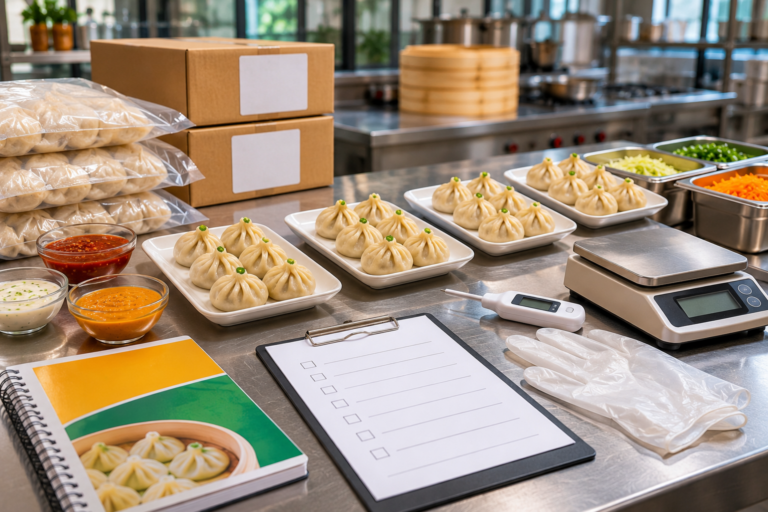
The minimum buffet log
| Field | What to record |
|---|---|
| Item and batch | Exact filling and preparation lot |
| Cooking check | Verified approved method and doneness |
| Time displayed | Start of service for the batch |
| Food temperature | Measured at defined site-SOP intervals |
| Corrective action | Replace, hold, discard or other validated action |
| Staff initials | Responsible person |
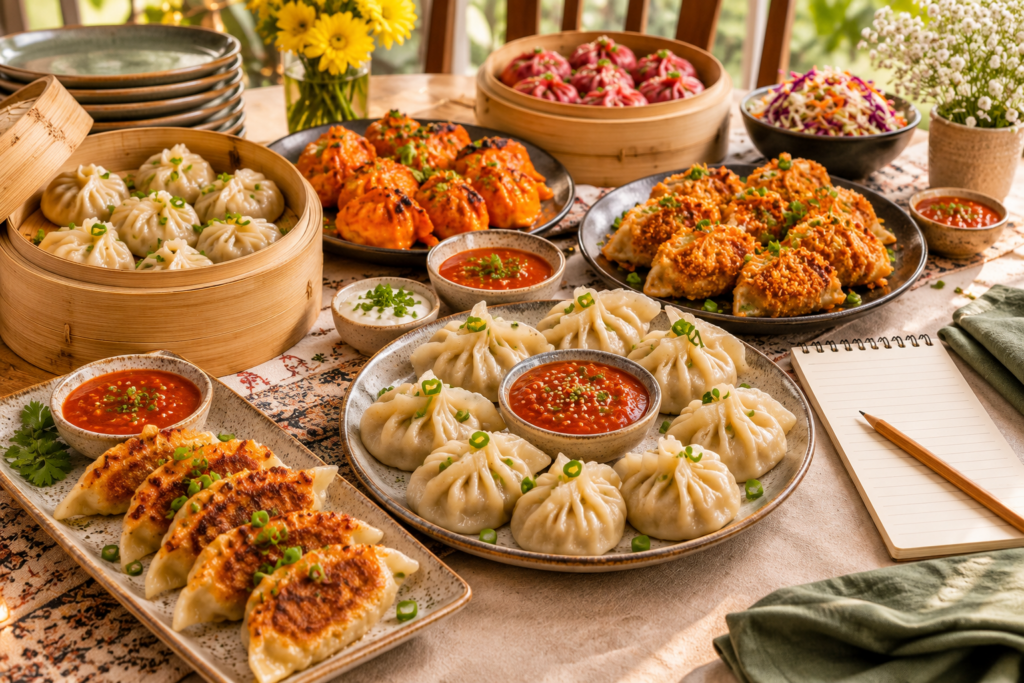
Small batches work better than a mountain of momos
US FDA buffet advice recommends smaller serving platters and replacing dishes rather than topping them up. The logic is especially good for momos: fewer layers mean less crushed dough, more reliable timing and better control of steam and condensation. Back-up food must remain in suitable hot or cold controlled storage until needed.
Allergens still matter in self-service
Provide separate, clearly labelled utensils for vegetable, paneer and other variants. Sesame achar, peanut dips and yoghurt sauces require ingredient confirmation. Guest-managed buffet spoons can cross from one dish to another; where an allergy is severe, staff-controlled service may be necessary. Do not guarantee zero cross-contact based solely on signs.
What to do when holding goes wrong
Do not estimate a food’s safety by whether the wrapper feels warm. FSSAI’s referenced direction describes limited, specific conditions for a one-time hot-holding excursion and approved reheating; those conditions are not a blanket permission to leave trays out and reheat them repeatedly. Follow the validated corrective-action protocol and make the food-safety lead responsible for disposition.
Pre-service checks
- Test hot-holding equipment and thermometer calibration.
- Confirm cooking and temperature procedures for each SKU.
- Put food-grade trays, lids and dedicated tongs in place.
- Verify sauce labels and appropriate cold storage.
- Record opening temperatures and batch details.
- Assign replenishment, hand-washing and discard responsibilities.
See the frozen delivery receiving guide for earlier cold-chain controls that a buffet cannot fix later.
FAQs
Can a chafing dish reheat cold momos?
Not unless its use is expressly part of a validated reheating process; holding equipment is not a substitute for a proper reheater.
Can trays be topped up indefinitely?
No. Replacement is easier to control and avoids mixing time histories.
For additional foodservice guidance, see Foodservice supply. Use verified product specifications and food-safety procedures.

Leave a comment