

Aa Reading preferences
Batch preparation saves time only when the filling still tastes fresh and behaves well in the wrapper. Finely chopped cabbage and carrot can release liquid as they sit with salt, leaving the last tray of momos wetter than the first. A little workflow discipline keeps flavours balanced and seams easier to close.
This guide focuses on preparing multiple portions of a vegetarian filling for home use or a small trial kitchen. Commercial operations must add their own validated food-safety controls and documented specifications.
Choose vegetables for flavour and manageable moisture
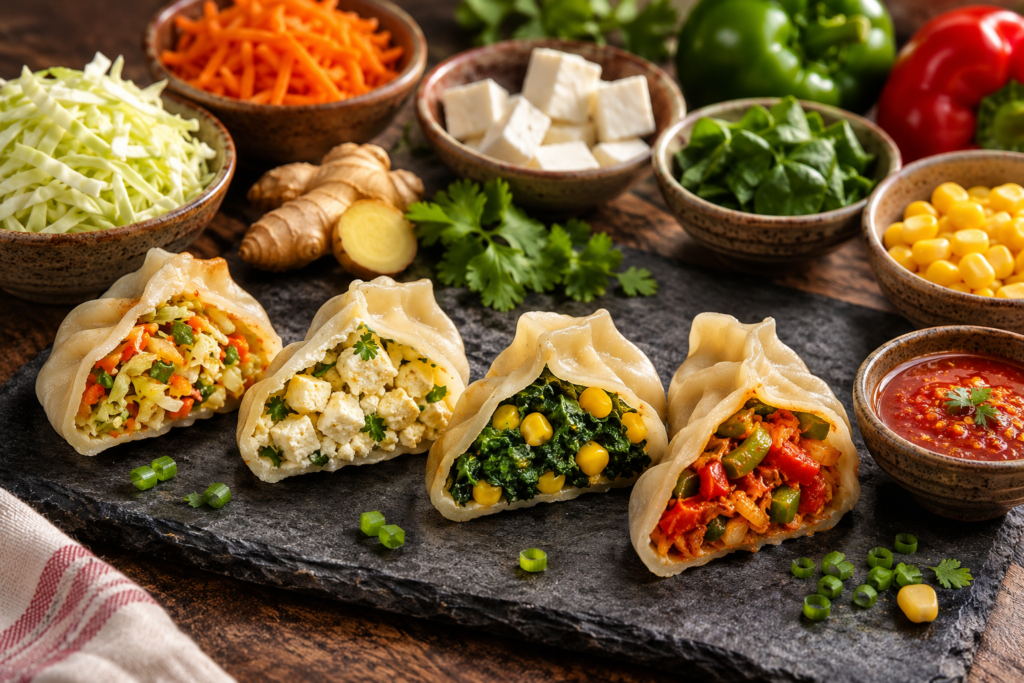
Cabbage brings body, carrot offers subtle sweetness, and ginger, garlic or spring onion adds aroma. Mushrooms and leafy greens can work, but water content varies by ingredient and cooking method. The challenge is not to remove all moisture—dry filling tastes flat—but to prevent liquid pooling at the bottom of the bowl.
A practical test is to squeeze a small spoonful gently after mixing. If liquid runs between your fingers, reconsider how the vegetables were cut, salted or cooked.
Separate washing, cutting and seasoning
Wash vegetables under clean running water and dry them as thoroughly as practical. Shred cabbage into fine, even pieces; roughly cut chunks create weak points under thin wrappers. Keep washed vegetables cold if there will be a delay before preparation.
For a batch that will wait, postpone salt and soy sauce until close to filling time when the recipe permits. Both can draw out water or contribute liquid. Alternatively, salt cabbage briefly, squeeze it, and then use a measured final seasoning. Choose one method, write it down and judge the result.
A two-bowl method for consistent filling
- Measure and prepare the vegetables and aromatics into one clean bowl.
- If using pre-salted cabbage, squeeze it well and record its post-drain weight.
- Keep wet seasonings separate in a smaller bowl.
- Divide the vegetables into the portions you expect to shape in one session.
- Season one portion immediately before wrapping; leave the others properly chilled.
- Inspect each portion for free liquid before placing it in the dough.
This makes late-batch texture less dependent on how many minutes the whole filling has been soaking in seasoning.
A small-batch example—not a factory specification
Suppose your trial mixture contains 500 g prepared vegetables, 50 g chopped aromatics and 10 g oil before final seasonings. If you intend to fill 25 momos evenly, that is approximately 22.4 g of mixture per momo before any further draining or additional seasoning. The final safe and practical amount depends on wrapper diameter and the actual mixture. Use the example to understand yield arithmetic, not as a mandated portion size.
Weigh the first few filled wrappers and adjust for ease of sealing. A consistently overfilled momo is more likely to leak regardless of how good its seasoning tastes.
Keep work-in-progress filling cold
Vegetable fillings that include paneer, tofu or cooked components may be perishable. The CDC recommends keeping a home refrigerator at 4°C/40°F or below and refrigerating perishables within two hours, or within one hour above 32°C/90°F. Do not leave a large batch on a counter while shaping for an entire afternoon.
Use smaller covered containers that can return promptly to the fridge; keep separate clean utensils for raw components and cooked foods. Freezing does not undo earlier unsafe handling.
How to assess a batch before assembly
| Check | Good sign | Action if not |
|---|---|---|
| Cut size | Small, mostly uniform pieces | Chop coarser pieces finer |
| Free liquid | No puddle at base of bowl | Drain or adjust seasoning approach |
| Aroma | Fresh vegetables and balanced ginger | Recheck freshness; discard questionable food |
| Portion | Wrapper closes without strain | Reduce filling weight |
| Temperature history | Properly chilled when held | Follow discard procedure if unsafe |
Common mistakes
Salting everything too early: a large bowl may become watery while the last pieces are filled. Over-processing: pulsing vegetables into a puree destroys the desired texture. Using hot sautéed ingredients: they can soften the dough; cool safely first. Relying on smell to judge food safety: harmful microorganisms do not always create obvious off-odours.
For related momo preparation ideas, explore Raw vs Pre-Cooked Vegetable Fillings for Homemade Momos and Winter Momo Dinner: Soup, Dumplings and Vegetable Sides. Confirm ingredients and dietary suitability when serving others.
Frequently asked questions
Can I cut vegetables the night before?
Yes, if washed, handled hygienically and kept properly refrigerated. A brief trial helps determine texture loss.
Should I squeeze all moisture from cabbage?
No. Aim to remove excess free liquid without making the filling dry.
Is a food processor useful?
Yes for consistent short chopping, but stop before the vegetables become paste.

Leave a comment