Aa Reading preferences
This guide compares vegetable, paneer, spinach-corn and spiced momo fillings by flavour, texture, common ingredients and dietary considerations. It also makes an important menu distinction: Veg Momo and Paneer Momo describe fillings, while steamed, fried, kothey and tandoori describe cooking or finishing methods. One filling can work with more than one style.
The Momo Delights menu lists Classic Veg Momo, Paneer Momo and Spinach Corn Momo alongside other variations. Those names are verified menu listings, not published complete recipes. Ingredient percentages, allergens and preparation specifics must be confirmed with the outlet or actual product specification.
Momo filling types: side-by-side comparison
| Filling style | Common ingredients in example recipes | Taste and texture direction | Important check |
|---|---|---|---|
| Classic vegetable | Cabbage, carrot, onion, ginger, herbs | Vegetable-forward and aromatic; some texture remains | Actual sauces and seasonings |
| Paneer | Paneer, aromatics, optional vegetables | Soft, dairy-based and richer | Milk allergen; other dairy ingredients |
| Spinach–corn | Leafy greens and sweet corn, possibly dairy or other binder | Sweet kernels against a mild leafy base | Whether cheese, paneer or milk is added |
| Mushroom | Mushrooms, aromatics and vegetables | Savoury, with a distinct earthy flavour | Freshness and moisture handling |
| Soya/soy-based | Soy ingredients with spices and vegetables | Varies with the particular soy product | Soy allergen; wheat in some processed ingredients |
| Chilli or spiced veg | Vegetables, chilli and added aromatics | Hotter and more seasoning-led | Actual chilli strength and sauces |
These are general culinary descriptions rather than a disclosure of Momo Delights’ own formulations. An Indian momo producer, Momo Express, publishes ingredient examples for vegetable, paneer, corn, spinach, mushroom and soy variants. Its examples help demonstrate how broadly the category varies, but another company’s formulation must never be attributed to Momo Delights.
1. Classic vegetable momo filling: a versatile starting point
Vegetable fillings often use finely chopped cabbage and carrot, with onion, ginger, garlic or other seasonings depending on the cook. The vegetables supply different textures, and the aromatics provide savoury flavour. Some recipes lightly cook the vegetables; others prepare the filling differently and rely on the final steaming step according to a tested process.
The Government of Sikkim’s cuisine reference describes momos with meat or vegetables and illustrates a preparation involving lightly cooking the filling, then wrapping and steaming. This is one regional example—not a universal requirement that every vegetable momo contain the same ingredients or be precooked.
Why do vegetable momos sometimes taste watery? Cabbage, onion and other vegetables release moisture when cut, salted or cooked. An overly wet filling may weaken a dough seam and alter texture. A properly designed recipe balances moisture, seasoning and wrapper strength without becoming dry. A home cook should follow an established recipe rather than guessing shelf life from the appearance of a filling.
What goes with a vegetable filling?
A tangy red tomato–chilli chutney can complement the vegetables, while a milder dip can allow delicate ingredients to stand out. The Sikkim momo traditions article explains regional culinary context; the actual sauce at a specific restaurant can differ.
2. Paneer momo filling: dairy richness and softer texture
Paneer is a fresh dairy cheese familiar in Indian cooking. In momos, it can be crumbled, grated or otherwise portioned with aromatics and seasoning. It makes a different centre from shredded cabbage or carrot. Dassana’s paneer momo recipe shows one example that combines paneer with onion, herbs and seasonings; it also explains how to fold half-moon and pouch shapes.
Paneer is not vegan and contains milk. Some recipes add butter, yoghurt or cheese in the filling or sauce, making a full ingredient check particularly important for people with milk allergy. A paneer momo is not automatically high-protein or low-fat: the amount of paneer, wrapper size, oil and sauce determine the final nutrition of the serving.
The Momo Delights published menu lists Paneer Momo, Whole Wheat Paneer Momo, Paneer Kothey Momo and Paneer Kurkure Momo among its broader offerings. These item names describe combinations of filling, wrapper or finish; they do not establish a uniform paneer percentage or full ingredient specification across different products.
3. Spinach and sweet corn momos: an accessible flavour contrast
A spinach–corn style combines a green leafy ingredient with sweet corn kernels. Depending on the recipe, it may use additional vegetables, seasoning, cream, cheese or paneer to bind or enrich the filling. The phrase “spinach corn” does not establish that the filling is dairy-free or that the entire dish has a particular nutritional profile.
For a cook, spinach contains water and changes volume as it heats; corn kernels introduce sweetness and a firmer bite. Managing free moisture can help protect the wrapper seam. If adding cheese or another binder, the allergen and ingredient declaration must change accordingly.
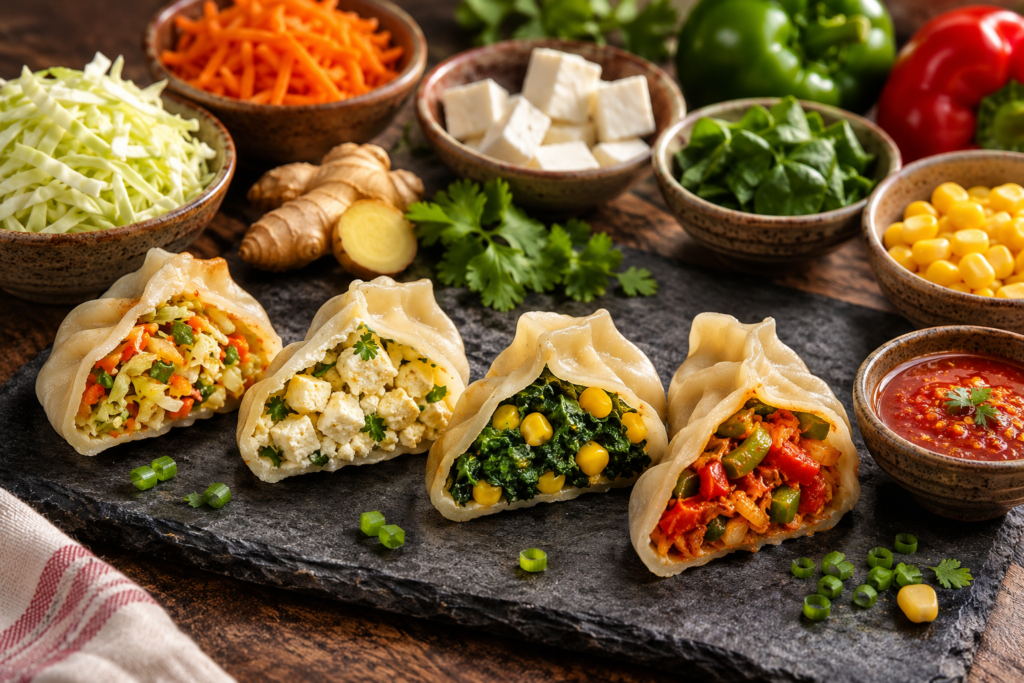
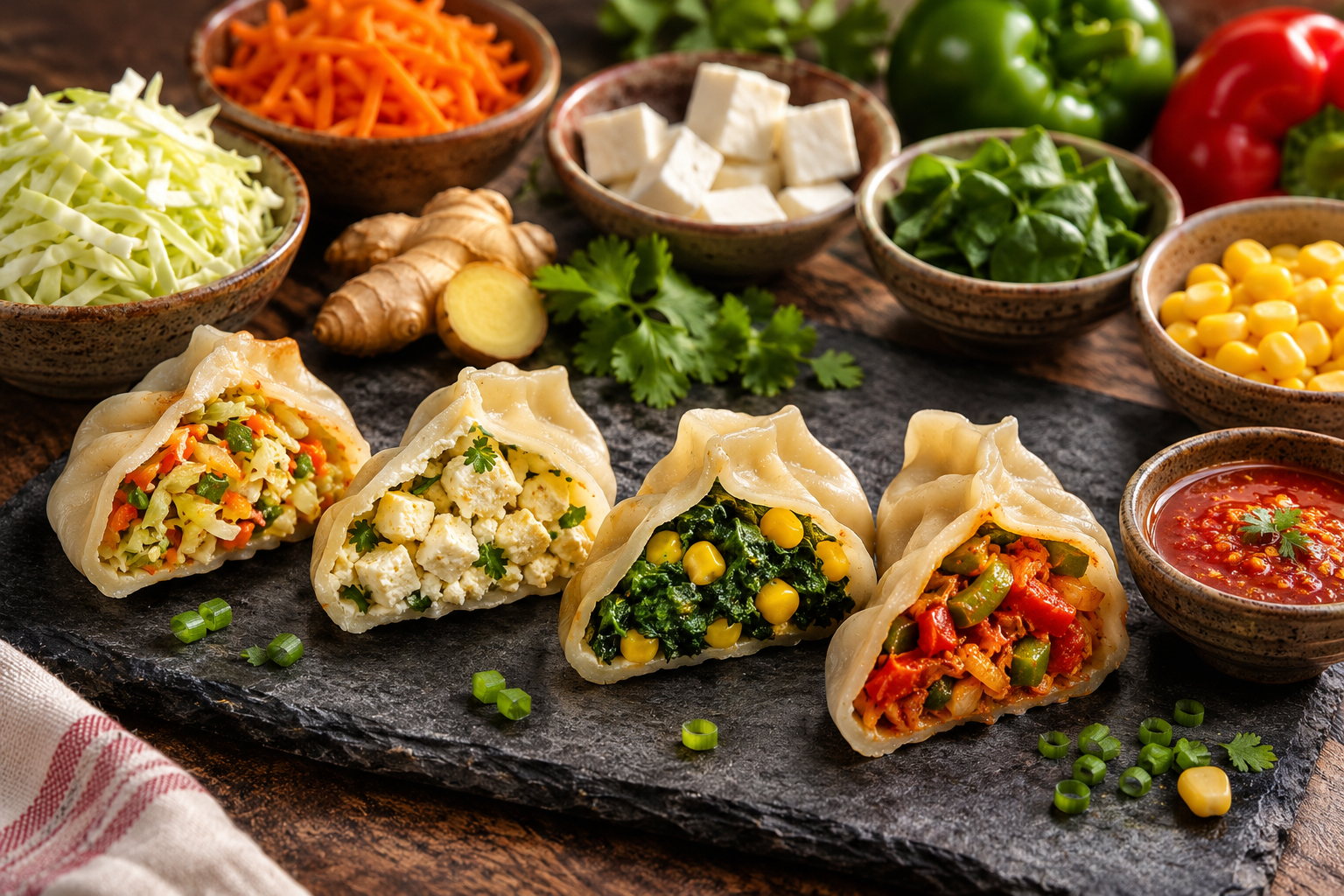
Momo Delights lists Spinach Corn Momo on the published menu. A customer should ask whether cheese or other dairy ingredients are included if relevant. The illustration below shows conceptual filling types, not actual portions from the restaurant.
4. Other momo fillings you may encounter
Mushroom filling
Mushrooms can bring a savoury quality, but a recipe must account for their water content and cooking requirements. A mushroom momo sold by another restaurant does not mean it is currently on the Momo Delights menu. Check the live listing before looking for a particular flavour.
Soya-based filling
Soy can appear as soya chunks, textured soy protein, tofu or other preparations. Ingredient lists differ, and soy is a relevant allergen for some consumers. Seasonings and sauces may also contain wheat. Never assume a soya-based product is gluten-free from its name alone.
Meat fillings and regional traditions
Meat-filled dumplings are part of various Himalayan food traditions, with recipes differing between communities and households. Meat fillings require careful separation from cooked food and validated cooking, especially when raw poultry is used. This culinary reference does not claim that Momo Delights sells meat momos; customers should consult the brand’s actual current menu.
Modern fusion fillings
Restaurants may experiment with corn-cheese, spicy vegetables or other combinations. Fusion innovation is different from claiming a single immutable “authentic” recipe. The better approach is to describe the ingredients and cooking style accurately, with clear allergen disclosures and menu descriptions.
Five things that make a momo filling work well
- Evenly cut ingredients: Smaller, fairly even pieces help the filling fit into a wrapper and cook more consistently according to the chosen recipe.
- Controlled moisture: Excess free liquid can loosen seams or lead to soggy wrappers, while an overly dry filling can feel unpleasant.
- Balanced seasoning: Taste should be appropriate to the filling and the sauce served with it; seasoning requirements vary with ingredient type.
- Consistent portioning: Too much filling makes folding and sealing difficult. Too little leaves an unbalanced dough-heavy dumpling.
- Safe preparation and storage: Raw and cooked ingredients need suitable hygiene, holding and validated cooking, not just a visually attractive final momo.
These are preparation principles, not a universal food-safety-approved recipe. The FSSAI hygiene requirements describe the appropriate food-safety management context for food businesses.
Is filling more important than the wrapper or cooking style?
All three matter, but they answer different questions. Filling determines the central ingredients. Wrapper determines the dough and how it feels around the filling. Cooking or finishing style can change the surface: steamed momos are typically softer, kothey momos have pan-seared contrast, and kurkure momos emphasise a crunchy coating.
| If you want… | Look for this dimension | Example question to ask |
|---|---|---|
| Vegetable-forward flavour | Filling | What vegetables are in this item? |
| A dairy-based centre | Filling | Does this paneer dish contain other milk products? |
| A grainier dough | Wrapper | Is this whole-wheat or millet blend? Does it contain wheat? |
| A crisp base and tender top | Cooking style | Is this kothey or fully fried? |
| Bolder seasoning outside | Finishing style | How is the tandoori or masala coating prepared? |
Our published Himalayan momo preparation guide explores regional distinctions, while the momo machine versus ready-made momo article discusses production choices for restaurants.
Dietary and allergen checks before choosing a filling
Do not infer vegan, dairy-free, wheat-free or allergen-free status from the word “vegetable.” Many momo wrappers are made with wheat, paneer includes dairy, and soy or sesame can appear in sauces, fillings or seasonings. A product may also be prepared in shared equipment, introducing cross-contact risk.
- Milk avoidance: Ask about paneer, cheese, butter, cream, malai or yoghurt in fillings and dips.
- Wheat/gluten avoidance: Check the full wrapper formula; a colourful or millet-based wrapper may still contain wheat.
- Soy avoidance: Check processed ingredients and sauces, not just the filling name.
- Sesame/nut avoidance: Some chutney or achar variants use sesame or nuts.
- Spice preferences: Ask about the filling and sauce independently; the dip can be hotter than the momo.
Read Momo Delights’ allergen information and verify the current item directly when a restriction matters. This article is not a substitute for an individual medical or allergy assessment.
What momo filling should you order at Momo Delights?
For a first-time introduction, Classic Veg Momo offers a vegetable-led option, subject to the actual ingredients and current availability. If you like paneer, choose a paneer item; if sweet corn and leafy greens appeal to you, ask about Spinach Corn Momo. For a direct comparison of fillings, try to keep the cooking style similar so that fried versus steamed texture does not dominate the experience.
Use the official menu for the up-to-date list, prices and descriptions, and Find Us to contact the appropriate Mohali or Panchkula outlet. Do not assume every listed item is available at every service period.
Foodservice buyers: standardizing fillings across multiple kitchens
Restaurants buying or producing filled dumplings should document ingredient composition, piece weight, filling portion, allergen declaration, recipe version and handling/cooking requirements. Different batches can feel different if the fill ratio, moisture or ingredient cut size drifts. Use controlled tasting and measurable specifications rather than a promise that every batch is “premium.”
Momo Delights’ HoReCa/B2B enquiry page is the appropriate channel to ask which products and written specifications are currently available. A consumer menu listing does not itself establish wholesale availability, shelf life or formulation.
Momo filling frequently asked questions
What is usually inside a vegetable momo?
Many recipes use cabbage, carrot, onion and aromatics such as ginger, but there is no single universal filling.
Is paneer momo vegetarian?
Paneer is a dairy-based cheese and is commonly used in vegetarian cooking, but the full recipe and preparation must still be checked for specific dietary needs.
Is paneer momo vegan?
No. Paneer contains milk.
Does spinach-corn momo always contain cheese?
No. Recipes vary; ask about cheese, paneer or other dairy if relevant.
Which momo filling is the spiciest?
There is no universal answer. Chilli level varies with the recipe and accompanying chutney.
Is a vegetable momo gluten-free?
Not automatically. Many wrappers contain wheat flour, regardless of the vegetable filling.
Can the same filling be used for steamed and fried momos?
Some fillings can be adapted to multiple cooking styles, but the recipe and cooking process must be suitable and validated for each use.
Why do fillings make wrappers tear?
Overfilling, free liquid, large ingredient pieces or weak seams can cause tearing.
Which filling is best for beginners?
A classic vegetable or paneer option is an accessible place to start, depending on your preferences and dietary needs.
Does Momo Delights sell all the filling types discussed here?
No such claim is made. The article includes wider examples for education; use the brand’s live menu for actual offerings.
Sources and editorial note
- Sikkim Tourism — Cuisine (regional momo and filling context).
- Dassana’s Veg Recipes — Paneer Momo (one home-style paneer filling example).
- Momo Express — Published Product Ingredient Examples (illustrates variety in contemporary commercial fillings, not Momo Delights formulations).
- FSSAI — Hygiene Requirements (safe handling for food businesses).
- Momo Delights — Official Food Menu (source for the brand’s listed menu names).
Editorial transparency, 1 November 2026: The filling descriptions are representative culinary examples, not a disclosure of exact Momo Delights recipes, allergens, laboratory nutrition data or product specifications. The featured image is an AI-generated conceptual illustration. Actual ingredients should be verified at the outlet or with the supplier.