

Aa Reading preferences
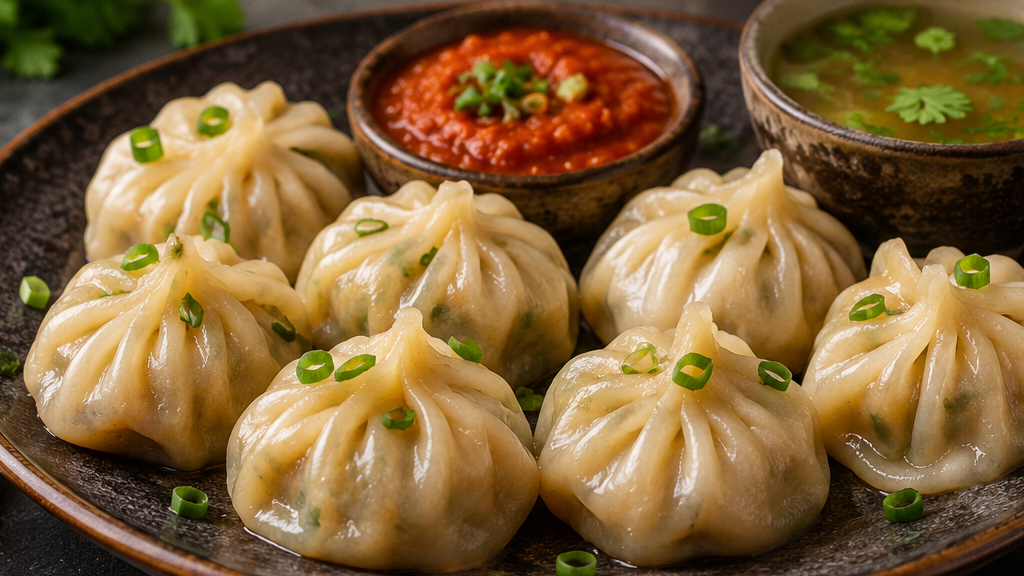
The nicest steamed momo comes to the table with a soft wrapper, a distinct filling and a little warmth still rising from the folds. Timing matters. Leave cooked momos uncovered, and the surface may dry; trap them under a dripping lid, and the bottoms can become wet and sticky.
These simple changes make home service smoother without relying on unsafe room-temperature holding. Commercial hot holding requires a separately verified temperature-control process.
Time your dumplings as the final component
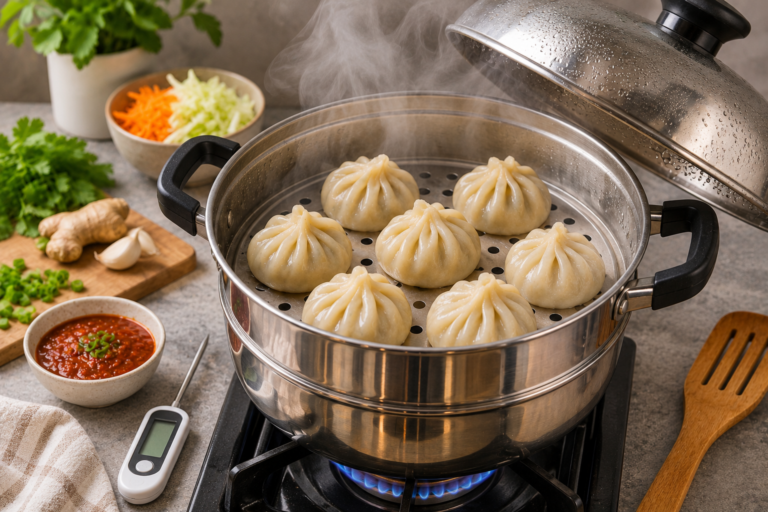
Make the chutney, prepare plates and set out drinks before the steamer begins its final cycle. Keep the steamer space manageable; a crowded tray cooks less evenly and forces a rushed removal of sticky pieces. If you are serving several rounds, cook smaller batches close to the moment each group will eat.
The ideal goal is not to preserve steamed momos indefinitely. It is to shorten the interval between fully cooking them and enjoying them.
Understand moisture from both directions
A freshly cooked wrapper loses moisture when exposed to circulating air. If the dough cracks before cooking, see our published wrapper troubleshooting guide; holding problems need a different fix. Under a tightly sealed lid, water condenses and drips back onto the food. The first effect can produce a tough surface; the second creates a gummy underside. Both can happen over the same long holding period.
Use an appropriate covered food-safe tray for a short transition, arranged in one layer where practical. Do not set a hot tray directly onto surfaces that can be damaged by condensation.
What a covered steamer can and cannot do
If you need a very short pause after cooking, the appliance may be a convenient place to keep dumplings protected, provided its heating/holding operation is safe for the intended use. Turn off or adjust steaming heat according to equipment guidance rather than overcooking them continuously. Check the condition before serving.
For restaurant-scale holding, verify the actual product temperature and follow applicable local catering rules. A covered pot sitting off the heat is not proof that food is being held at a safe temperature.
How to serve a group without a pile of cold dumplings
- Place clean serving utensils and dips on the table first.
- Make the first batch small enough to serve immediately.
- Do not stack tender momos in deep layers; seams can tear.
- For a longer meal, schedule a second steaming round instead of cooking everything at once.
- Separate dipping sauces so wrappers do not absorb them before guests eat.
- Refrigerate safely handled leftovers promptly rather than leaving them for a late snack.
Texture and safety are different questions
A momo may still feel warm while having spent too long outside controlled temperatures. FoodSafety.gov advises refrigerating perishable foods within two hours and within one hour when ambient temperatures exceed about 32°C; leftovers should be reheated thoroughly to 74°C/165°F. These are US household guidelines, while Indian professional caterers must follow the relevant FSSAI requirements and their validated SOPs.
Do not infer safe hot-holding duration from steam on the surface or how soft the wrapper feels.
Common mistakes
| Symptom | Likely cause | Improvement |
|---|---|---|
| Hard, dull surface | Long uncovered wait | Cook closer to mealtime |
| Sticky wet bottoms | Condensation and stacking | Shallow layer; appropriate covered tray |
| Broken seams | Overcrowding or rough lifting | Leave gaps; use thin spatula |
| Sauce-soaked wrappers | Chutney added in advance | Serve dips separately |
A note about frozen ready-to-cook momos
A commercial frozen product may be raw, pre-cooked or formulated for a specific appliance. Follow its own cooking instructions and check complete doneness before serving. This guide is about the texture of fully cooked momos during service, not a replacement for pack safety directions.
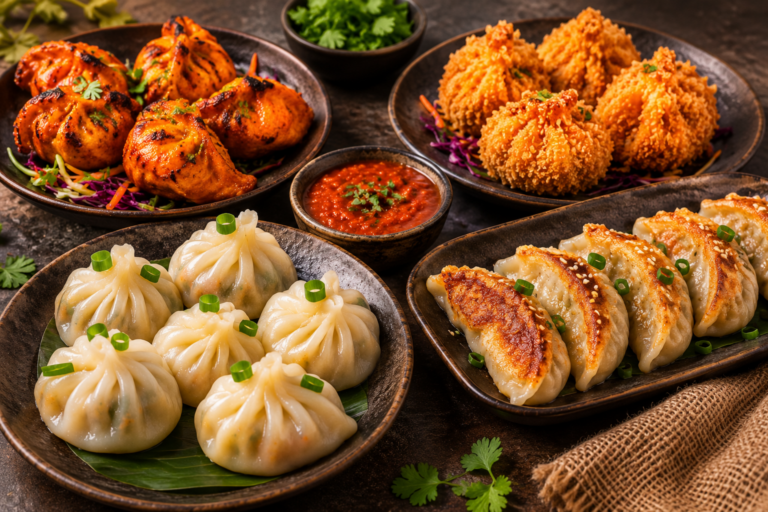
For more cooking and menu ideas, see Tingmo vs Momos: Tibetan Steamed Bread and Filled Dumplings and How to Choose Between Steamed, Spiced and Crispy Momos. Verify ingredients and allergens where relevant.
Frequently asked questions
Can I leave steamed momos on a plate for an hour?
It is not a good quality strategy, and food-safety risk depends on temperature and handling. Serve promptly or use validated temperature control.
Can I cover the plate with cling film?
Only use a material appropriate for hot food and its intended temperatures; many wraps are not designed for direct hot contact.
What keeps the first batch best?
Preparing everything else beforehand and serving the dumplings soon after cooking.

Leave a comment