

Aa Reading preferences
A crisp golden base beneath a tender dumpling feels like a small kitchen trick, but it is simply good control of heat and moisture. Both Chinese-style potstickers and Himalayan kothey momos can deliver that contrast. They may look similar in a photograph, yet their culinary histories, seasoning and serving styles are not interchangeable.
Understanding the technique helps you order more confidently—and troubleshoot the next pan of dumplings at home.
What is a potsticker?
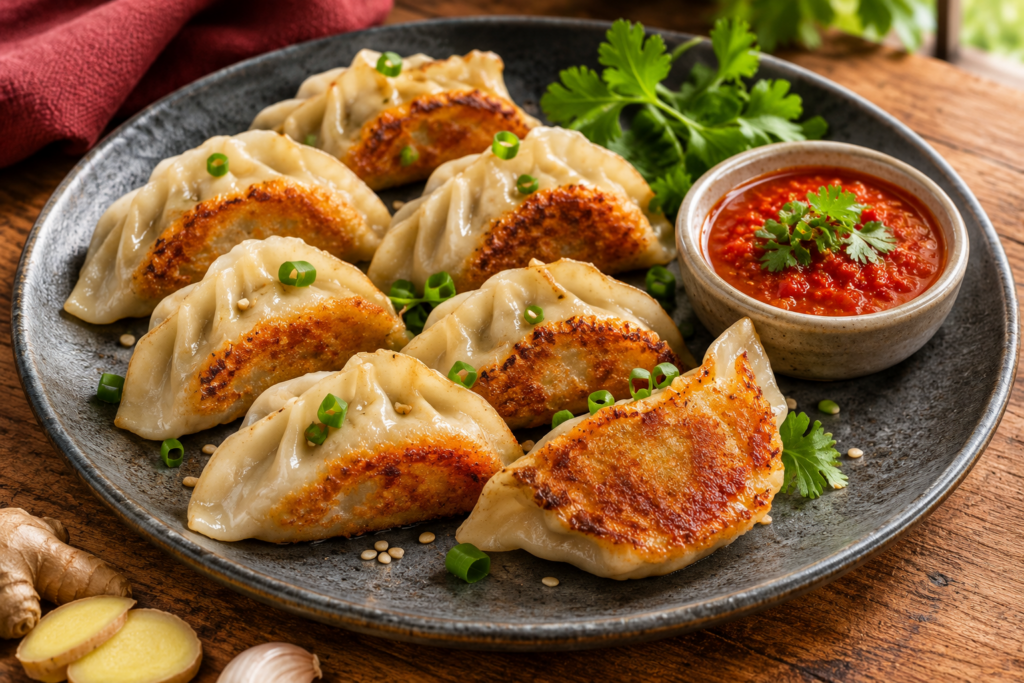
Potsticker is a common English name for pan-fried Chinese dumplings, often associated with guotie and the broader jiaozi family. The bottom cooks against the pan and develops colour, while steam helps cook the top and centre. Some versions begin with raw dumplings and use water under a lid to cook through; others vary the sequence.
The term describes a cooking presentation, not one fixed filling. Pork, cabbage, chives, seafood and vegetarian variations exist. The actual wrapper and sauce depend on the maker.
What is a kothey momo?
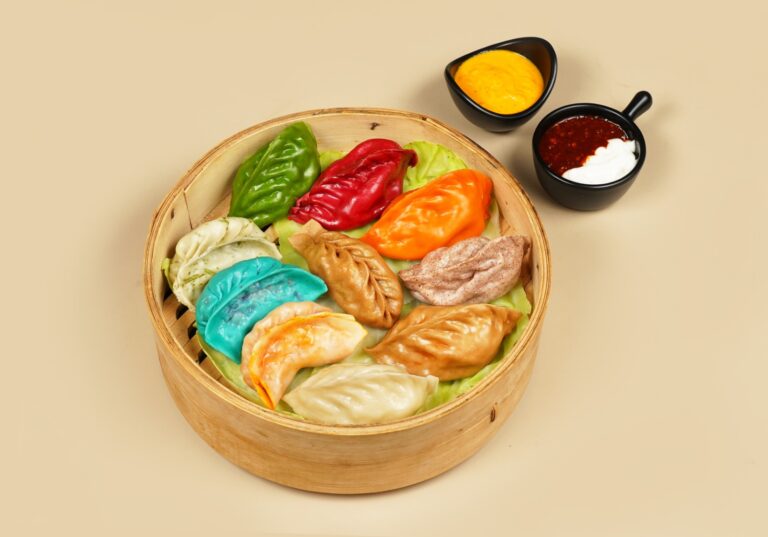
Kothey is a momo preparation frequently described as pan-seared on one side, with the top remaining softer. It belongs to momo food culture rather than becoming a Chinese jiaozi simply because it touches a frying pan. In Nepal, kothey is among the commonly identified momo styles, alongside steamed, fried and jhol versions.
The characteristic experience is contrast: a browned base, tender dough and well-seasoned filling, often paired with tomato-chilli achar or another dip.
The pan technique they can share
- Heat a suitable heavy pan with a little cooking oil.
- Arrange the dumplings flat-side down without crowding.
- Let the bottoms develop colour over controlled heat.
- Add a carefully measured splash of water, cover and steam only if the recipe specifies this cooking method.
- Allow excess water to evaporate and finish the base until crisp.
- Confirm the filling is fully cooked before serving.
For commercially frozen products, the manufacturer’s validated directions override a general method. Hot oil and water can splutter, so add water cautiously and keep hands away.
What changes in the bite?
| Feature | Potsticker | Kothey momo |
|---|---|---|
| Culinary setting | Chinese jiaozi/guotie traditions | Himalayan momo traditions |
| Typical surface | Browned base, soft top | Browned base, soft top |
| Seasoning | Varied; often soy, ginger and alliums | Varied; often ginger, garlic and aromatic filling |
| Sauce | Often soy-vinegar style | Often chilli-tomato or sesame-based achar |
| Shape | Frequently crescent | Crescent or other momo shapes |
These are common associations, not binding rules. Both dishes can be prepared creatively.
Why the base sometimes stays pale
The pan may be too cool, the dumplings crowded or water added before the base takes colour. If it turns black before the interior heats, the pan may be too hot. A soggy base often means liquid has not fully evaporated or the finished dumplings were stacked in a closed box.
For an approachable home finish using already cooked vegetarian dumplings, experiment with a short, controlled browning step rather than trying to adapt a raw frozen product by guesswork.
Allergens and dietary considerations
Both commonly use wheat wrappers. Soy sauce may contain wheat; sesame oil and peanut-containing dips can introduce further allergy concerns. Kothey fillings may include dairy paneer. Vegetarian, vegan and gluten-free suitability must be established for the complete dish and shared equipment, not the cooking technique.
For Momo Delights, see the published allergen information and the current menu.
For further food and cultural background, see How to Choose Between Steamed, Spiced and Crispy Momos and Himalayan food traditions. Food traditions and variations differ across communities.
Frequently asked questions
Are potstickers always fried?
The name usually refers to a pan-fried presentation, though related jiaozi can be boiled or steamed.
Is kothey just another name for gyoza?
No. Similarities in cooking do not remove the distinct food traditions.
Can I pan-fry steamed leftovers?
Yes, when properly stored and thoroughly reheated; USDA guidance recommends 74°C/165°F for leftovers.

Leave a comment