

Aa Reading preferences
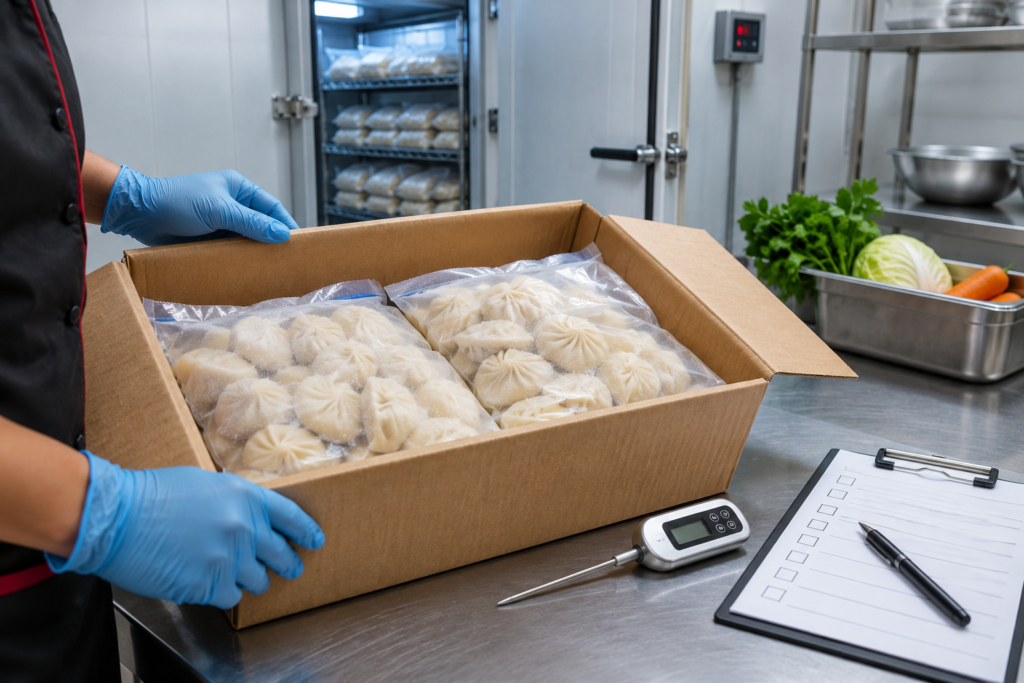
Batch traceability is the difference between “we bought some frozen dumplings last month” and “we know which batch arrived, where it was stored and when it was used.” That difference becomes crucial when a supplier reports a defect, a label changes or a guest raises an ingredient concern.
Restaurants do not need a complicated software platform to begin. They need a simple system that connects supplier, SKU, lot, dates, quantity and movement without losing the original label.
What counts as a traceable unit?
A lot or batch code identifies a defined quantity of product produced or packed under a supplier’s system. The restaurant should preserve that code together with the product name, pack size, date marking and supplier invoice. A batch number is not a safety certificate, and two cartons with similar graphics need not contain the same batch.
Do not overwrite the manufacturer’s information with a restaurant-created code unless the original reference is maintained in the record.
The minimum receiving record
| Field | Example / purpose |
|---|---|
| Delivery date | When stock arrived |
| Supplier and invoice | Who supplied the lot |
| SKU and pack size | Exact product identity |
| Batch/lot | Manufacturer traceability code |
| Manufacture/expiry information | As printed on the label |
| Quantity accepted/rejected | Accurate stock balance |
| Cold-chain / pack condition | Evidence at handover |
| Checker and disposition | Who approved or quarantined it |
These are operational fields, not a claim that the table is the full legal record required in every situation.
A fictional two-lot example
Imagine the kitchen receives 12 packs of vegetable momos labelled lot VD-271 and 8 packs labelled VD-272. Both are accepted after documented checks. Three packs from VD-271 are issued during lunch, leaving nine. The store log should show that movement; it should not simply record “11 packs of veg momos remain” without identifying which lot was used.
If the supplier later asks the restaurant to hold VD-271, the team can identify the nine remaining packs and inspect service records for the three already used. Those lot numbers are invented examples.
Don’t lose identity when cartons are opened
Keep original pack and lot markings legible. If you transfer bags from a shipping carton into a freezer bin, make sure each unit remains identifiable. Never mix loose pieces from two batches in an unlabelled container. Keep allergens and SKU variants separated to prevent wrong-product picks.
Check that the stock-rotation process accounts for actual expiry dates: FEFO can be more appropriate than arrival-order FIFO when batches arrive with different remaining shelf life.
Link the issue log to the serving shift
A small restaurant may record which lot was opened during each service day or shift; a larger operation may require tighter tracking. Determine how much granularity is practical given risk and volume. Record significant rework, repacking, rejection, temperature excursion and supplier escalation events in a way that preserves the original lot reference.
A clear ownership rule matters: the receiving lead records arrival, the storekeeper records issues, and the kitchen lead verifies the active batch. Change those roles to fit the site, but do not leave them undefined.
A simple product-hold drill
- Receive a hypothetical supplier message naming one lot.
- Search receiving and inventory records for that code.
- Locate and quarantine remaining physical stock.
- Check whether any units were issued to service and when.
- Document the supplier instructions and any legal reporting requirements.
- Record the authorised disposition before removing the hold.
Repeat the drill periodically so the team can find a lot without relying on one employee’s memory.
Why this matters for quality and trust
FSSAI’s hygiene framework requires food businesses to maintain effective food-safety management and good hygiene practices. Batch traceability supports these systems, supplier communication and corrective action. For the delivery-side process, see Momo Delights’ frozen receiving checklist; for professional supply enquiries see HoReCa/B2B supply.
FAQs
Is a product expiry date the same as a batch code?
No. Multiple lots may share an expiry and a lot may identify a specific production run.
Can I use a spreadsheet instead of ERP?
Often as an initial system if it is accurate, backed up, access-controlled and maintained consistently.
Should damaged packs be returned immediately?
Use a documented hold and supplier disposition process, preserving evidence before any return.
For related foodservice resources, see How to Reheat Vegetarian Momo Soup Safely Without Mushy Dumplings and Momo Machine vs Ready-Made Momos: What Is Better for Restaurants, Cafés, Hotels and Cloud Kitchens?. Follow current safe-handling requirements and supplier guidance.




Leave a comment