

Aa Reading preferences
A good frozen momo pack should answer more than “what’s inside?” Before you buy, check the product name, ingredient list, allergen statement, storage conditions, batch details, date markings and exact cooking method. These details help you compare products fairly and avoid turning a convenient dinner into a guessing game.
Here is a practical label-reading routine for shoppers and small foodservice buyers in India. This is a consumer checklist, not a legal determination that any particular label is compliant.
Start with the product description—not the photograph
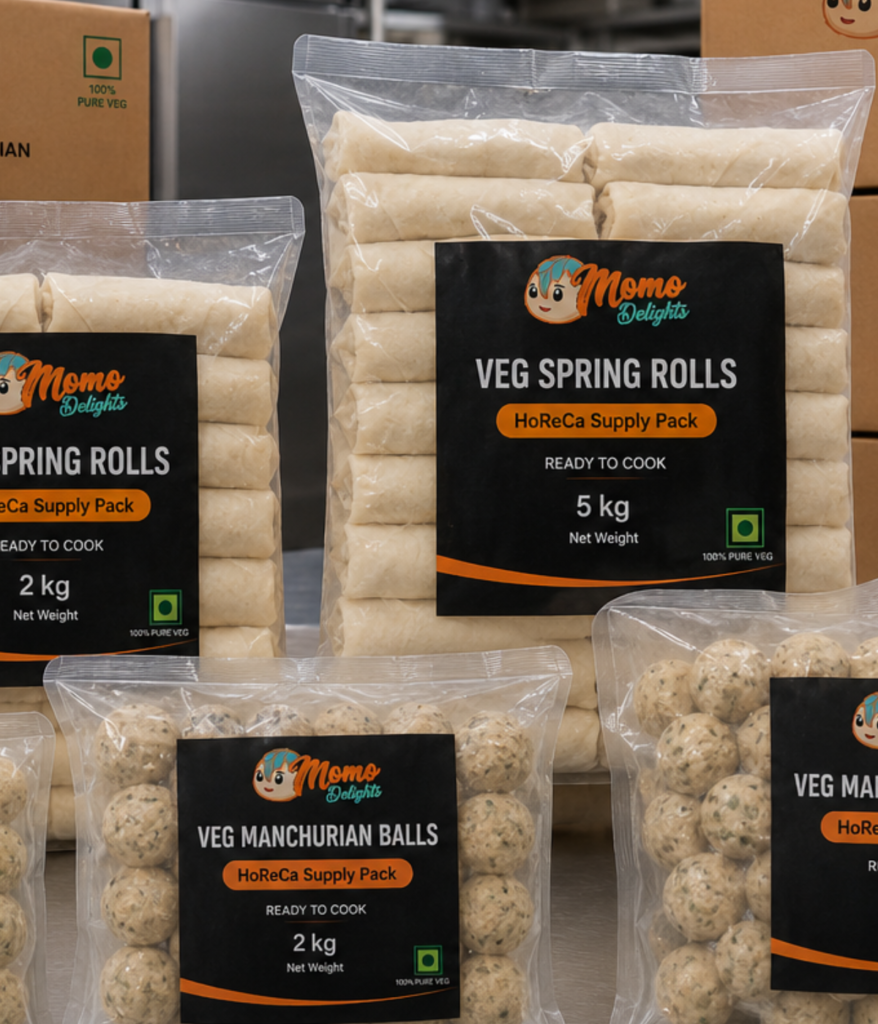
Read whether the pack says vegetable, paneer, cheese, tofu or another filling. Look for the distinction between ready to cook, fully cooked and ready to eat. The appearance of cooked dumplings on a product photo does not establish that the contents are precooked.
Also check net quantity and the number of pieces, if stated. Comparing prices per pack without considering pack weight or serving yield is rarely useful.
Read the full ingredient list
Do not stop at “veg momos”. A product can contain several wrapper ingredients, sauces, flavourings and added fats. Wheat, milk ingredients, soy and sesame may appear in different components of the meal. The Momo Delights allergen page specifically notes possible exposure to several allergens and cross-contact depending on the item and batch.
If you are vegan, check dairy and egg ingredients; if you must avoid gluten, check wheat and the producer’s cross-contact information. A green vegetarian symbol and a vegan or gluten-free claim are not interchangeable.
Find the dates and batch identification
Look for the manufacturing or packing date, the “best before” or “use by” statement as supplied, and a clearly readable batch or lot number. They support traceability and allow the seller to answer a specific product question. A date should never be interpreted in isolation from the stated storage conditions.
Keep a photo of the label and lot if reporting a quality concern. For foodservice procurement, record the batch number on receipt alongside supplier, quantity and receiving temperature.
Understand the cold-storage instruction
Commercial frozen foods commonly require a freezer maintained at -18°C or colder; FSSAI guidance for food businesses identifies frozen storage at -18°C or below. The exact instructions on the pack are the primary reference for the product you have. A bag labelled ‘keep frozen’ should not be treated as a shelf-stable snack.
Do not buy a pack that appears thawed, leaking, badly damaged or improperly stored. Frost crystals can have several causes, but a visibly compromised package warrants a question to the retailer rather than an assumption that it is safe.
Treat cooking instructions as a safety instruction
Check the recommended equipment, whether the momos can be cooked directly from frozen, the water or oil setup, the suggested time and any minimum internal temperature. Follow the maker’s guidance rather than a viral fixed-time recipe. Appliances and dumpling sizes differ; even cooking is more important than a specific number of minutes.
For raw fillings, verify thorough cooking. For cooked leftovers, FoodSafety.gov lists 74°C/165°F for reheating, though that leftover standard does not replace the manufacturer’s raw-product instructions.
A 60-second buying checklist
- Is the pack sealed, intact and properly frozen?
- Is the product type and filling unambiguous?
- Can you see ingredients and allergen information?
- Are batch and date details readable?
- Are storage and cooking directions complete?
- Is the manufacturer or packer contact information present?
- Is the net weight and quantity clear enough to compare value?
What restaurants should record additionally
A restaurant buyer should retain the supplier invoice and batch code, note delivery condition and temperature, check expiry and maintain first-expiry-first-out rotation. The frozen momo receiving checklist covers this operational process in more detail. If temperature or seal integrity is in doubt, isolate the batch for supplier review rather than quietly returning it to saleable stock.
FAQ
Does frozen mean precooked?
No. “Frozen” describes storage, not whether the food has been cooked.
Can I cook every frozen momo without thawing?
Only when the manufacturer’s instructions allow it.
Is freezer burn proof the product is unsafe?
Not necessarily; it can reduce quality. But damaged packaging, temperature abuse or an unknown history require separate safety assessment.
Sources: FSSAI — hygiene requirements for food businesses; FoodSafety.gov — food safety charts; Momo Delights — allergen information.
For practical foodservice resources, read Frozen Momo Supplier Onboarding: Documents Restaurants Should Request and FIFO vs FEFO for Frozen Momo Stock: A Restaurant Inventory Guide. Verify current product details and safety procedures.

Leave a comment