

Aa Reading preferences
The first frozen momo delivery should not be the moment a restaurant discovers that it cannot answer a guest’s allergen question or trace a damaged pack. Supplier onboarding begins with documents: the basic evidence that the product, the business and the handover process are understood before the first commercial order.
This checklist is for restaurant owners, café operators, hotel purchasing teams and cloud kitchens in India. It is a practical procurement framework, not a legal opinion or certification that a supplier complies with every requirement.
Begin with business identity and food licensing
Request the supplier’s legal business name, billing details, appropriate FSSAI license or registration details, the manufacturing or packing entity if different, dispatch address and an operational contact. Verify relevant details through the available official channels as appropriate for the transaction.
A marketing brand name and the entity responsible for manufacturing may differ; knowing both helps with traceability. Keep records updated when the manufacturing site, legal entity or production arrangement changes.
Product specifications for every SKU
Ask for a separate specification for each momo variety you intend to purchase: product name, weight or size range, pack quantity, ingredient list, allergen declarations, preparation status, storage conditions, cooking directions and declared shelf life. Do not assume all products in one supplier’s catalogue use the same wrapper or filling.
A product described as vegetarian may still contain wheat, milk, soy or sesame. If a customer requires a vegan or allergen-controlled meal, the full recipe and cross-contact position must be confirmed, not inferred from a category label.
Cold chain, batch coding and delivery conditions
Agree on acceptable frozen-delivery temperatures, pack integrity checks and escalation procedures. Commercial frozen food is generally handled at -18°C or colder under applicable frozen-storage requirements, subject to the exact product and relevant FSSAI guidance. Ask how temperature is monitored and what record is available on request.
Ensure each received lot is identified by batch or lot code, dates and quantity. Establish who the outlet contacts if packs arrive partly thawed, wet, torn or unlabelled. See the published frozen momo receiving checklist for the actual delivery-day checks.
A useful onboarding document register
| Document | Why it matters | Owner |
|---|---|---|
| Business and food license details | Identity and regulatory review | Procurement |
| SKU specifications and ingredient lists | Correct preparation and menu claims | Chef / QA |
| Allergen and cross-contact declaration | Guest safety communication | QA / Front of house |
| Frozen storage and cooking directions | Safe operations | Kitchen lead |
| Batch and date-label examples | Traceability and stock rotation | Stores |
| Commercial quotation and terms | Cost, orders and payments | Purchasing |
| Nonconformance and returns procedure | Handling rejected deliveries | Purchasing / QA |
Commercial terms that should be written down
Confirm minimum order, delivery lead time, shipping and unloading responsibility, invoicing terms, price revision notice, order cut-off time, shortages, returns and how the supplier handles substitutions. A written agreement prevents the kitchen from improvising with a different filling or pack size on a busy service day.
Define whether an urgent emergency order is possible and whether it attracts separate freight charges. These are negotiated questions, not guaranteed features of a particular supplier.
Run a controlled kitchen validation before menu launch
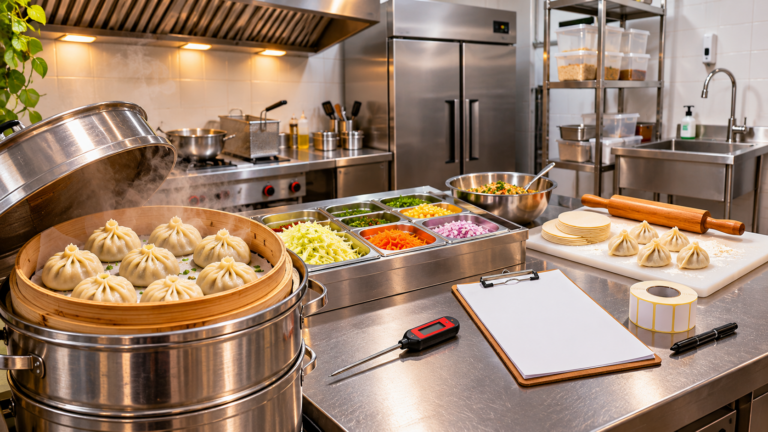
Cook a sample from a labelled batch using the written preparation instructions. Observe portion weight, wrapper integrity, filling distribution and service performance. Compare landed cost per usable serving, including breakage and prep labour. Ask more than one staff member to prepare a test batch to identify ambiguous instructions.
If allergens or ingredients change, update the kitchen specification and guest-facing menu before serving. The best tasting score does not replace a food-safety review.
Records and follow-up review
Keep an onboarding folder for each supplier, with a date for the next specification review. Confirm how recipe or packaging changes will be communicated. Train the receiving team to isolate products with doubtful temperature history or damaged seals pending quality review rather than returning them silently to saleable stock.
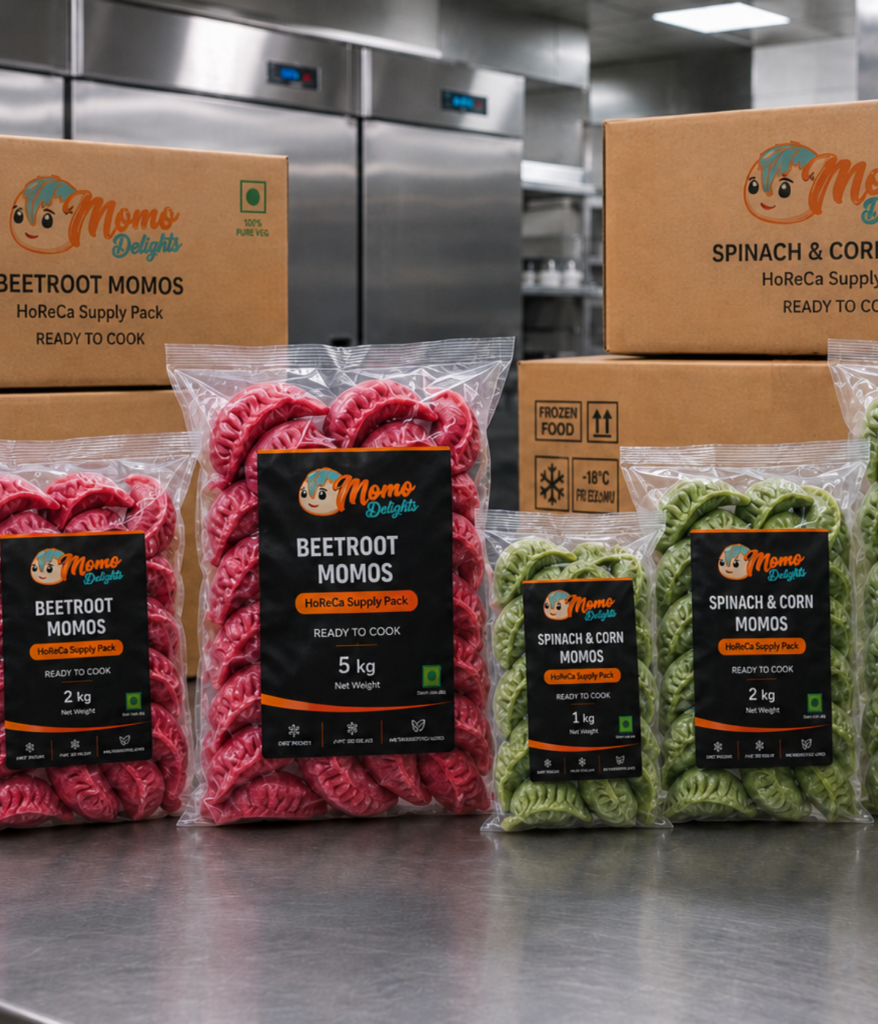
For professional product discussions, visit Momo Delights HoReCa/B2B supply and request current SKU-specific documents directly.
FAQs
Does an FSSAI license prove every batch is compliant?
No. Batch integrity, specifications, storage and ongoing controls still need review.
Can the menu simply say “vegan” if a supplier calls the filling vegetable?
No. Wrapper, sauces, processing aids and cross-contact matter too.
Who owns the receiving checklist?
The restaurant should assign a named trained person and a backup for each delivery.
For related foodservice tips, see Batch Traceability for Foodservice Dumplings: What Restaurants Should Record and Switching Frozen Momo Suppliers: A Restaurant Quality Checklist. Check current specifications and safe handling guidance.

Leave a comment