

Aa Reading preferences
A restaurant may switch momo suppliers to improve consistency, reduce delivery risk or explore a different recipe. Yet an apparently simple change can affect everything from steaming time and wrapper thickness to the allergen statement on your menu. The safest transition is deliberate, documented and tested before the new stock reaches an ordinary service shift.
This checklist helps operations and purchasing teams avoid a rushed “same product, different carton” assumption.
1. Write down why you are switching
List the measurable problem you are trying to solve: late deliveries, high broken-piece rates, inconsistent portion weight, customer feedback, landed cost or limited product range. If you do not define the goal, you can end up choosing a cheaper pack that creates more kitchen waste.
Separate supplier reliability from product taste. A momo may cook beautifully but arrive unpredictably; a punctual supplier may offer a filling your diners do not prefer.
2. Confirm every proposed SKU’s specification
Collect the new supplier’s ingredients, allergens, preparation status, storage temperatures, pack size, cooking instructions, date and batch format. Compare them side-by-side with the current product. A “veg momo” from two factories might have different wheat, soy, milk or sesame exposures and require different cooking procedures.
Never carry forward an old allergen menu statement without checking the new formulation and manufacturing controls.
3. Run blind taste and service tests
Prepare coded samples from the outgoing and incoming products under their respective documented cooking instructions. Evaluate wrapper, filling texture, seasoning, portion consistency and holding or takeaway performance. Run more than one batch when possible, rather than using a single promotional sample as proof of repeatability.
Include staff who actually operate the steamer and front-of-house team members who handle guest feedback. A product that looks excellent on a test plate may be difficult to prepare quickly in a compact kitchen.
4. Compare cost per usable serving
Look beyond the quoted price per kilogram. Measure actual cooked piece yield, size variation, broken wrappers, sauces, packaging, freight and time. For example, a 10% lower pack price can be cancelled out by higher waste or lower usable servings; this is a planning possibility, not a claim about any particular supplier.
Use the restaurant sales guide to connect menu performance with margin and repeat customer outcomes.
5. Plan the cold-chain and batch handover
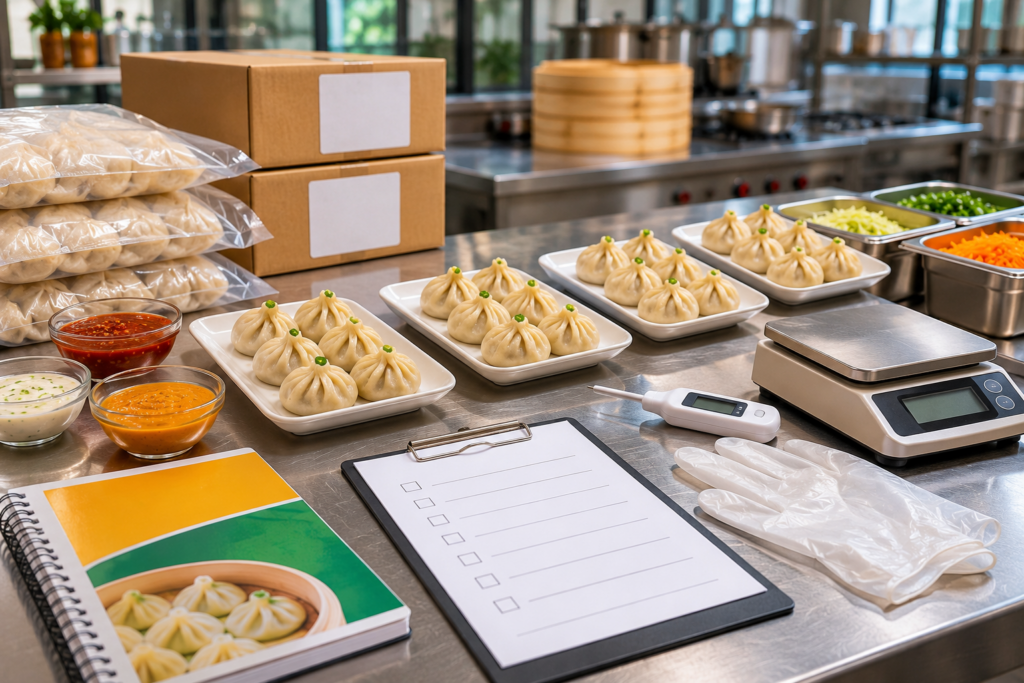
Define the last purchase from the outgoing supplier, the first planned delivery from the new one, freezer space and what to do with existing approved stock. Do not mix loose dumplings from different suppliers into an unlabelled container. Keep batch and expiry records for traceability, and follow FIFO/FEFO stock rotation as appropriate.
Establish the rejection process for warm, damaged or wrongly labelled stock. A supplier transition is exactly when a temporary gap in paperwork can occur if no one owns the task.
6. Update the SOP and guest-facing information
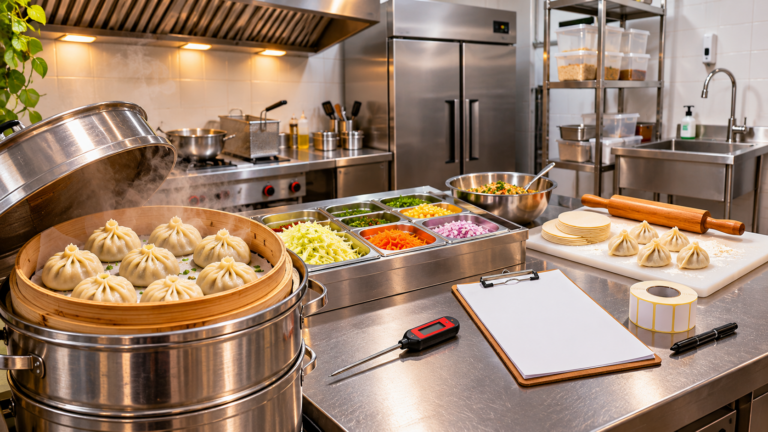
Revise cooking time guidance, portion standards, plating photographs, sauce pairings, allergy information and staff training before the new item is sold. Front-of-house staff should know that a recipe has changed and where to find verified specifications. Avoid telling guests that nothing changed if ingredients or allergens did change.
Update delivery-platform descriptions and printed menus where necessary. An attractive food photograph must still represent the actual product and serving.
7. Use a controlled cutover checklist
| Control | Before first sale |
|---|---|
| Product and allergen spec | Approved and distributed |
| Batch coding | Receiving team trained |
| Freezer allocation | Separate, identifiable stock |
| Cooking SOP | Tested by multiple staff |
| Serving cost | Recalculated with actual yield |
| Guest communications | Menu and allergy wording checked |
| Quality escalation | Contact and process documented |
8. Review the first two weeks
Record complaints, breakage, service times, portion deviation and supplier performance daily after cutover. If a problem appears, isolate affected lots and investigate; do not silently blend new and old stock. The first 14 days provide a practical operations check, not proof of all future batches.
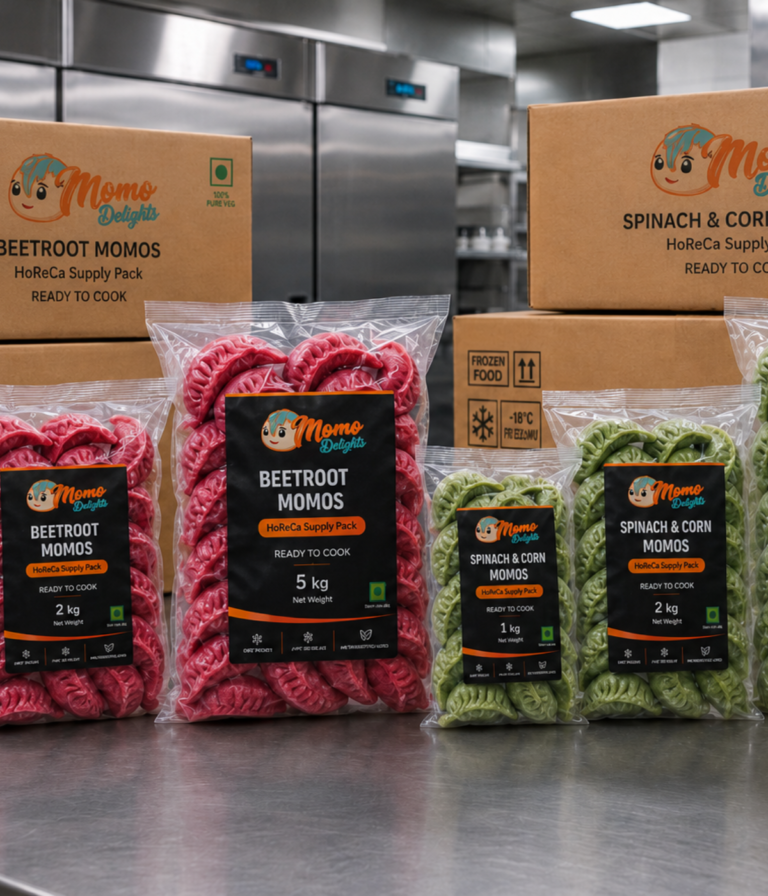
For professional foodservice sourcing enquiries, visit Momo Delights’ HoReCa/B2B page and request current specifications for your product requirements.
FAQs
Can a supplier switch alter allergens?
Yes. Different ingredient formulations and processing environments can change the risk profile.
Should new and old cartons be mixed in one freezer?
They can share compliant freezer space if properly segregated, identified and handled, but loose unlabelled mixing should be avoided.
Does a lower price guarantee better margins?
No. The kitchen must compare landed cost per usable serving and actual quality losses.
For more foodservice operational detail, explore Safe Thawing for Frozen Momos: When to Thaw and When Not To and Freezer Burn vs Spoilage in Frozen Momos: How to Tell the Difference. Check applicable handling rules and current SKU specifications.

Leave a comment