

Aa Reading preferences
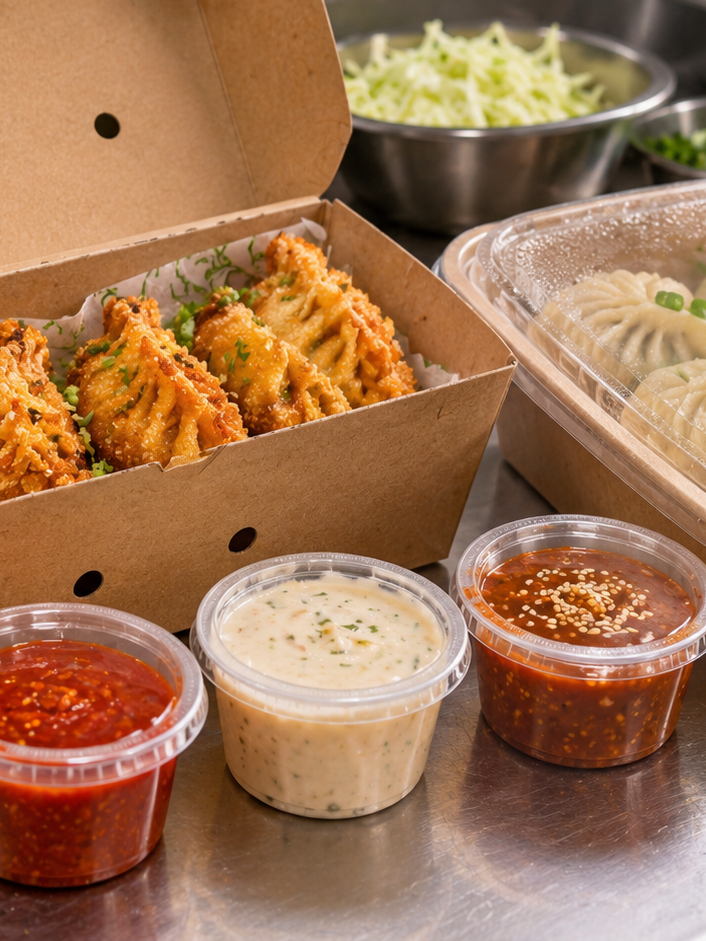
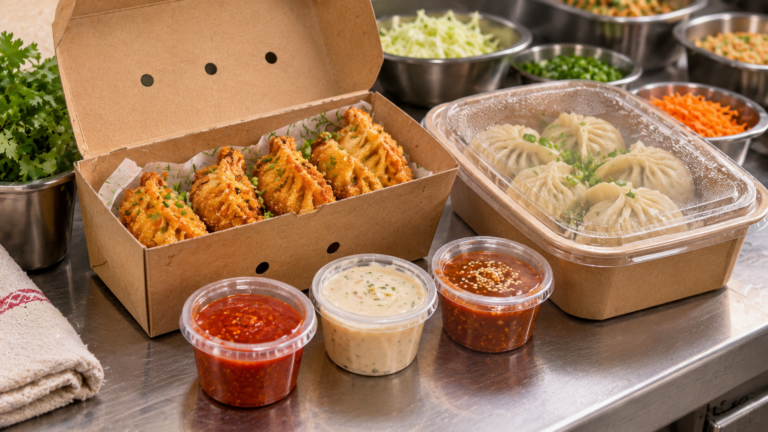
The greatest enemy of a crisp momo on delivery is not always distance. It is moisture trapped between hot food and the lid. Steam rises, meets a cooler surface and condenses, then droplets fall back onto wrappers and coatings. A thoughtful package design can reduce that cycle while still protecting the meal during travel.
There is no one perfect box for steamed, pan-seared and crunchy momos. The right choice balances texture, hygiene, leak protection, temperature and the realities of delivery handling.
Why steam turns into sogginess
Freshly cooked momos release heat and moisture. When hot vapour meets the cooler inside of a closed lid, water can condense into droplets. If the box is packed with stacked dumplings, moisture may be trapped between pieces and under the food as well.
Steamed wrappers can become wet and sticky; crispy coatings tend to lose their crackle. This is a physical texture problem, separate from the question of whether the meal has remained at a safe temperature.
Test venting without abandoning food protection
Some containers include designed ventilation to let excess vapour escape. Others use a rigid food-grade base with a lid that controls moisture while staying secure. Do not cut arbitrary holes into a box, especially near sauce, dust or exposure pathways, without a packaging test and suitable hygiene controls.
A vent that improves crunch but causes food to cool unsafely or lets contamination enter is not a successful solution. Check the intended food-contact temperature and any manufacturer statements about use.
Keep wet sauces away from delicate wrappers
Pack tomato-chilli chutney, sesame achar and creamy dips in appropriately sealed separate containers when the menu allows. Test cups for leaks after normal shaking and handling. A sauce can affect more than texture: sesame, milk, soy and other allergens require correct identification and cross-contact controls.
The menu and packaging team should agree on a standard arrangement so the sauce cup does not crush dumplings or fall against a fragile lid.
The 20-minute packaging comparison
Run a small controlled trial using two or three food-safe packaging options. Place equally sized, fully cooked momo servings into each at similar initial temperatures. Use the same route or stationary simulation for 20 minutes, recording the elapsed time, product temperature as appropriate, condensation, wrapper integrity, sauce leakage and appearance on opening.
Repeat the test on different days; a single result cannot predict a long delivery route in hot or cold weather. Choose the package that satisfies safety and hygiene requirements while maintaining acceptable quality—not necessarily the driest lid.
A scorecard for practical decisions
| Question | Observe or measure |
|---|---|
| Condensation | Visible lid droplets and wet box base |
| Wrapper texture | Soft, tacky, broken or crisp as intended |
| Leak resistance | Sauce cup seal, box edge and lid closure |
| Safe temperature | Follow validated delivery and food-holding controls |
| Portion protection | Crushed pieces or separated fillings |
| Transport fit | Stacking stability and rider handling |
| Cost | Package, insert, cup and lid per order |
Design for the momo style
Steamed: a box should limit sticking and protect moisture without causing a wet base. Pan-seared: keep crisp surfaces from being pressed against each other. Crunchy or crumb-coated: use a packaging configuration that reduces trapped steam and prevents sauce contact while keeping the product protected.
Packaging choices can change when an item is served with gravy or a separate soup. For brand menu imagery and how to show realistic portions, see Momo Delights’ food photography guide.
Do not let packaging claims outrun evidence
A “100% crisp on delivery” promise cannot be established without knowing distance, weather, delay and handling. Use measured quality targets instead, and avoid printing unverified temperature or environmental claims on packaging. The FDA and USDA warn that food-contact materials need to be suitable for their intended temperature and use; an ordinary cold-food container may not be suitable for hot food.
Food safety and operating responsibilities
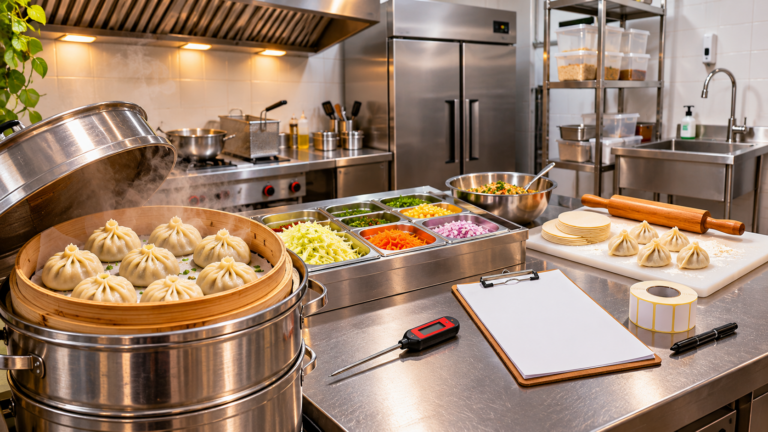
FSSAI’s hygiene requirements call for effective food-safety management and good manufacturing and hygiene practices. A packaging SOP should specify clean assembly, allergen checks, the intended hot-food container, safe transport controls and a procedure for rejected or leaking packs. Texture optimisation cannot replace temperature control.
FAQs
Should a momo box always be airtight?
Not necessarily. Moisture control must be balanced with safe transport, hygiene and temperature requirements.
Why does the chutney cup leak?
Lid mismatch, overfilling, heat tolerance and physical pressure are common reasons to test.
Can the same box work for steamed and crispy momos?
It might, but the two textures respond differently to trapped steam. Validate each style.
For related foodservice resources, see Frozen Momo Delivery Checklist for Restaurants: Receiving, Storage & Batch Controls and Vegetarian Office Lunch Catering with Momos: Menu and Delivery Planning. Follow current safe-handling requirements and supplier guidance.

Leave a comment